This election cycle, many candidates have pledged to not rely on political action committees.
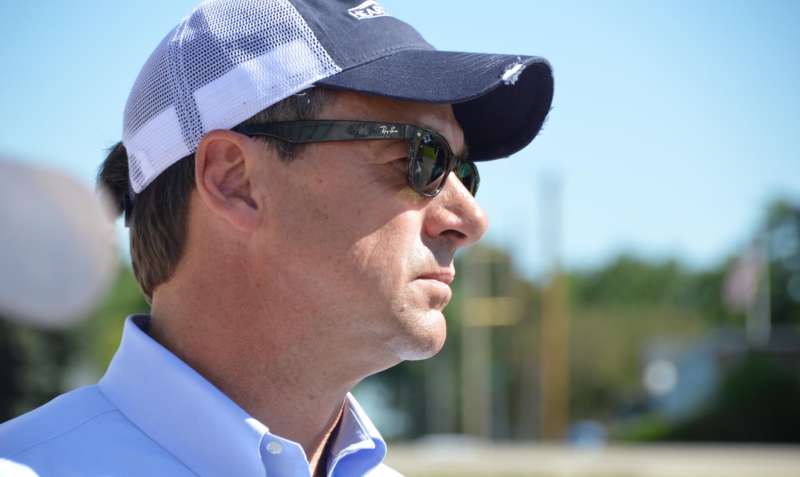
Montana Gov. Steve Bullock, who talks often about ridding the system of dark money, has decided to add another layer of transparency to his campaign by accepting public financing.
“Taking public financing, I think, really is rooted in those shared values of showing the importance of every individual,” Bullock said. “One of the challenges I think we have in this overall system is people feel like their participation really doesn’t matter.”
That means that Bullock will get matching public funds for the first $250 of every donation he receives during the primary election. However, there’s lots of strings attached, including limits with how much he can spend throughout the primary. And Bullock can choose to only use public financing only for the primary. He doesn’t have to use it for the general.
In order to qualify for public financing, candidates first have to meet certain requirements and obey certain limitations on the amount of money they can spend.
The legislation for public financing was approved in 1966, and provisions added in 1971 formed the current system.
The program is funded through voluntary tax “checkoffs” that contribute $3 from people’s tax refunds.
[inline-ad id=”1″]
Public financing then uses the tax dollars for two things. The first is to match the first $250 from individuals that a legitimate presidential candidate receives during the primary campaign.
The other use is to fund the nominee’s general election campaigns, though eligible minor party nominees can also get some assistance. However, for major party nominees in today’s extremely expensive presidential races, the spending restrictions on that are too much to compete.
When candidates apply for public financing, they also accept limitations. In 2016, had someone accepted public financing, the most they could have spent in the primary was $48 million.
There are also limitations in each state. In the 2016 presidential primary election, the spending limitation in Iowa was $1.8 million.
According to the New York Times, as of June 22, 2016, Sen. Bernie Sanders spent about $220 million on the primary and Sec. Hillary Clinton spent $195.7 million.
The total limitations for the 2020 cycle have not yet been announced.
[inline-ad id=”0″]
When asked about that, Bullock said he wasn’t concerned about the limitations, even if it means he could reach a point where he can’t take or spend more money in the primary.
“I’m choosing, as someone who’s spent my whole time trying to fight against the corrupting influence of money in our system, to run the campaign in a way that’ll really reflect how government ought to work for everyone,” Bullock said.
The idea of publicly financing campaigns is meant to regulate the amount of money spent in elections, and it’s a reform that was talked about for a long time: President Theodore Roosevelt called for it in 1907.
According to the FEC, the Watergate scandal inspired a lot of the push for implementing public financing. And it worked for a long time.
[inline-ad id=”2″]
“Until a couple of cycles ago, those sort of limitations were already accepted,” Bullock said. “You still get plenty of money along the way if what you’re really doing is trying to engage voters to try to make sure that they have a stake in the election and we’ll still be able to succeed with those limitations on.”
There’s no requirement to use public financing, which is one reason why it isn’t used as much as it used to be. In 2000, President George W. Bush didn’t use the matching funds Bullock will be relying on. And in 2008, President Barack Obama declined public financing for the general election.
Bullock, on the other hand, said he’s always planned on using this for his primary campaign.
“I think it’s an acknowledgment that this is the way it should work,” he said. “We knew from the beginning that matching funds would probably be key to a victory as we get close to the first primaries and caucuses.”
by Nikoel Hytrek
Posted 10/3/19