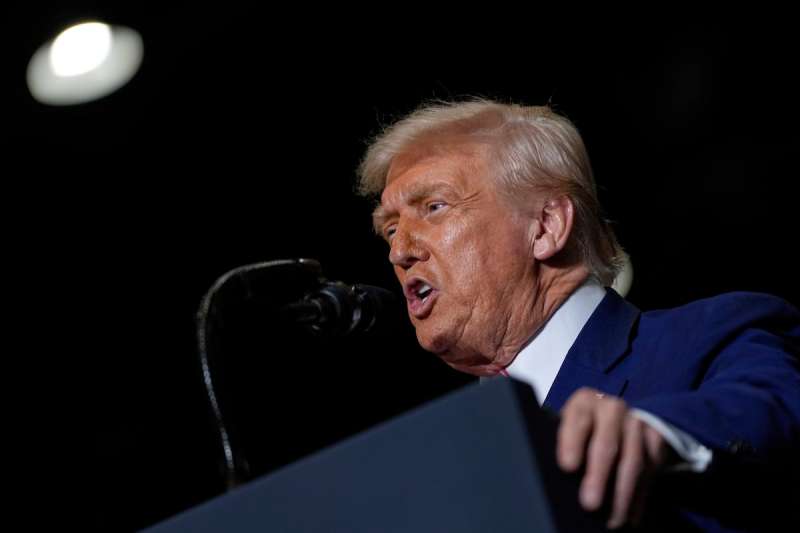
President Donald Trump will take the stage at 9 p.m. ET tonight to deliver what he’s calling one of the most important speeches of his presidency. The centerpiece: the SAVE America Act. The legislation features voter ID requirements and citizenship verification measures he and fellow Republicans say are essential to protecting elections from fraud.
Politico reported Trump is expected to claim US intelligence agencies found that widespread vulnerabilities in voting machines affected the 2020 elections.
The timing is worth noting. The midterms are shaping up to be a competitive in Iowa and across the country. Republicans face headwinds on abortion rights, healthcare, and rural economic decline. The party is positioning election fraud narratives—claims about noncitizen voting, mail-in ballot manipulation, and voting system vulnerabilities—as the explanation for any losses that might come their way. Understanding what those narratives are, and what actually threatens Iowa elections, matters for voters heading into the general election.
The noncitizen voting claim
Trump and fellow Republicans will likely cite concerns about noncitizen voting as a central rationale for stricter ID and citizenship verification requirements. The framing: Elections are being flooded with illegal votes.
Iowa already requires voter ID on absentee ballot request forms. The voter ID number and address must match the voter registration database before a ballot can be mailed. Secretary of State Paul Pate (R) has told Radio Iowa that Iowa’s multi-layered approach to election security means that voters know“your vote will be counted fairly, accurately and securely.” Iowa also already verifies citizenship: After a federal lawsuit settlement, the state has legally binding access to the federal Systematic Alien Verification for Entitlements (SAVE) program, Iowa Capitol Dispatch reported.
County auditors and the secretary of state’s office also conduct regular list maintenance—voters who move or die are removed from the rolls through a process required by state and federal law. It’s routine administration, not evidence of fraud.
The mail-in ballot fraud narrative
Republicans will invoke mail-in voting as inherently vulnerable to fraud. The implication: Absentee ballots are a security risk that needs to be restricted. But Iowa has been using it successfully for years.
In order to request an absentee ballot, the voter must apply to their county auditor no later than 5 p.m. 15 days before the election providing information like their Iowa address, voter verification number, and signature. It is only then that eligible voters are sent an absentee ballot.
In Iowa, mail-in fraud happened—but not the way Trump will frame it. Iowa Public Radio reported in 2023 that Kim Phuong Taylor, the wife of Republican Woodbury Supervisor Jeremy Taylor, was convicted of 52 counts of voter fraud for illegally filling out absentee ballots on behalf of members of Sioux City’s Vietnamese community. She targeted voters with limited English proficiency, offering to help them vote and then cast ballots in their names for her husband’s congressional and supervisor races. A federal jury found her guilty, and she was sentenced to four months in prison.
The case proves mail-in voting can be exploited butby political operatives instead of noncitizens. And Iowa’s system caught it. Election officials noticed the fraud, investigated, and prosecutors built a federal case. The very safeguards Republicans say are inadequate worked exactly as designed.
The voting machine hacking fear
Tonight’s expected centerpiece claim—that voting machines are compromised—is the one with the longest and most expensive paper trail.
Iowa uses paper ballots in every election. Paper ballots cannot be hacked and can be recounted to check the results. Before each election, every ballot tabulator undergoes logic and accuracy testing in public view, with sample ballots tested to ensure machines are recording votes correctly. After every election, at least one randomly selected precinct in each of Iowa’s 99 counties conducts a hand count audit, which is compared to the machine count. In the 2020 election, post-election audits verified accuracy in all 99 counties.
Iowa’s election infrastructure is monitored 24/7 by state cybersecurity officials. The Iowa National Guard’s Joint Task Force-Cyber supports the infrastructure. The FBI works with state and local officials to prepare for potential cyberattacks and foreign interference.
What actually threatens Iowa elections
If the Trump administration is serious about election security, there are some things they could improve:
Election workers face harassment and threats. The FBI has flagged threats to election workers as a security concern.
Federal cybersecurity support for election infrastructure has declined. Cybersecurity and Infrastructure Security Agency (CISA) programs that monitored election-related cyberattacks were shut down last year. Iowa Capitol Dispatch reported that Pate said Iowa has “learned a lot” from CISApartnerships and built “a pretty independent operation.” Losing federal coordination is a new challenge under the Trump administration.
And as the Woodbury County case proved: Political operatives with access to voter data and the trust of communities can commit fraud at scale if no one is watching. Election security depends on vigilant election officials, county auditors, and law enforcement willing to investigate.
None of those threats are addressed by voter ID requirements or citizenship verification mandates. They require funding, staffing, and sustained attention to the unglamorous work of election administration.