Reporting by Kyle Werner, Des Moines Register
One was sawed down in Pleasant Hill. Three have been vandalized in Johnston. Four were recently struck by gunfire in Wapello County. Another four have been vandalized in Ankeny.
Flock cameras across the country are being vandalized, damaged, and destroyed by people who oppose and decry the more than 120,000 cameras placed at city entrances and along high-traffic roads that photograph each passing car.
The automated license plate readers, commonly referred to as ALPRs or LPRs, are powered by artificial intelligence to capture and analyze photos of cars and are used primarily by law enforcement as a tool to aid in investigations.
Many fear the data collected by the cameras is being used to aid in deportations. There have been reports of some law enforcement officers misusing the data for personal use.
The Iowa ACLU has called the cameras a “Big Brother-style government surveillance” and a violation of privacy. The national ACLU has started a “Get the Flock Out!” campaign that calls for cities and police departments to end their contracts with Flock.
Those who oppose the cameras have begun vandalizing, damaging and destroying them across the country. Many cities have opted to end their contracts with Flock Safety, including Coralville earlier this year.
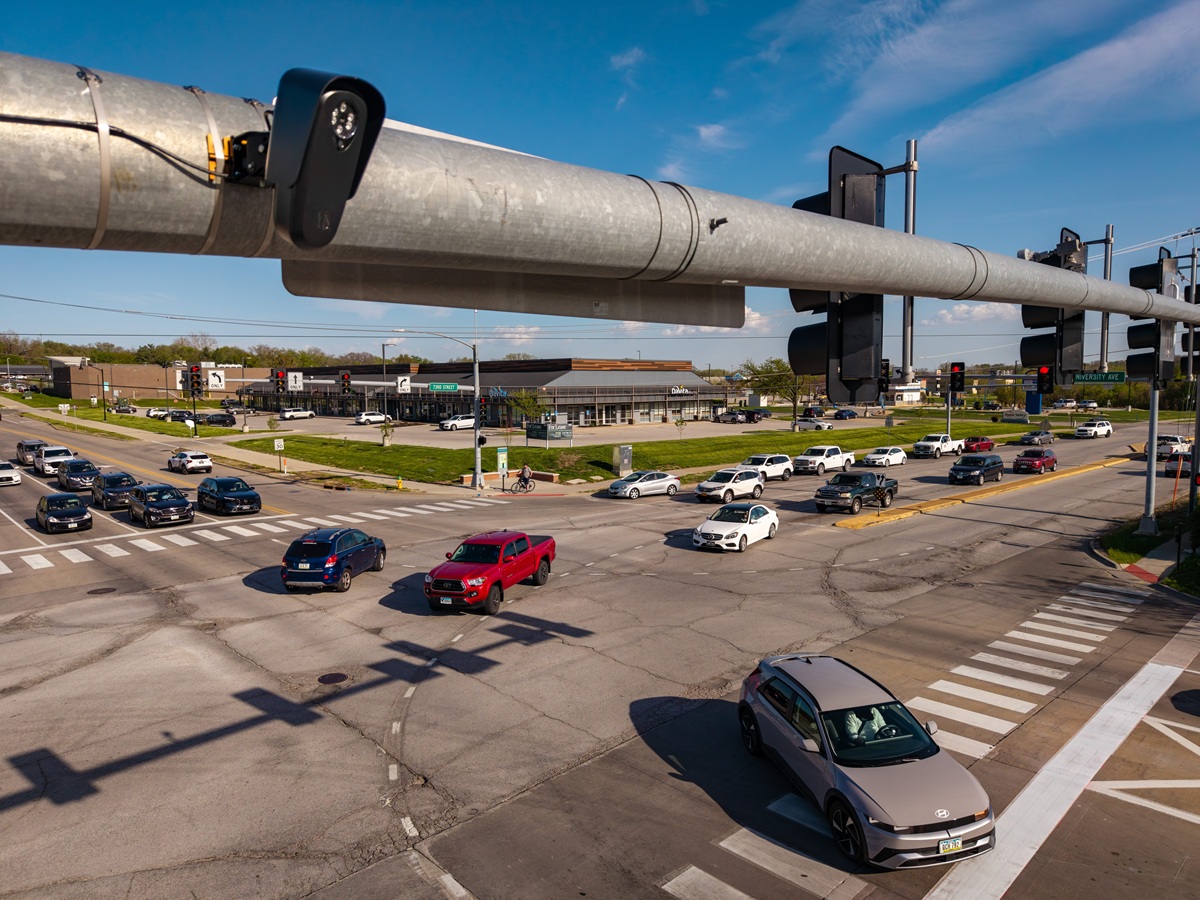
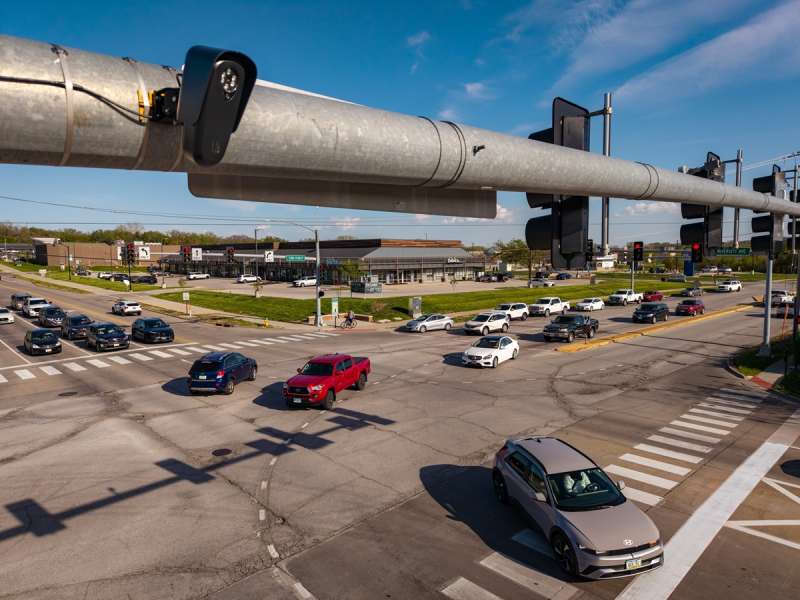
License plate readers have been shot at in Tennessee, hit with a truck in California, beaten with a baseball bat in Virginia, cut down with a saw in Texas and splattered with paint in New York. They’ve also been regularly blocked by a lone protester in Florida.
Incidents involving Flock cameras have also been recorded in Iowa, although many police departments aren’t publicly announcing such damages for fear of more vandalism occurring.
“People have every right to make their voices heard, but criminal acts should never be part of that process,” Flock Safety spokesperson Courtney Terlecki said in a statement to the Register. “Damaging public safety equipment ultimately hurts the very communities this technology is there to help protect.”
What are automated license plate readers?
Automated license plate readers are cameras that can automatically recognize and register license plate characters and numbers and store images of the plates. The cameras can be stationary, in vehicles, or portable with solar panels.
The cameras take still photos of the back of vehicles when motion is detected and also store location, time, and date, as well as car make, model, and color.
The data cameras capture is stored in a national database and can be shared with approved law enforcement and government agencies.
Flock Safety is among the most frequently used manufacturers, starting private operations in 2017 and transitioning to law enforcement around 2019. It’s the company most Iowa cities use, though Des Moines uses Motorola license plate readers. Several companies produce similar devices.
Automated license plate readers are not the same as automated traffic enforcement cameras triggered by a violation, such as speeding. License plate readers take images of all vehicles that pass by, regardless of whether a motorist has done anything wrong.
Where have Flock cameras been vandalized, destroyed in Iowa?
At least three communities in central Iowa have had incidents involving vandalism or the destruction of Flock cameras.
The first publicly reported incident of a Flock camera being destroyed in Iowa occurred on July 23 in Pleasant Hill. The pole on which the camera was attached was “cut in half, and the system itself was destroyed,” according to city spokesperson Candace Bell.
The cost to replace the camera is around $7,000 and would come out of the city’s budget, Bell said. No suspect has been identified. The camera has not yet been replaced.
“We’ve also seen similar incidents pop up elsewhere in Iowa, and some of what we’re hearing suggests a bit of misinformation is fueling the backlash,” Bell said. “These cameras don’t track or follow individuals the way some people assume.”
Since the beginning of the year, Ankeny has had four of its 16 cameras sporadically destroyed or vandalized, according to department spokesperson Sgt. Trevor McGraw.
One camera was covered in tape, another was rotated to face away from the roadway, and another was bent over after being hit by a vehicle, according to McGraw. A fourth was damaged on Saturday, Aug. 8, and remains under investigation. All cameras and poles were fixed in-house, McGraw said.
The Altoona Police Department has also received a report of damage to a Flock camera, according to police spokesperson Lt. Alyssa Wilson. The incident is currently under investigation.
In Johnston, one camera was destroyed, which brought criminal charges, and two were mildly damaged by a “group of juveniles,” according to Police Chief Dennis McDaniel. All incidents happened in July.
“These are minor incidents of criminal mischief,” McDaniel said. “Unfortunately, we see it in our parks, and we see it in other public facilities and with other equipment, and it’s one of those things where it’s not right, it’s not appropriate. It’s illegal.”
Four Flock cameras, operated by the Wapello County Sheriff’s Office in southeastern Iowa, were destroyed by gunfire at the beginning of July, according to Chief Deputy Martin Wonderlin.
“One was shot out in the evening hours of July 4, and the other three were in the middle of the night on July 6,” Wonderlin told the Register.
The Wapello County Sheriff’s Office did not put out a press release regarding the camera vandalism until a copy of the department’s LPR policy began circulating online. The sheriff’s office faced criticism of its policy for instructing deputies not to mention ALPR camera use in traffic stops. According to the release, the sheriff’s office is reviewing its policy.
“The reason for that, other than we plan on getting them fixed, is we didn’t want to draw more attention to it so they get shot out again after we get them fixed,” Wonderlin said.
Terlecki said that “when a camera is taken offline, an investigative lead can disappear, and a time-sensitive alert tied to an AMBER Alert, a missing-person case, or a violent crime suspect on the move may never reach the officers who need it. These are tools agencies rely on to respond quickly and help keep people safe.”
McDaniel encourages residents to “engage your local police department, your local officials and, and have real conversation about it,” he said. “We’ve got to get beyond just the generalities.”
What can and can’t an automated license plate reader do?
Flock cameras are not able to detect speed. The camera motion detection works up to 75 feet, with a field of view of about 20 feet wide, according to the company’s website. The cameras use infrared technology at night.
The Flock Transparency Portal for each agency that uses the cameras outlines what is and isn’t recorded. Cameras record license plates and vehicles, but not drivers or passengers, race or gender, and do not use facial recognition technology.
Law enforcement agencies that use Flock cameras can decide what the data collected by the cameras is and isn’t used for.
Holly Beilin, a spokesperson for Flock Safety, previously told the Register Flock cameras have “accountability and transparency mechanisms built into the product,” such as an indefinite log of who accesses the information, and data deletion after 30 days.
All police departments in central Iowa prohibit the use of data for traffic enforcement, harassment/intimidation, to target anyone based on race, sex or religion, and personal use.
Agencies also choose the organizations that can access the data captured by their cameras.
“The city or the agency, they don’t have to share data with any other city or agency if they don’t want to, or they can only share data with cities and agencies that they know are also not doing immigration enforcement,” Beilin said. “That’s entirely within their hands.”
According to Iowa Code Chapter 321P.4, photos of vehicles and other data captured must be deleted no later than 30 days after the image was taken. A violation is a simple misdemeanor.
The data can be copied and stored longer if it is relevant to an ongoing investigation.
A bill passed through the Iowa Legislature in the 2026 legislative session would have required a local ordinance authorizing the use of license plate readers, restricted data access to authorized personnel, and required a log of data searches, as well as required the Iowa Department of Public Safety to maintain a list of approved license plate readers. The bill was not signed into law.
Kyle Werner is the breaking news and public safety reporter for the Register. Reach him at kwerner@registermedia.com.
This article originally appeared on Des Moines Register.
Related: Rob Sand wants Iowa to take on Big Tech over kids’ safety