
Reporting by Donnelle Eller, Des Moines Register
The recent heavy rains are unlikely to drive up nitrate levels in the Raccoon and Des Moines rivers, the source of drinking water for 600,000 central Iowa residents — but that depends on how much rain northwest Iowa receives, experts say.
Nitrate levels should remain low “for a bit unless we get some prolonged rainy periods,” said Matt Helmers, the Iowa Nutrient Research Center director on Aug. 7.
The region north of U.S. Highway 20 is “fairly dry … and that probably all went to replenish soil moisture” that Iowa crops have been using, said the Iowa State University professor of agricultural and biosystems engineering.
With August’s weekend storms, north Iowa areas have received 2-plus inches over the past week, according to the Iowa Environmental Mesonet. Fort Dodge saw 2.4 inches; Sheldon, Ames and Des Moines, about 1.5 inches; and Mason City and Spencer, 1.3 inches.

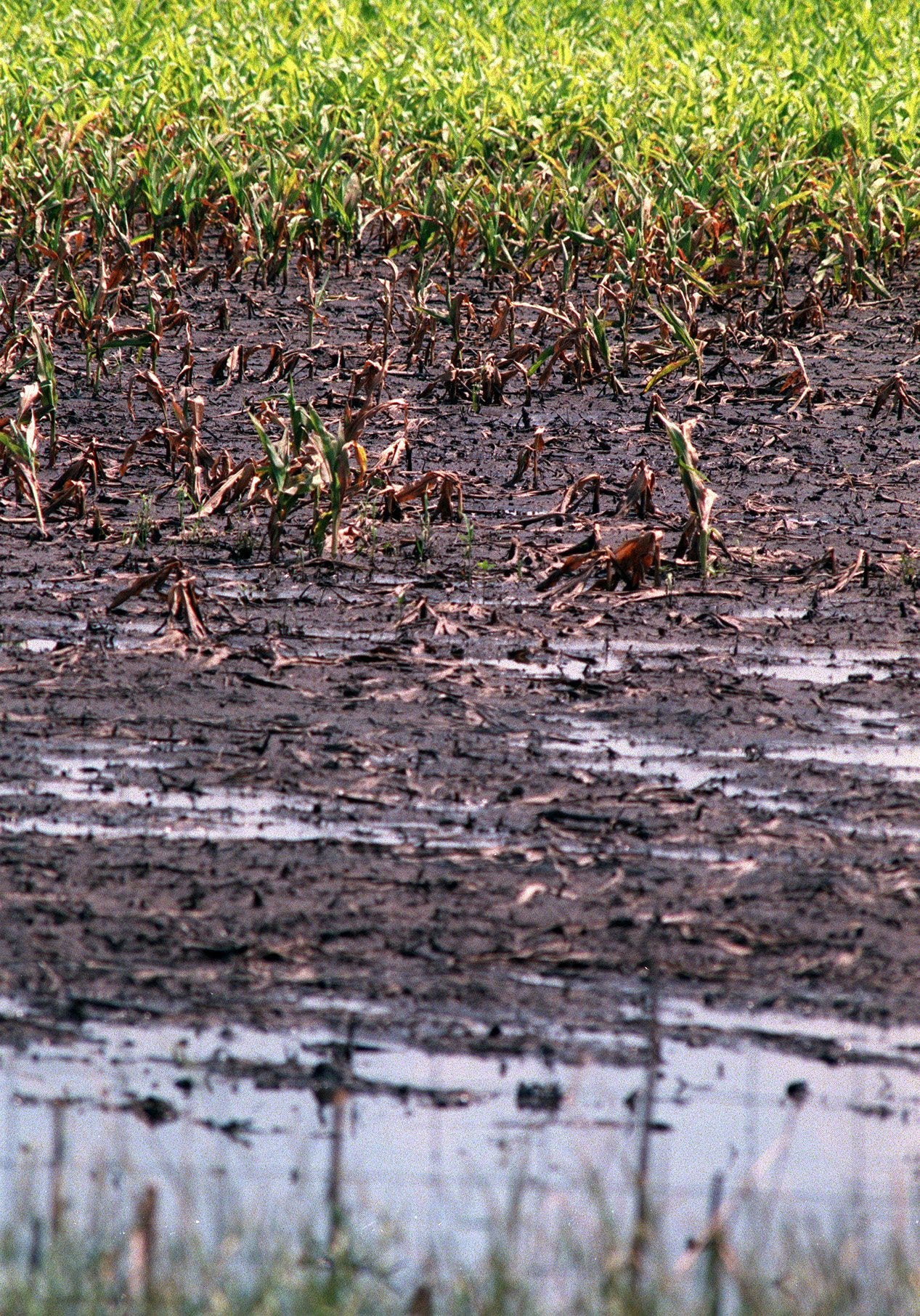
Surface runoff from heavy rains can initially dilute nitrate concentrations in rivers, streams and lakes, but levels may later rise as rain soaks into soil, picking up nitrates as it runs into underground drainage tiles, experts say.
Also at this time of year, Iowa’s 23 million acres of corn and soybeans are using nitrogen, phosphorous and other fertilizers, reducing the threat to the state’s waterways.
Tami Madsen, Central Iowa Water Works executive director, said Monday, Aug. 10, she doesn’t anticipate nitrate levels to rise.
“Nitrate concentrations in our source waters typically begin to drop around mid-July and continue to decline in August,” Madsen said.
On Monday, nitrate levels in the Raccoon River at Van Meter sat below 2 milligrams per liter, U.S. Geological Survey data shows, and the Des Moines River at Second Avenue in Des Moines hovered around 3.5 milligrams per liter.
Nitrate levels upstream from Des Moines remained low as well, Madsen said. For example, nitrate levels in the Raccoon at Jefferson, were 0.2 milligrams per liter and 2 milligrams per liter in Sac City, USGS data shows.
The federal safe drinking water limit, primarily set to protect infants from blue baby syndrome, is 10 milligrams per liter. Nitrate concentrations at even lower levels, however, have been tied to some cancers, research shows.
On June 8, Central Iowa Water Works banned lawn irrigation to preserve water for essential uses as spiking summer demand threatened to outpace the Des Moines metro utilities’ ability to treat high nitrate levels. It lifted the last of its ban on July 20 as levels began to drop below.
CIWW turned off its large nitrate removal facility July 23 after running it for a record 193 days.
Are Iowa’s challenges with nitrate levels growing?
Iowa experiences “a lot of seasonality in nitrate concentrations,” depending on weather patterns and Iowa’s cropping systems, said Larry Weber, interim director of the Iowa Flood Center at the University of Iowa.
Nitrate levels typically are high in spring and early summer, with heavy rainfall and crops are not yet using a lot of nitrogen, phosphorus and other fertilizers. And levels can drop with drier conditions in mid-summer and fall, when millions of acres of corn and soybeans are “taking up those nutrients,” Weber said.
Then nitrate levels can rise again in late fall as crops die and are harvested, and farmers apply fall nitrogen and manure from hog, chicken and cattle operations.
With climate change, though, Iowa could see high nitrate levels more often during the winter months. Warmer than normal temperatures and wet conditions help nitrogen to move through the soil into underground drainage tiles.
Central Iowa Water Works, for example, began operating its nitrate removal plant in January, an unusual requirement during the winter. “It’s more and more likely to be the shape of things to come,” Weber said.
Iowa also is experiencing an increasing pattern of several drought years followed by intense rainfall, Weber said. Nitrogen can build up in the soil the drought years, then get “flushed” into waterways during spring flooding.
Ag leaders are encouraging farmers to adopt more conservation practices that reduce nitrogen and phosphorus losses. Cover crops that are planted in the fall can prevent winter and spring soil erosions and runoff.
Donnelle Eller covers agriculture, the environment and energy for the Register. Reach her at deller@registermedia.com.
This article originally appeared on Des Moines Register.
Related: The 7 best places for kayaking near Iowa City and Cedar Rapids