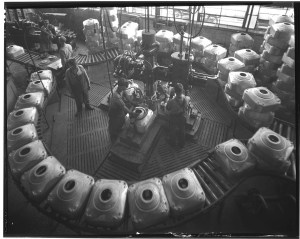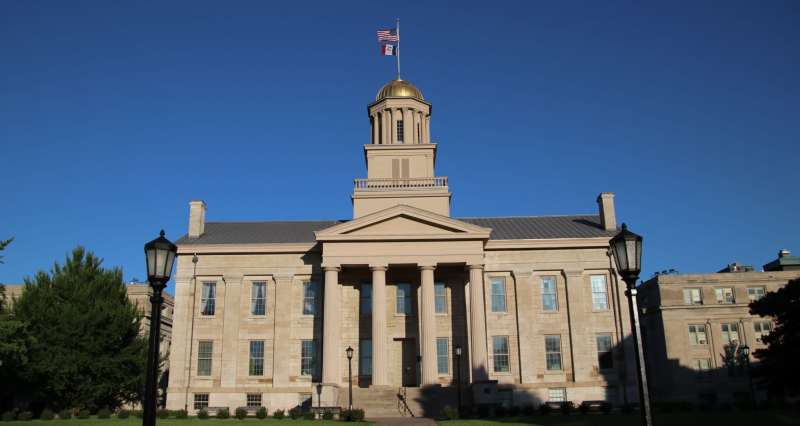
Since 2019, the University of Iowa has partnered with private, French-owned companies to run its power plant in exchange for over $1 billion for the university to spend on its strategic plan goals.
That makes it the “largest financial obligation ever held by Iowa taxpayers,” Iowa State Auditor Rob Sand concluded in his four-year review of the partnership. The report was released Wednesday.
Part of the reason the university sought the partnership, which ends in 2070, is because it needed another source of money in order to fund general operations and compete for students. Tuition increases weren’t seen as a good option.
“Had the Governor and legislature provided appropriations to support the general operations of the [Board of Regents] BOR and the Universities, the Board of Regents and University may have been able to use a portion of any tuition and fee increase for initiatives to retain and recruit students and faculty and to maintain and improve Iowa’s position as an educational state,” the report states. “As a result, the BOR and Universities have had to look for other sources of revenue, including a long term P3 (public private partnership) agreement, to help fund initiatives to retain and recruit students and faculty and to maintain and improve Iowa’s position as an educational state.”
[inline-ad id=”0″]
In December 2019, the Iowa Board of Regents approved the 50-year agreement for two companies to operate and manage the campus’ coal power plant in exchange for a payment that equaled more than the typical amount given to any of Iowa’s three public universities combined: $1.165 billion.
State appropriations for higher education, previously a big source of university funding, have decreased in Iowa over the years, and the report expands on that.
According to the report, “State appropriations to the Board of Regents (BOR) have decreased from 76.5% of total revenues in fiscal year 1981 to 30.5% in fiscal year 2023. During the same period tuition revenue has increased from 20.8% to 63.8% of the Regent’s University General Education Funding.”
The midyear state appropriation to the University of Iowa in 2018 was $5.2 million. In 2019 that was $3.2 million.
[inline-ad id=”1″]
In 2022, the University of Iowa received $2.4 million in new incremental funding for Fiscal Year 2023. The total appropriated for the Board of Regents to divide among Iowa’s three universities was $5.5 million.
Sand also noted that if the university’s investment of the money doesn’t meet the return on investments needed to uphold its end of the deal, Iowa taxpayers will be left to make up the difference.
He asked Gov. Kim Reynolds and the legislature to consider whether further decreases in state appropriations to Iowa’s universities are worth this risk.
In 2018, Reynolds sent a letter to the Board of Regents encouraging they seek these public private partnerships.
“I encourage you and your colleagues on the Board of Regents to survey what other universities around the nation are doing to leverage their assets—tangible and intangible—to further invest in higher education,” she wrote.
[inline-ad id=”2″]
The solution the regents found came from a similar program at Ohio State University, which started its public private partnership in 2017 with one of the same companies as Iowa’s partnership.
Iowa’s partnership started in March 2020 and is between the university and the University of Iowa Energy Collaborative (UIEC). The UIEC is an LLC formed by ENGIE North America, a French-owned energy provider, and Meridiam, a French infrastructure investment firm.
“While the Legislature long ago delegated the authority to issue debt to the BOR, it is uncertain they anticipated debt or long-term obligations of this magnitude,” the report reads. “It seems inappropriate for a government department or agency to take on the largest financial obligation ever held by Iowa taxpayers at the Governor’s general suggestion. Such practices lead to a lack of accountability and transparency.”
Nikoel Hytrek
12/15/22
[inline-ad id=”3″]
If you enjoy stories like these, make sure to sign up for Iowa Starting Line’s main newsletter and/or our working class-focused Worker’s Almanac newsletter.
Have a story idea or something I should know? Email me at nikoel@new.iowastartingline.com. You can also DM me on Twitter at @n_hytrek.
Iowa Starting Line is part of an independent news network and focuses on how state and national decisions impact Iowans’ daily lives. We rely on your financial support to keep our stories free for all to read. You can contribute to us here. Also follow us on Facebook and Twitter.