“ We see it really as a trap. We are pursuing a different kind of path to unionization.”
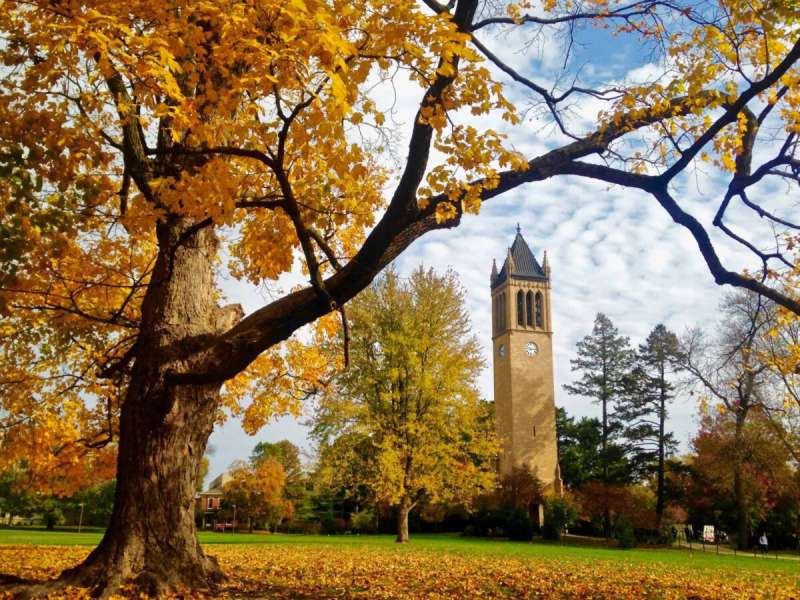
That’s Peter Flynn, a graduate of Iowa State University who now works there as a software developer.
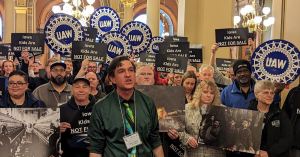
Workers at Iowa’s three public universities who aren’t faculty aren’t unionized. But since they’re also public sector workers, they don’t want to form a traditional union, because those are prohibited by the state from bargaining on almost everything.
So Flynn and others at the University of Iowa and the University of Northern Iowa are trying something a little different.
“There’s sort of, I think, a misconception that collective bargaining makes a union or that striking is what makes a union,” he told me. “ A union just means we’re a collective group of workers taking actions to improve our workplace.”
University workers are lower paid than if they were doing the same jobs in the private sector. But they also have great health insurance—all workers have to pay is a monthly premium. It’s a trade-off Flynn said is worth it.
That changed in 2024, when the universities adopted a coinsurance model, where workers have to pay copays and deductibles.
“This was just so earth-shattering to people,” Flynn said. “I’ve talked to people that have diabetes or have a child with a chronic condition, and all of a sudden they’re spending thousands a year when they were spending, like, just whatever their monthly premium was previously.”
Now, their smaller paychecks didn’t stretch as far, and talk of a union grew steam. But folks didn’t think a union would help much.
“They would not be obligated to bargain with us over health care, time off, anything other than base wages,” Flynn said. “And even that line item is kind of hilariously limited to either the consumer price index inflation amount or 3%, whichever of the two is lower.”
That’s when Flynn and other organizers reached out to United Campus Workers, an affiliate of the Communication Workers of America, who pioneered an alternate model specifically in states where politicians had gutted collective bargaining.
“What we’re pursuing is something called pre-majority unionism, which essentially just means we are not waiting until we have a majority of our coworkers on board to start taking actions and trying to improve our workplaces,” he said.
It’s not as out of the ordinary as it sounds.
“People forget there was a time when none of that existed, when every union had to operate this way,” Flynn said, noting the eight-hour work day, weekends and holidays were all won without today’s formal union structure.
“All of those things were won by people who had no right legally to their employer being obligated to bargain with them. They had to come together and figure out a way to build enough pressure to get those things.”
This month, they finally went public: Flynn authored a piece in the Iowa State Daily introducing the new UCW Iowa union, and calling on university workers to join them.
He said workers have been reaching out since then, saying they also felt that way about their health insurance, and wanting to know more.
“Nobody is gonna come save us, you know?” Flynn said. “We can’t really expect, all of a sudden, the state to just change their minds. We have to build power as workers and make them understand that the public universities in Iowa run because we do.”