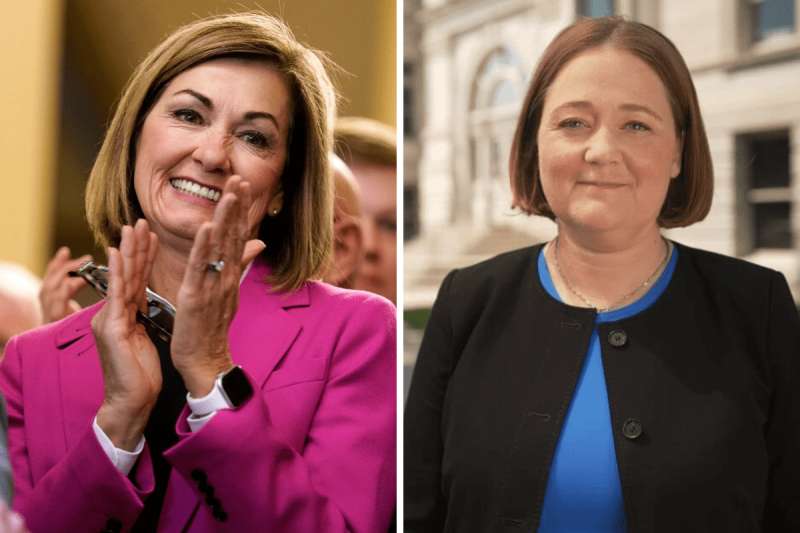
Iowa students, including transgender and nonbinary children, will not enjoy new federal Title IX protections at school because Iowa Attorney General Brenna Bird, a Republican, sued over them in federal court.
On Aug. 1, the Title IX expanded rules went into effect for 24 states across the country, but not Iowa and the other 25 states that sued to block the Department of Education (DOE) from enforcing the rule.
The DOE added some language to the 423-page rule—which protects against a variety of sex discrimination, include pregnancy and sex-based harassment—to expand protections against discrimination.
The update “protects against discrimination based on sex stereotypes, sexual orientation, gender identity, and sex characteristics,” according to a summary of the changes,
In May, Iowa Gov. Kim Reynolds, a Republican, directed Bird to sue the DOE because of those gender identity and sexual orientation protections. A US District Court judge on July 25 issued an injunction and blocked some of those rules from being enforced.
Bird has characterized the rules as a “war on women” and a sign of “woke gender ideology.”
“I will continue fighting protect opportunity and privacy for young women across the country and to make this win permanent,” she said in a press release after the injunction.
“The definitions of “sex” and “gender identity” are different, just as biological males and females are different,” Reynolds said in a July 25 release. “I’m proud that Iowa is part of this lawsuit and I’ll never stop defending the rights of women of all ages.”
Bird and Reynolds have both championed abortion bans that restrict the privacy and bodily autonomy of, predominantly, women and girls in Iowa. Reynolds has also signed laws in 2022 and 2023 discriminating against trans and nonbinary youth by restricting their ability to play school sports, use their preferred names at school, and use bathrooms that align with their identities.
Iowa joined the Arkansas and Missouri-led lawsuit, which is also joined by Nebraska, North Dakota and South Dakota. There are four other coalitions of states suing over the rules and several right-wing groups like Moms For Liberty.
The Title IX changes follow a 2020 Supreme Court ruling in Bostock v Clayton County, where Justice Neil Gorsuch—appointed by convicted felon and former President Donald Trump—held that a sex discrimination ban in the Civil Rights Act includes discrimination based on sexual orientation and gender identity.
That ruling was focused on employment discrimination, but other federal courts have applied the reasoning to Title IX cases since the Supreme Court’s decision. As written, the updated Title IX rules could apply to bans on using a student’s preferred name and banning trans students from the appropriate bathrooms. The new rules don’t eliminate single-gender spaces.
The Department of Justice on July 23 petitioned the US Supreme Court to allow most of the rule to go into effect, using its own arguments as reasoning, but the Court has not responded yet.
According to Chris Geidner, a courts reporter at Law Dork, “The lawsuits brought relate only to enforcement of the Title IX rule. The injunctions do not limit any state or local protections. They do not even limit any federal protections that exist outside the Title IX rule, whether based on the Constitution or federal law.”