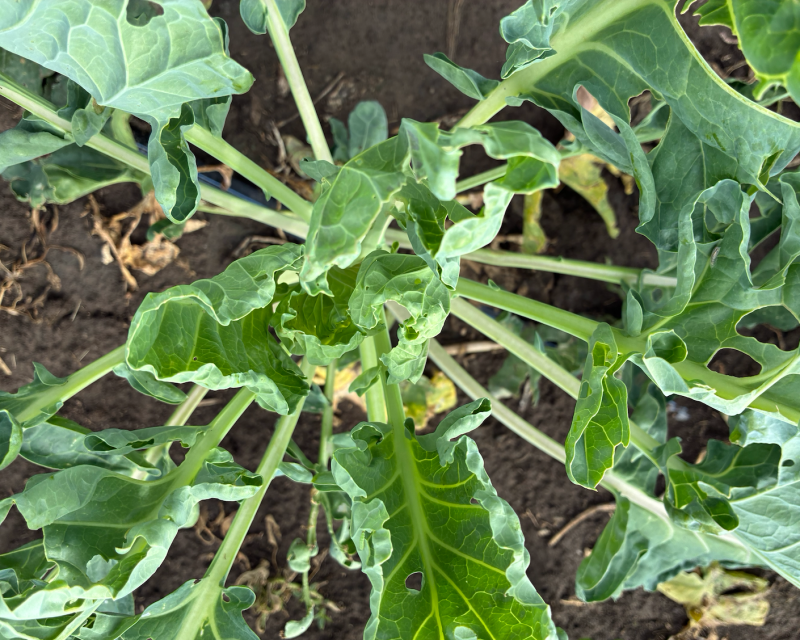
A Page County farmer’s entire crop may have just been ruined by his neighbor’s pesticide drift—and the only punishment is a slap on the wrist.
Shad Swanson is a farmer from Essex in southwest Iowa’s Page County. He makes a living selling food from his 2-acre food farm, the same farm he grew up on.
But unlike his parents, who grew conventionally raised corn and soybeans, he’s farming chemical-free food.
“My main goal is just to grow food for the community,” he told Iowa Starting Line. “A secondary goal is to show other people and even some of the conventional farmers that there’s more to agriculture than just planting corn and soybeans; I profit more per acre than they do.”
But weeks ago, he said he witnessed a chemical sprayed on a nearby farm field floating over his acreage—and it may have destroyed the vast majority of his crops.
“Until this happened, everything was looking better than I’ve ever seen it,” he said. “This was gonna be my best year I’ve had, and my produce was selling as fast as I could pull it out of the ground. And now I’m just like, I don’t even know what to do.”
Swanson was out working in his fields when he says he saw his neighbor spraying chemicals on his own crop.
“I could smell the chemicals drifting over on me, and I actually got nauseous and had to leave the field for a little bit, ’cause it was just spraying right at everything,” he said.
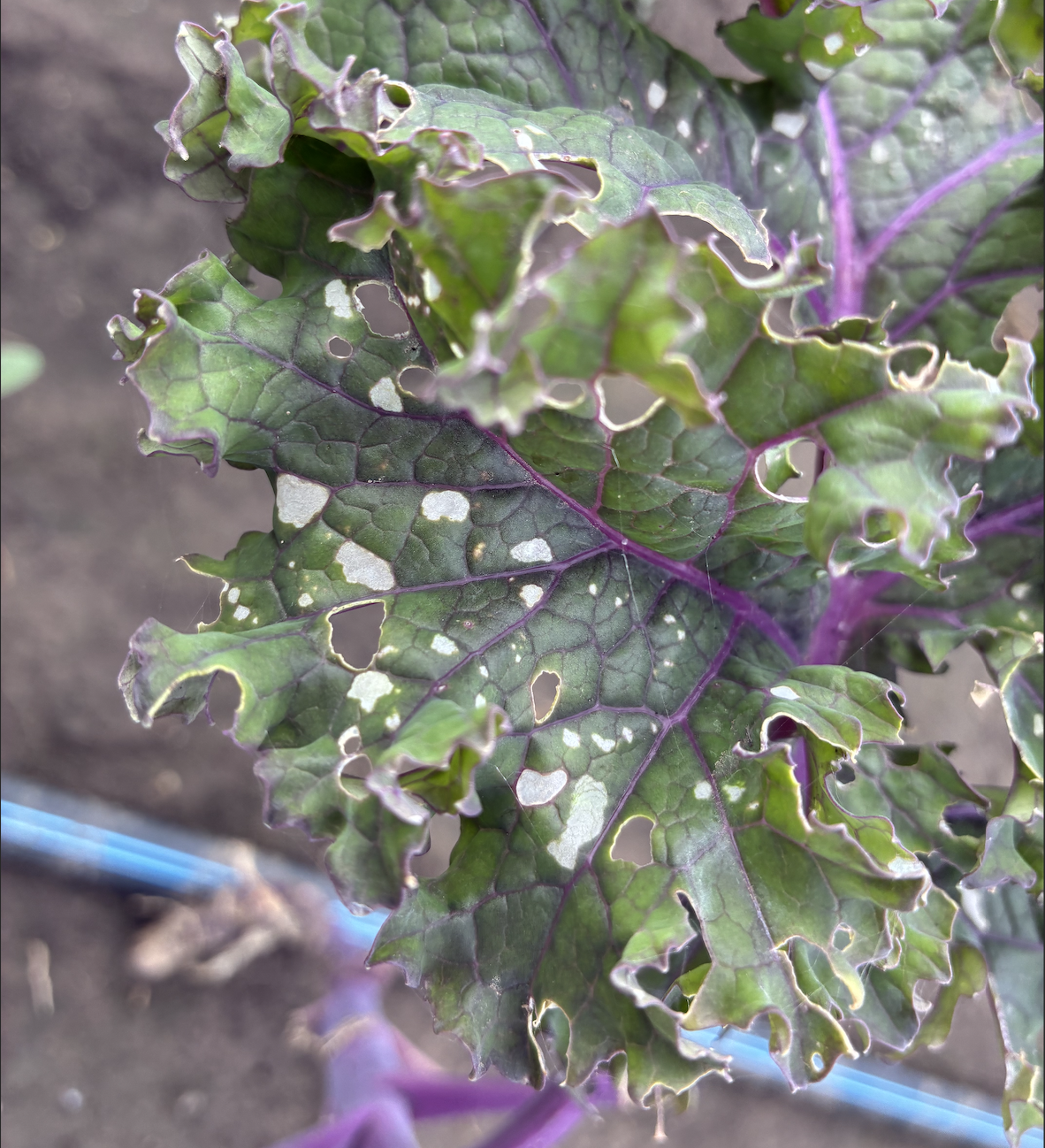
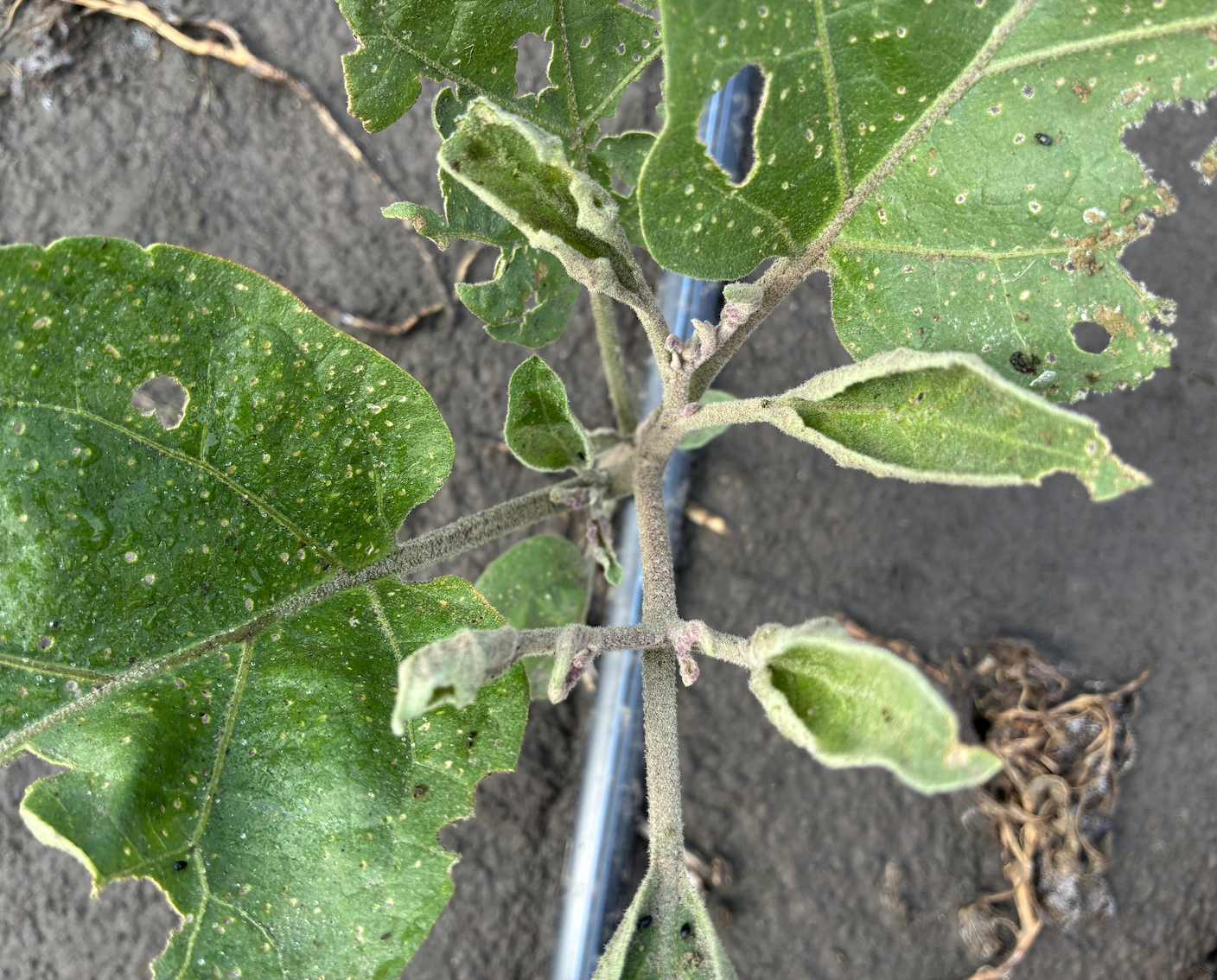
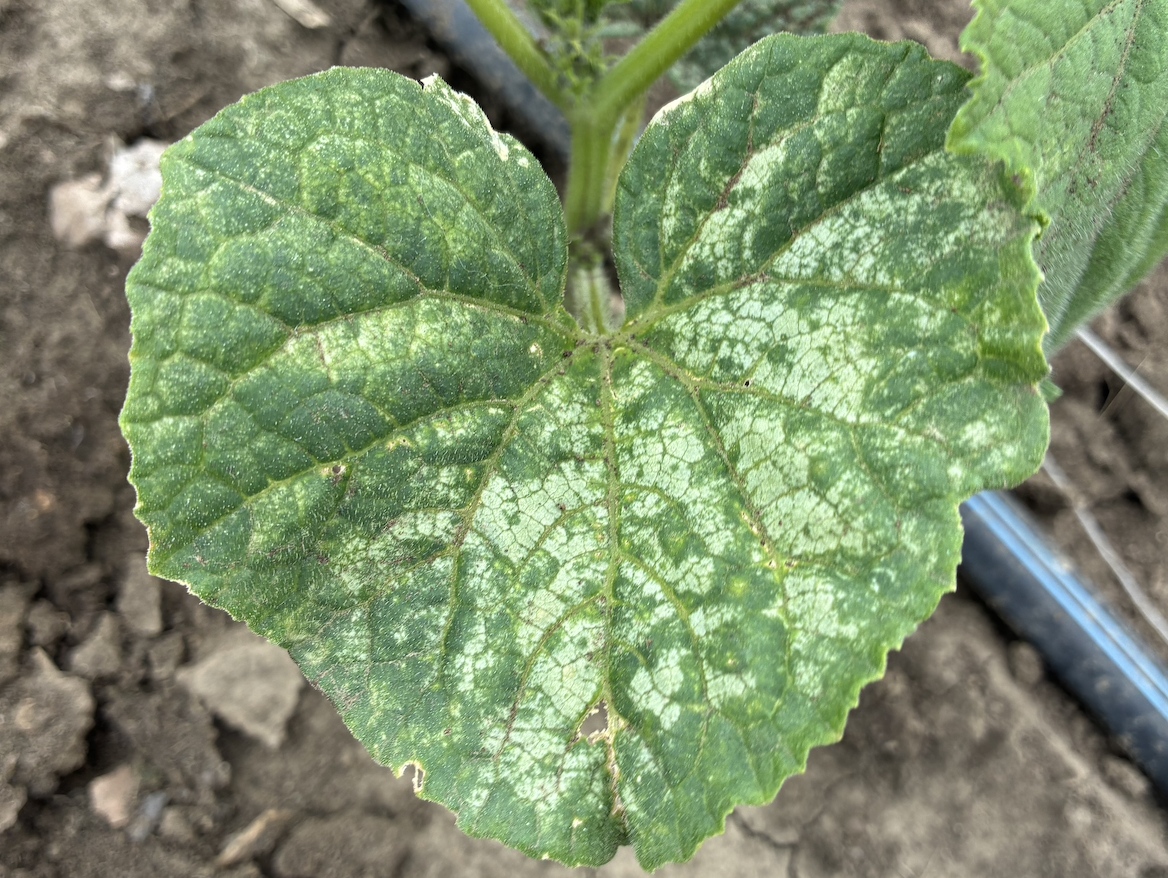
He started noticing damage about five days after, saying it took that long to seep into the plant tissue on his vegetables, herbs, and fruit.
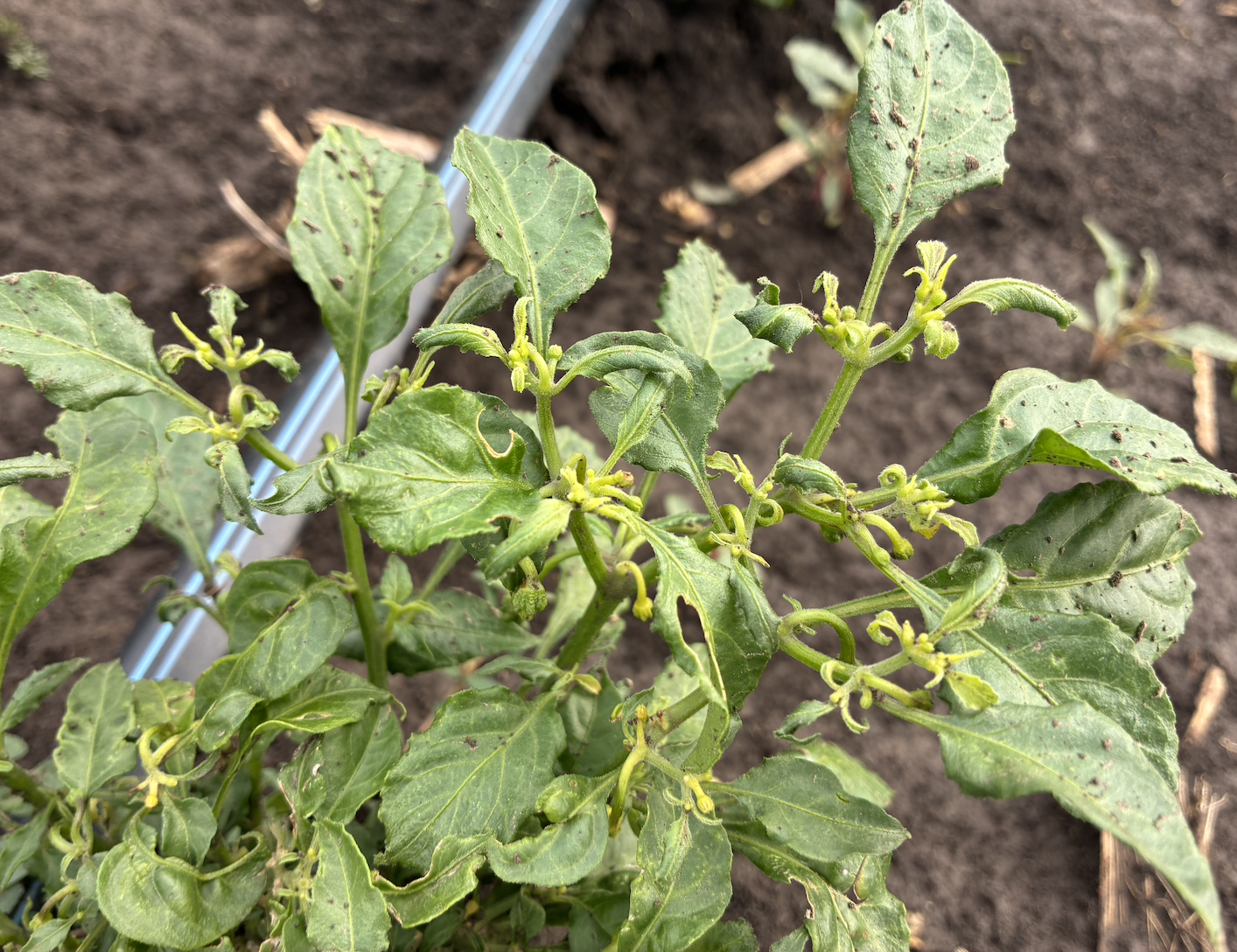
“So you’re gonna get deformed fruits,” he said. “Now I have to tell everybody all year that shit’s been contaminated, and if they don’t wanna buy it, I completely understand, ’cause I don’t want to eat it either.”
He estimates at least three-fourths of his two acres were hit by the chemical, which he thinks was the widely-used herbicide 2,4-D.
“It’s really hard to tell what kind of financial damage that that’s gonna be,” Swanson said. “If everything’s a total loss, I’m looking at between $60,000 and $80,000 worth of damage. I’ve never had it on this large of a scale.”
Swanson called the Iowa Department of Agriculture and Land Stewardship’s Pesticide Bureau, which investigates pesticide drift allegations.
He says they came out right away and took samples. But he says they also told him it would take 6-9 months to get results back from the lab, and another 6-9 months to finish a report on the incident.
“And the first offense is a written warning,” Swanson said. “And the state can’t force them to pay damages. This potentially could destroy my business if I’m not compensated.”
Swanson said he’s not alone—and it’s not just chemical-free farmers affected, either.
“It’s a huge problem,” he said. “All the people I know that live at the edge of towns next to corn fields or whatever, they get hit almost every year. It’s a much bigger issue than anybody’s willing to admit.”
He thinks the Iowa Legislature should beef up penalties, force offending farmers to pay damage to others’ crops, and limit or ban certain chemicals altogether.
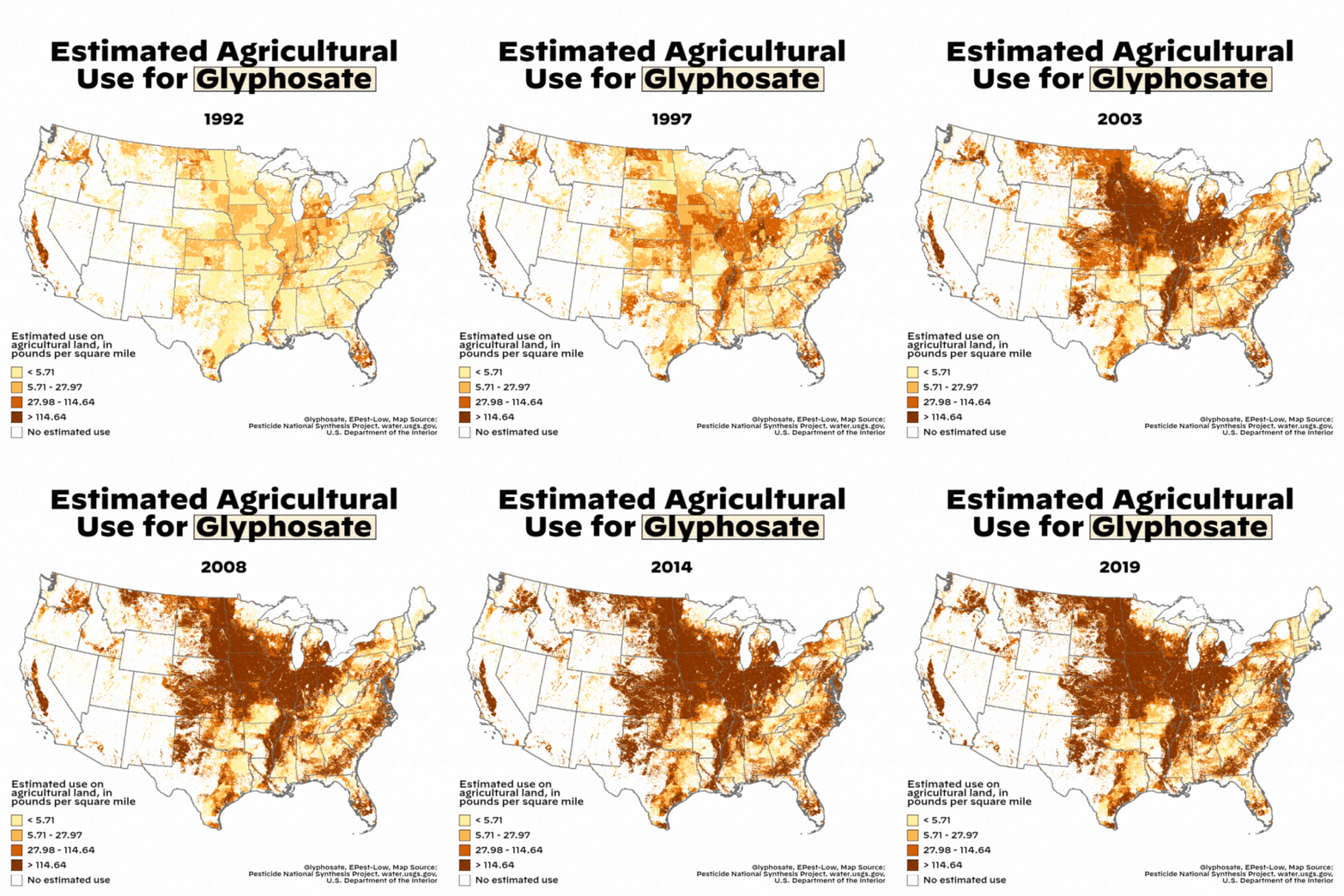
“Iowa is one of the heaviest applicators of pesticides in the country,” he noted. “We also have the highest cancer rates in the country, and there’s no way you can tell me that’s not correlation.”
Swanson said he won’t know for a while how bad the damage will be. But he knows he won’t be able to pay back the $50,000 loan he took out this year to expand his farm—and will probably have to borrow even more next year to stay afloat.
“Which, to me, is financially stupid to go farther into debt, because this could happen all over again next year, and then I’m just screwed even deeper than I was before,” he said.
“The people that are actually growing the food are just getting shit on with no protection at all—and then you wonder why food prices are going up.”