Minding the regulatory gap
Experts point out that regulation doesn’t automatically adjust to the most recent science. It’s not even standard across nations. A 2019 paper found that, of the 1.2 billion pounds of pesticides used in the US in 2016, 322 million pounds were pesticides banned by the European Union; 40 million were pesticides banned in China; 26 million were banned in Brazil.
This evolution in understanding creates what Dr. David Cwiertny, the director of the Center for Health Effects of Environmental Contamination at the University of Iowa, calls a “gray area” where policy still considers something safe while emerging science suggests it may not be. That lag between scientific discovery and policy is time in which vulnerable populations continue to be exposed to something that could be harming them.
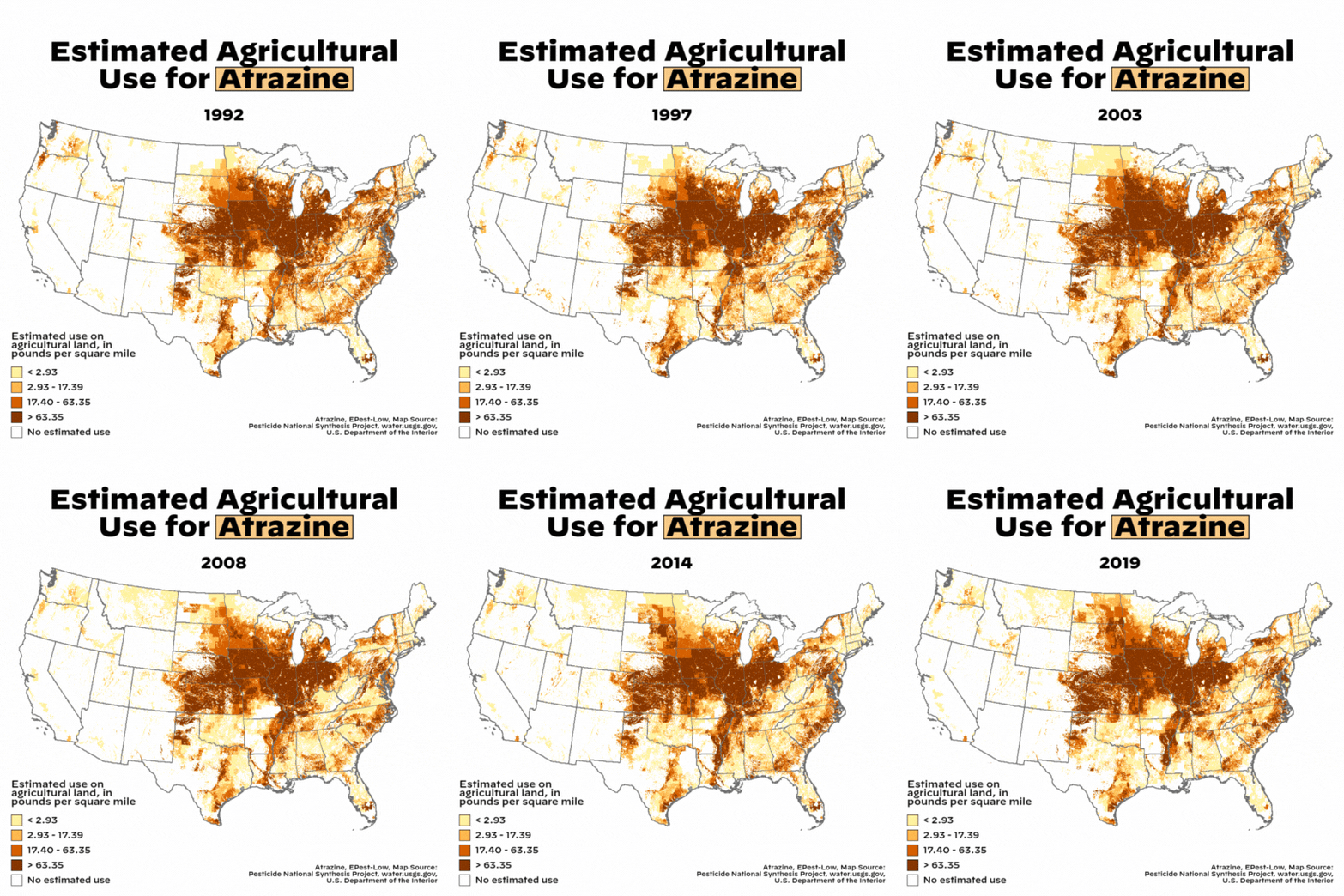
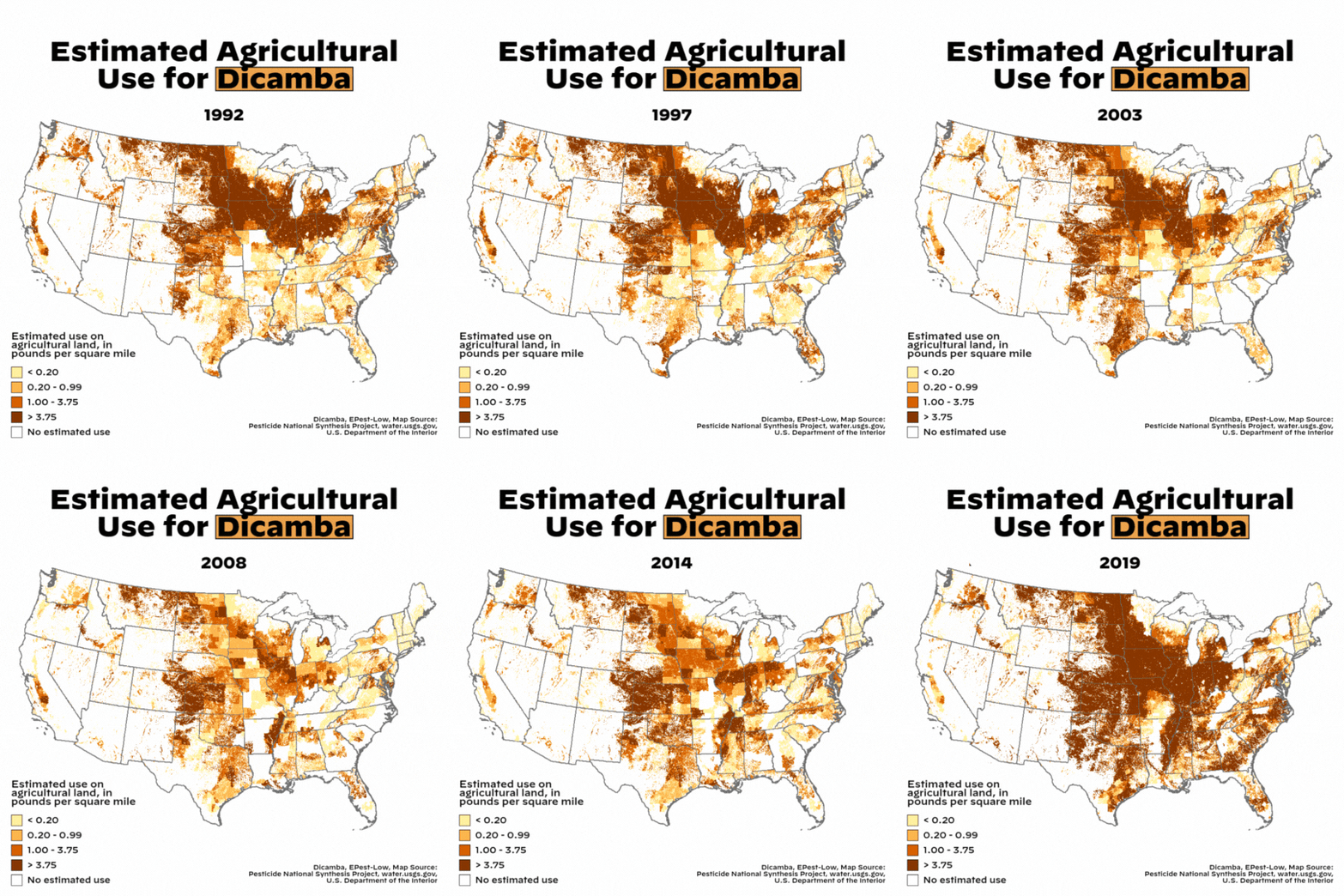
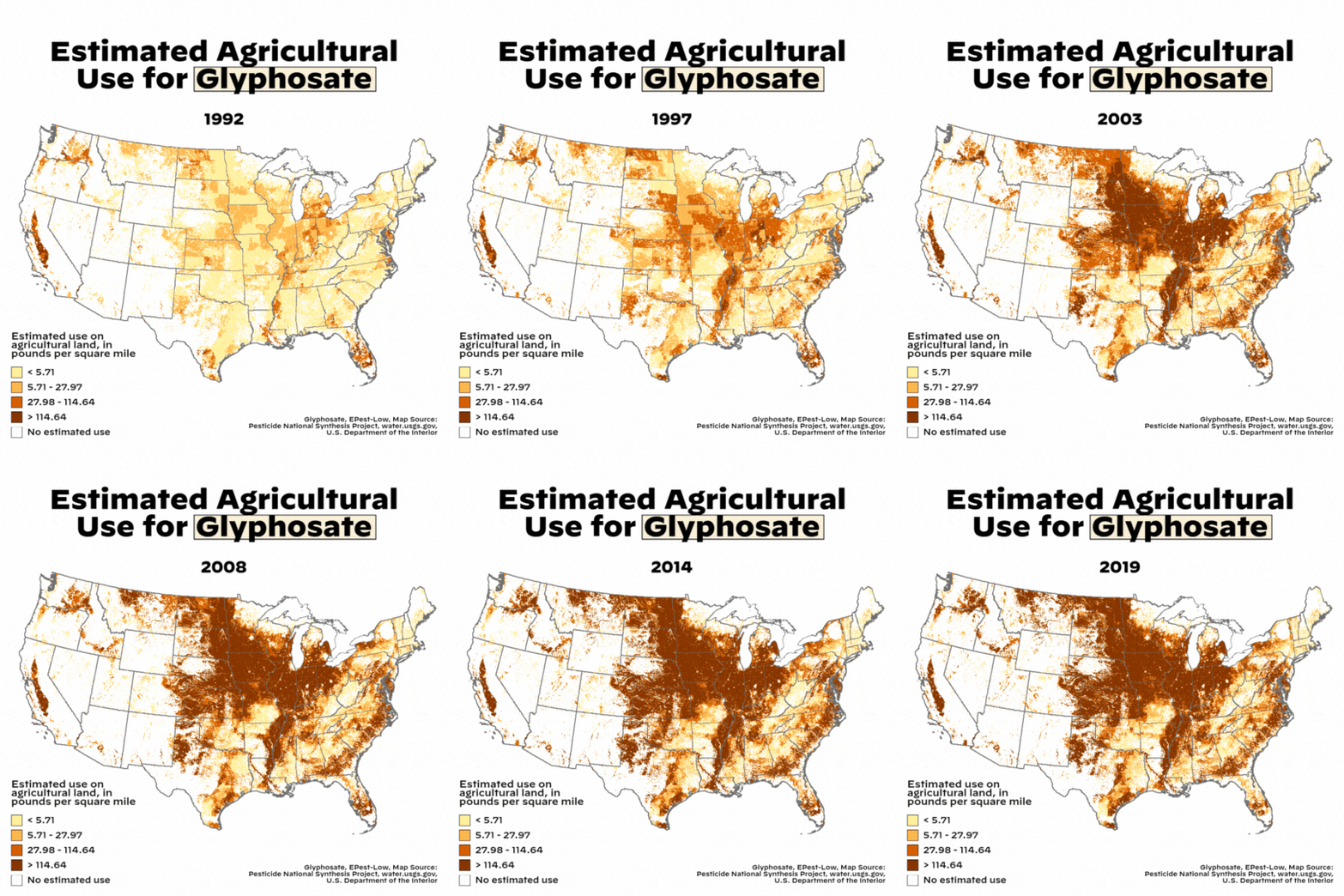
Cwiertny’s team measures pesticide concentrations in waterways, air, and dust throughout agricultural regions. He said they rarely find a water sample that doesn’t contain at least one or two major chemicals, even in remote areas—what Cwiertny calls “ubiquity” that reflects decades of sustained use.
Charles Benbrook, an agricultural economist who has advocated against the increased application of chemicals like glyphosate, has called for the EPA to not approve chemicals based on limited exposure scenarios, but based on the widespread, repeated use that is seen across states like Iowa.
“The pesticide risk assessment and regulatory decision process as carried out by EPA and its sister regulators in the state… is basically broken,” Benbrook said.
He was most recently in Iowa advocating against a bill that would restrict the ability of individuals to sue pesticide manufacturers like Bayer for health issues, such as cancer, that could be linked to the companies’ products.
An analysis by Food & Water Watch found that since the bill was first introduced in 2023, Bayer has spent $209,750 lobbying for it, including registering seven Iowa lobbyists. That is five times what they spent in the two cycles prior, and nearly double what Bayer spent lobbying in Iowa in the decade prior from 2013 to 2023. The bill failed but will likely be back on the table in next year’s session.
The challenge for public health researchers is that this exposure creates a complex web of risk factors that defy simple cause-and-effect relationships. Unlike clear-cut cases of occupational exposure or accidental releases, the kind of chronic, low-level exposure most Iowans face makes definitive connections nearly impossible to establish.
“Here in Iowa, the challenge is there’s a variety of risk factors and it’s not any one thing,” Cwiertny said.
For Don Carpenter, this is an unsatisfying reality. He lives near the Maquoketa River, and each summer, he watches as planes spray cornfields that border its waters.
“ I just want one person—I don’t care which political party—but I just want one person to be like a dog with a bone and just keep harping on this, that we need to do something about it,” he said. “And I don’t have faith in any of ’em that they can do that.”