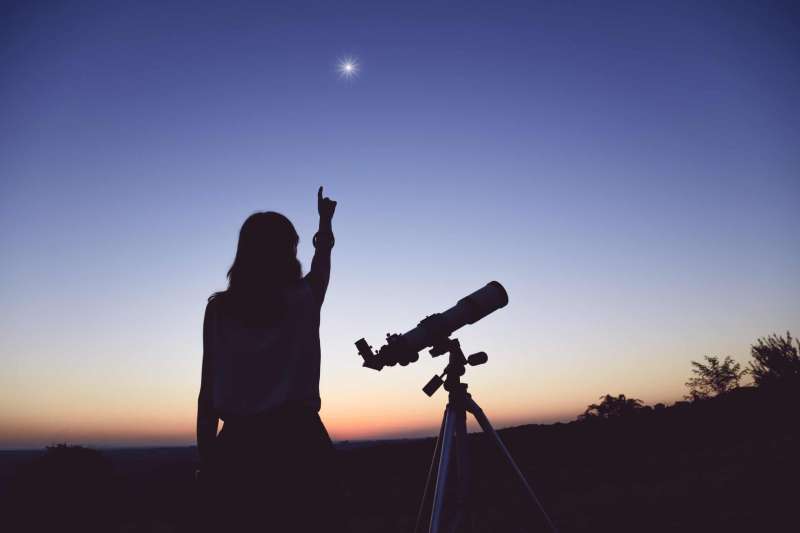
There’s something magical about an Iowa summer night. Maybe it’s the fireflies blinking across a quiet field or the hum of cicadas in the distance. Or maybe it’s the way the stars somehow seem brighter once you leave the glow of the city behind.
This summer, Iowans will have even more reasons to look up. From meteor showers and moonlit skies to telescope viewings and astronomy events, the next few months are loaded with celestial happenings worth staying up past bedtime for.
So grab the bug spray, pack a lawn chair, and maybe download one of those star-identifying apps everyone pretends they fully understand.
June 26: Summer solstice star party
Summer officially begins with the summer solstice in June, bringing the longest days—and some of the shortest nights—of the year. But just because the sun stays out later doesn’t mean the nighttime sky has any less to offer.
On June 26, the Science Center of Iowa will host a free Star Party from 9 to 11 p.m. at the Drake Municipal Observatory, giving Des Moines metro-area residents the chance to explore the night sky through high-powered telescopes alongside SCI staff and volunteers.
The event is designed for curious beginners and experienced stargazers alike, offering views of colorful double stars to distant star clusters and other celestial objects (weather permitting). No tickets or registration are required.
Keep an eye out for more SCI Star Parties throughout the summer, which take place at a different location around the Des Moines metro.
It’s the kind of wholesome summer activity that feels a little nostalgic in the best way—adults pretending they totally remember astronomy terms from middle school science class and everyone collectively saying “wow” when Mercury finally comes into focus through a telescope lens (yes, there’s a chance!)
July 30-31: Southern Delta Aquariids meteor shower
The Perseids tend to steal the spotlight later in the summer, but the Southern Delta Aquariids meteor shower quietly arrives first, offering patient viewers a chance to catch streaks of light darting across the sky in late July. The peak is set for July 30 and 31.
This year’s viewing conditions aren’t exactly perfect thanks to a full moon set a day before the peak, which means brighter skies could wash out some of the dimmer meteors. Still, astronomy fans say the shower can be a bit of a sleeper hit, especially for viewers willing to venture away from city lights (thank goodness Iowa offers plenty of those areas).
The key to seeing meteor showers is often less about fancy equipment and more about location and patience. Find a dark spot, let your eyes adjust for at least 30 minutes, and resist the urge to constantly check your phone every two minutes.
Western Iowa, particularly the Loess Hills region, offers some of the state’s better dark-sky viewing opportunities. On clear nights, the sky can feel surprisingly enormous there.
August 12: Partial solar eclipse
August is bringing one of the summer’s biggest cosmic events: a partial solar eclipse. But only those with proper equipment will be able to see it, since it’s quite a distance away.
During a solar eclipse, the moon passes between Earth and the sun, partially blocking sunlight and creating a dramatic daytime viewing experience. While Iowa won’t experience total darkness during this eclipse, viewers may still be able to see part of the sun obscured by the moon starting around noon.
August 12-13: Perseids meteor shower
Just as eclipse excitement settles down, the Perseids arrive to keep the cosmic joy going.
Widely considered one of the best meteor showers of the year, the Perseids are famous for producing bright, fast-moving meteors and occasional fireballs streaking dramatically across the sky. In 2026, stargazers are getting especially lucky because the meteor shower peaks during a new moon, meaning darker skies and significantly better viewing conditions.
Under ideal conditions, viewers could spot anywhere from 50 to 100 meteors per hour during peak activity. In other words, this is not the year to casually say, “I’ll catch the next one.”
Meteor showers are among the best celestial events for beginners to catch because they require almost no equipment and no astronomy degree. Honestly, you don’t even need to know which way is north. You just need a dark sky, a little patience, and enough caffeine to stay awake past 11 p.m.
For many Iowans, the Perseids have become a sort of annual summer tradition—driving out to the countryside and spending a few quiet hours watching the sky put on a show.
August 14: Perseids Night Sky Event at Hitchcock Nature Center
If you want to fully commit to the meteor-shower experience, Hitchcock Nature Center in western Iowa is hosting a special Perseids Night Sky Event on Friday, Aug. 14.
Located in the Loess Hills near Honey Creek, Hitchcock is already known for scenic overlooks and excellent hiking trails, but its darker skies also make it one of the better places in the state for stargazing.
For the event, the park will remain open until midnight, allowing visitors to spread out across the ski hill area and trails to watch the meteor shower away from city lights. Members of the Omaha Astronomical Society will also be on-site with telescopes to help visitors get a closer look at celestial objects overhead.
Guests are encouraged to bring lawn chairs, blankets, binoculars, and red-light flashlights, which help preserve night vision without flooding the area with bright light. Entry costs $5 per vehicle.
August 21: Public observing night at Van Allen Observatory
Summer skywatching opportunities continue later in August (Friday the 21st) with a public observing night hosted by the University of Iowa Physics and Astronomy Department at Van Allen Observatory in Iowa City.
Held from 9 to 11 p.m. on the roof of Van Allen Hall, the event invites visitors to tour the summer sky using observatory telescopes while learning more about planets, stars, and other celestial objects from astronomy staff and volunteers.
There’s something especially fun about visiting an actual observatory. It taps into that old-school sense of scientific wonder—the feeling that maybe, just maybe, you’re about to discover something extraordinary while climbing the stairs to a rooftop telescope.
Where to watch the night sky in Iowa
While Iowa may not have nationally famous dark-sky parks like some western states, it still offers plenty of excellent stargazing locations if you know where to look—or if you just venture out into the nearest cornfield.
The Loess Hills region in western Iowa is often considered one of the state’s best areas for nighttime viewing thanks to its darker skies and rolling landscapes. Places like Hitchcock Nature Center, Preparation Canyon State Park, and Whiterock Conservancy provide scenic settings far removed from heavy light pollution.
State parks such as Lake Anita State Park and Yellow River State Forest can also offer peaceful nighttime viewing opportunities, especially on clear summer evenings.
And honestly, sometimes the best stargazing spot is simply a gravel road outside town. Enjoy!
This article first appeared on Good Info News Wire and is republished here under a Creative Commons license.
Related: 5 certified dark sky parks in Iowa to best see the stars