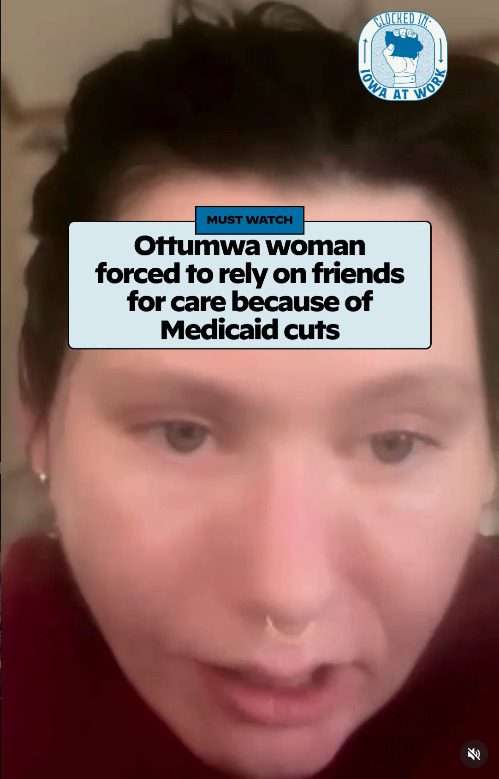
I spoke with an Iowa woman who says the government’s Medicaid cuts mean she’s relying on unpaid care work from her friends.
Christie Cellman is a 39-year-old Ottumwa native. She has her master’s in social work and is currently a PhD student at the University of Iowa.
She’s also disabled, with a condition that requires frequent care—care that the government has recently started denying her.
Watch the latest edition of Clocked In:
@iowastartinglineChristie Cellman wants to help other disabled Iowans like herself. Instead, she’s fighting Iowa’s health care system and relying on the generosity of her friends–an unpaid care force making up for the Medicaid shortfall.
Cellman is a licensed master social worker who uses a power wheelchair and a non-invasive ventilator to breathe.
Despite her limited mobility, she’s furthering her education, and wants to use her training to help advocate for disabled Iowans like her, particularly in setting up crisis teams to work with Iowa police departments to help de-escalate situations.
But that’s all possible, in part, because of the home-based care she relies on—care she’ll need for the rest of her life.
That home-based care, meant to keep disabled people out of institutions, is supposed to be covered by Medicaid.
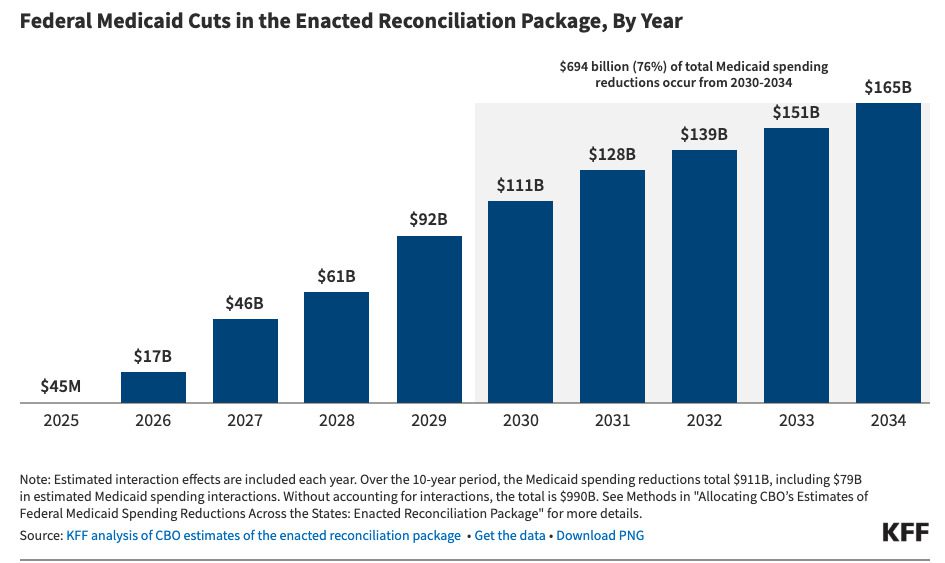
But last year, President Trump signed the One Big Beautiful Bill into law, which will cut $911 billion from Medicaid over the next decade. In Iowa, that means a 17% drop in federal Medicaid funding, or $9 billion.
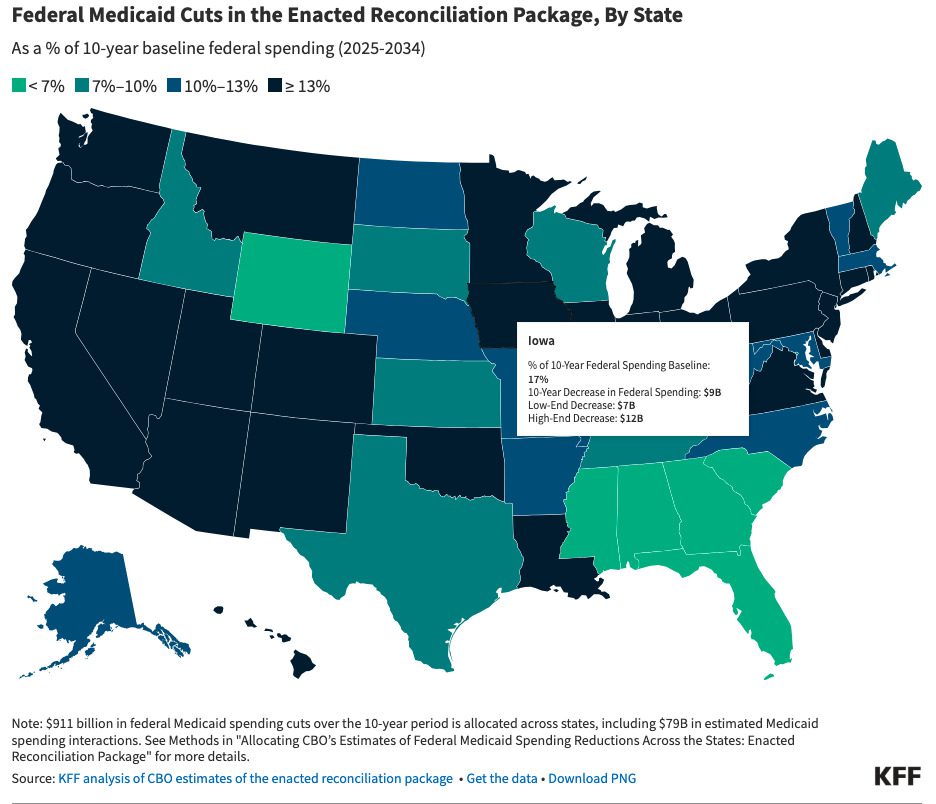
Instead of making up that difference, state officials appear to be slashing funding for home-based health care for disabled Iowans, impacting their ability to work.
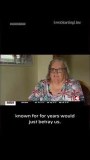
“I had my units severed by two-thirds,” Cellman told me. “I was given 45 hours for an entire month. Forty-five hours for an entire month is not sufficient whatsoever.”
Cellman is still fighting to get the care she needs.
“When I tell you that I have addressed this at all levels, I have addressed this at all levels,” she said. “I have talked to my caseworker, I switched caseworkers, I switched [managed care organizations], I contacted senators, I contacted people that are running for seats, I’ve contacted the governor.
”It’s just exhausting.”
In the meantime, she’s turning to friends and family for help going to school or work. Those folks support her without any compensation, and while working their regular jobs.
“Literally, we have a spreadsheet, and they’re volunteering their time,” she said, noting they all use a group chat. “They sign up for several time slots throughout the day to come and help me with like self care and hygiene and going to the bathroom and things like that.”
She’s grateful for those people. But she knows the government’s failures shouldn’t be foisted upon them—particularly at a time when everyone’s health care expenses are on the rise.
“All these people are coming into my home for absolutely nothing,” Cellman said. “That’s community.”
Are you seeing your Medicaid units slashed? Reply and tell me your experience.