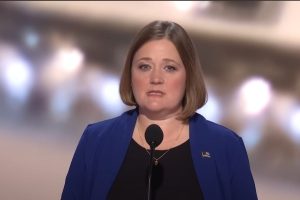
It’s not just about education—it’s about controlling what teachers can say in their own workplace.
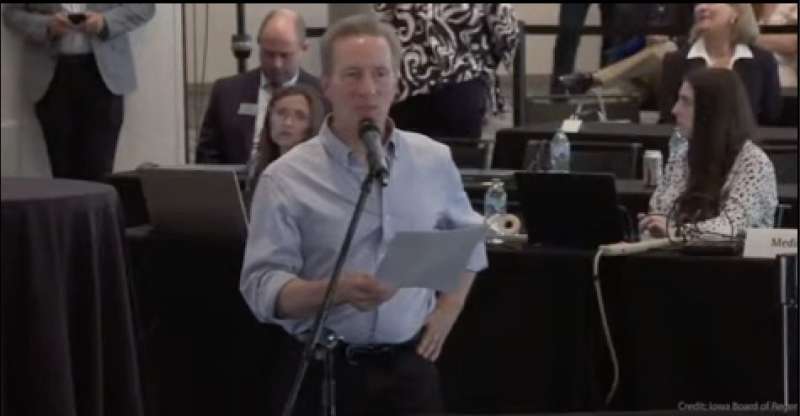
“They’re all trying to reign in higher education in some way, from a conservative perspective,” said Dr. Chris Martin, a professor of communication and media at the University of Northern Iowa. “ It’s really trying to impose a conservative view, and it’s something that Iowans never asked for.”
Chris Martin is worried about several Iowa bills that could be signed into law this year that could severely restrict who, and what, gets taught in college.
“As it gets closer towards the end of this legislative session, we have more of a sense for what the worst possible things are,” he told me.
Martin is the president of United Faculty, the union that represents around 500 UNI faculty members. And they’ve been paying attention to how Iowa legislators have approached higher education over the last few years.
“This year, we were hit with about 22 bills that had to do with higher education, so more than we’ve ever had to deal with before,” he said. ”Like, let’s try to reign in the universities, make them less free and make them bend towards a conservative type of politics.”
But it’s been tough going it alone. So last summer, United Faculty joined up with the AAUP faculty unions at the University of Iowa and Iowa State, as well as COGS, the graduate student union at Iowa, and the Iowa Federation of Labor, to form the Iowa Higher Education Coalition and try to increase the pressure on legislators.
“I think it’s the first time we’ve all really kind of worked together so we can kind of speak with one voice for UNI, Iowa and Iowa State,” Martin said of this recent effort. “ If we’re responding to these things that have to do with faculty and the workplace at universities, we should probably all be working together and be on the same page.”
@iowastartinglineIt’s not just about education—it’s about controlling what teachers can say in their own workplace.
3 bills to watch
Martin says there are three bills the Iowa Higher Education Coalition is particularly worried about. All of them recently passed through the Iowa House.
HF 2487 and SF 2303 “would basically censor anything having to do with diversity, equity, or inclusion,” Martin said, including critical race theory. And the Board of Regents—all appointed by the governor—would be empowered to review and eliminate courses if they believe professors are violating that.
“So it’s not only just trying to censor us in the classroom, but it also limits what students could take,” Martin said. “And they should have the freedom to say, ‘I wanna study this.’”
HF 2361 and SF 2232 would require public universities to have specific “core curriculum” in civic literacy. While Martin said he supports more civics education, he sees the curriculum as conservative indoctrination.
“It’s kind of a ‘great man’ theory of American history and government,” Martin said, noting such curriculum whitewashes shameful yet important US history, like slavery. “So we worry about these kind of very conservative, limited takes on what’s American history or what’s American government.”
HF 2245 and SF 2359 would change how presidents are selected at universities. Martin said the current process involves stakeholders from students, administrators, alumni, the community, and more. The proposed legislation would give the Board of Regents—again, political appointees—majority rule.
“It would allow them to cherry pick and appoint any kind of political type of appointee and not have any repercussions,” Martin said. “This would be disastrous, I think, for the culture and the economy of Iowa.”
Legislation like that has been coming directly from conservative think tanks like Civics Alliance, which believes education is, quote, “a recruitment tool of the progressive left.” Civics Alliance writes model legislation for states to adopt that restricts both K-12 and college academics to narrow viewpoints.
Martin says Civics Alliance even congratulated Rep. Taylor Collins, a Republican from Des Moines. Collins chairs the House Higher Education committee, which introduced all three of those bills from model legislation promoted by Civics Alliance.
“They said ‘he’s been doing a great job for us,’” Martin said. “I hope people realize that that’s who’s calling the shots here.”
Martin says the Coalition has been contacting senators about those bills, and hopes the broader public will do so too, before the next funnel on Friday, March 20.
Another group, Stop House File 2513, is rallying at 4 p.m. Saturday, March 21, at the Iowa Capitol in opposition to a bill that would impose a university hiring ban on researchers from certain countries. Martin says the Coalition is against that bill, too.
“We want students to do critical thinking. We don’t want them to have, you know, just one narrow point of view on politics,” he said. “I don’t think the people of Iowa want us to be known as having very partisan public universities.”