
After a summer of back-to-back headlines addressing reproductive rights in Iowa, many college students face frustration and confusion in what is supposed to be one of the most memorable, formative times in their life. But when your bodily autonomy is up for grabs, how great can the college experience really be?
Despite that a majority of college students want to keep abortion safe and legal, Iowa’s Republican politicians have made extensive efforts to restrict reproductive health care.
Many students didn’t want to see the overturn of Roe v. Wade, let alone near-total abortion bans in the state.
So, what do college students—and one professor—have to say about all of this? Starting Line spoke with five voices across Iowa to hear their thoughts.
Anna Behrens: ‘College students want and need reproductive healthcare’

Anna Behrens, president of the University of Iowa Student Advocates for Planned Parenthood, said advocating for reproductive rights in college builds a sense of community.
“It’s important to see that other people do care about this, and see that there are other people who want to actively work on the issue and fight for it in Iowa,” said the 21-year-old West Des Moines native.
During her time at Iowa, Behrens has served as a resident assistant and peer educator and has heard directly and on multiple occasions about the need for reproductive health care from students. She said one major concern to safety on campus is the prevalence of rape culture, which is why it’s important students have safe and legal access to abortion.
“In college, there’s a lot of talk about public safety, public health, safe sex, and all of those things,” she said. “But if there comes a time where abortion is completely inaccessible in Iowa, marginalized groups will be affected more drastically and in a more dangerous situation.”
Behrens is right. Women ages 18-24 are at an elevated risk of sexual violence, according to the Rape, Abuse and Incest National Network. In college, 26.4% of undergraduate females and 6.8% of undergraduate males experience rape or sexual assault from physical force, violence, or incapacitation.
Educational institutions also play a part in helping students find the care that they need, Behrens said noting reproductive rights represent a commitment to health, equity, and inclusion.
“Speaking out as a younger person gives hope,” she said. “You think, maybe everyone in my generation can get it right this time and protect everyone’s rights that they deserve.”
Devika Pharasi: ‘Reproductive healthcare is not political matter’
Devika Pharasi, a senior at the University of Iowa, believes bodily autonomy is synonymous with freedom.
“When we were young women, young girls, we had this sense of independence that we were learning,” Pharasi said. “That independence is so relevant in our 20s, when we’re biologically most fertile, and matters so much to us. And yet, as we grow up, we feel it being stripped away.”
At its core, reproductive health care, comes down to sex said the 20-year-old from Fairfield. In college, people often talk about men having sex, but rarely women.
“The second we start talking about sex for reproductive and sexual health reasons, it’s a taboo subject and stigmatized as ‘impure,’” Pharasi said. “When we talk about sex in a feminine way, it turns into something you can’t talk about. Then when we talk about sex in a masculine way, we’re dehumanized and demoralized.”
Being able to turn sex into a conversation that ultimately objectifies women leads to reproductive rights being stripped away, Pharasi added.
“[The conversation] ends up with reproductive health seeming like an outside, super liberal, socialist thing, just for women to have access to basic healthcare,” she said. “We need to look at reproductive health as a conversation about humanity and human rights rather than a way to isolate women’s rights.”
Maia Boell: ‘Access to abortion is an intersectional issue’
Maia Boell, a Carroll resident and soon-to-be freshman at the University of California in Berkley, said under normal circumstances, they would never need an abortion. But when queer people are assaulted, they often have no choice.
“Rape is a thing, sexual assault is a thing, especially on college campuses,” they said. “I’d like to say it’s never going to be an issue for me, but I don’t know.”
LGBTQ+ people are more likely to face sexual violence than straight people, according to the Human Rights Campaign:
- 44% of lesbians and 61% of bisexual women experience rape, violence, or stalking by an intimate partner
- 26% of gay men and 36% of bisexual men experience rape, violence, or stalking by an intimate partner
Boell, 18, has been active in the fight for reproductive rights in Iowa. They protested abortion bans at the Iowa State Capitol, created a position statement for comprehensive sex education, and wrote an op-ed in their local paper, the Carroll Times Herald.
“When a lot of the misinformation subsides, people start to realize that, yes, their argument is valid, but it’s just not their choice,” Boell said. “And understanding that it is going to take time and take building a lot of empathy across the board because of all the hard feelings there.”
As someone who used to be anti-abortion, Boell said understanding access to abortion comes from education.
“A lot of colleges take the stance that’s more middle ground, which is vague and ambiguous,” they said. “It’s a scary time for anyone needing an abortion, which is why colleges need to take the stance and clearly state abortion is healthcare.”
Scout Peery: ‘Students can create change’
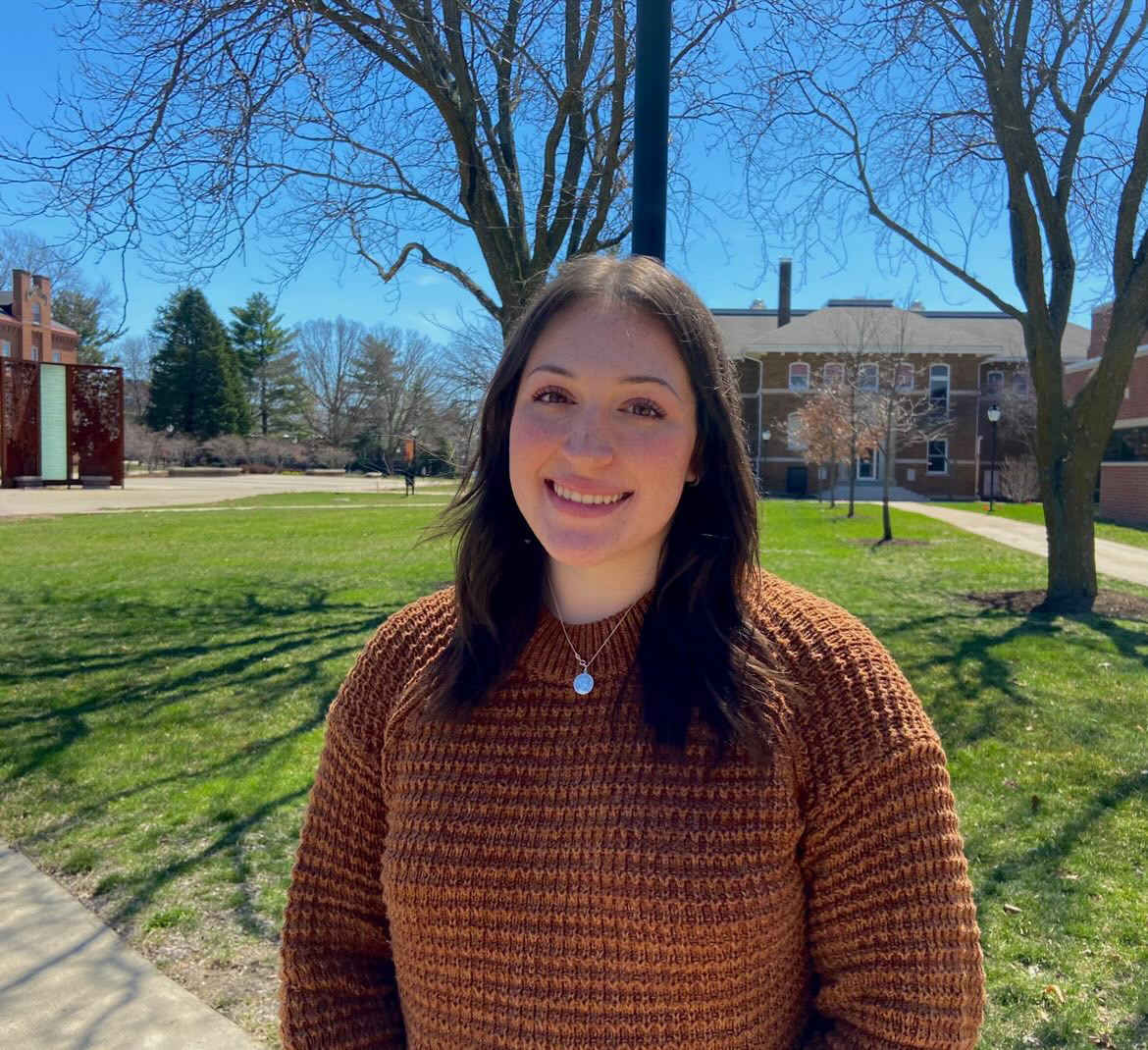
Scout Peery, a senior and student body president at Simpson College in Indianola, has used her leadership role within the college to support those in need of reproductive care.
“We have tried to make sure women have resources on campus that otherwise might be harder to reach,” Peery said. “We have emergency contraceptives in our health department with decreased prices than what’s typically found at a drugstore.”
Peery has also worked to provide resources for periods and other hygiene necessities.
“We’ve donated a lot of money to make this happen because we want to support students through and through,” she said.
Originally from Pittsburg, Kansas, the 21-year-old has seen the battle for reproductive rights firsthand. Last year, Kansas voted to keep abortion legal after a ballot referendum.
“I drove through my whole county last year and everyone had a sign saying ‘vote yes,’ but our county ended up voting against the ban,” Peery said. “It was really powerful because it really showed that the people who scream the loudest are not the opinion of the general population.”
Peery hopes to see a referendum vote in Iowa to truly show the number of people who want to keep their right to choose for their own bodies. Until then, she said colleges and universities need to work to keep students educated on the important issues.
“Many students who aren’t politically engaged also don’t read the news,” she said. “Many students probably didn’t even know about the special session until it was far too late.”
There should be a directory on campus for students to find the resources they need and non-politically-motivated updates on politics.
“We’re young adults coming into society, making our own decisions for ourselves and our bodies,” she said. “It’s a difficult place for any young person to be in, especially in college when you don’t know what your future will look like. It’s very important we allow everyone their own independence.”
Professor Sydney Ewerth: ‘Teachers play a bigger role than they think’

Sydney Ewerth, University of Iowa Idea Visiting Assistant Professor, said it’s the role of educators to provide a safe space in the classroom.
“It should be an easy decision to support our students when they want advice and support pursuing reproductive healthcare, but it’s hard to say what it’ll take to get there,” she said. “A widely accepted part of any syllabus is Title Nine, which says to respect others and their religions, race, and gender. Students needing reproductive healthcare should have the same support.”
Ewerth completed a bachelor’s of fine arts at Augusta University in Georgia in 2013, and her master’s of fine arts at the University of Alabama in 2017. Since graduating, she has stayed in higher education and watched access to reproductive health care fade.
“Access to reproductive healthcare has not gotten better, it has changed for the worse,” Ewerth said. “It’s very sad to see because every woman I know has had trauma regarding their bodily autonomy. I heard the stories when I was a student myself, and now I have students confiding in me.”
Ewerth has volunteered to stand outside abortion clinics during her time teaching in Louisville, Kentucky, where she has watched women face additional trauma from hateful people.
“To have a grown man say to my face, ‘Aren’t you glad your mother didn’t abort you?’ is just horrific,” she said. “Imagine what they said to the women who actually needed the care.”
Bodily autonomy protects women and provides safety. Eithout it, women will inevitably feel shame, guilt, and loneliness during moments they should be supported and cared for, Ewerth said.
“In a university, young people are branching out,” she added. “Life is messy, crazy, and chaotic. You’re meant to learn new things during those formative years, which makes reproductive healthcare such an empowering topic that must always stay relevant.”
By Grace Katzer
07/31/23
If you enjoy stories like these, make sure to sign up for Iowa Starting Line’s newsletter.
Have a story idea for me? Email grace@couriernewsroom.com, or find me on Twitter, Instagram and Facebook.
Iowa Starting Line is part of an independent news network and focuses on how state and national decisions impact Iowans’ daily lives. We rely on your financial support to keep our stories free for all to read. Find ISL on TikTok, Instagram, Facebook and Twitter.