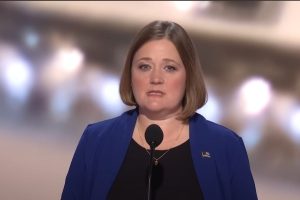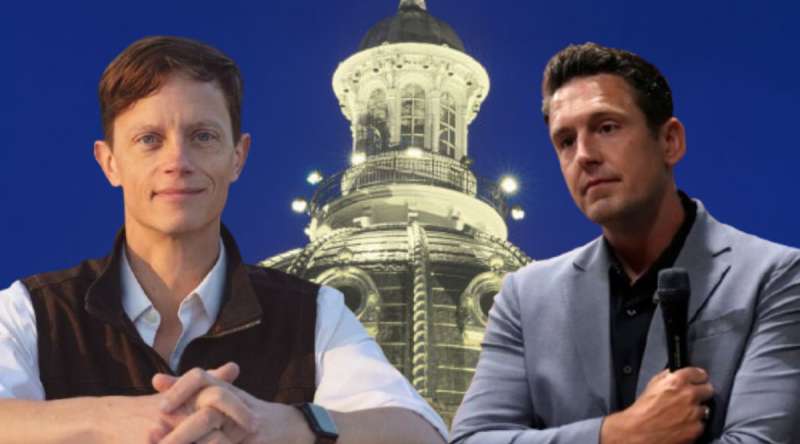
Iowa hasn’t picked a governor without an incumbent on the ballot since Terry Branstad retired in 2017. This November, it will. Gov. Kim Reynolds announced in April 2025 she wouldn’t seek a third full term, setting off the most wide-open Iowa governor’s race the state has seen in years; one that took a hard left turn even before the general election started.
State Auditor Rob Sand, the only Democrat holding statewide office in Iowa, ran unopposed for his party’s nomination, pitching a cross-partisan campaign that’s “not redder or bluer, but better and truer.” In comparison, Republicans got a shock when Zach Lahn won the nomination. Lahn ran as an outsider, taking on “big ag” and “big pharma.” In the primary, he managed to edge out the Trump-endorsed US Rep. Randy Feenstra.
Both campaigns have leaned into “none of the above” energy: Sand talks about breaking up the two-party system, Lahn about breaking up corporate power. But the differences between them are real, and they add up to two very different Iowas. Here’s where they stand.
The economy and your cost of living
Sand’s starting point is a warning about where Iowa ranks: 49th in the nation for economic performance and 48th for personal income growth. His plan would raise Iowa’s minimum wage from $7.25 an hour to $12 an hour in phases, with automatic cost-of-living increases after that. He’s also pitching a “Statewide Work, Statewide Jobs” plan to let state employees work from any of Iowa’s 99 counties instead of concentrating jobs in Des Moines, a new “Office of Rural Prosperity” to be a single point of contact for rural communities across state government, and rules cutting red tape for small businesses with 10 or fewer employees.
“The economy has not been working for working people,” Sand said. “It’s been favoring those at the top.”
On land, he’d raise taxes on out-of-state landowners and ban hedge funds and LLCs from large-scale Iowa land purchases.
Lahn’s economic pitch is aimed less at wages and more at asset prices and where state money flows. He wants to lower property taxes by raising rates on “Wall Street investors,” ban hedge funds from buying up single-family homes, and redirect state economic development dollars toward Iowa-owned companies instead of out-of-state or foreign corporations.
Healthcare and Iowa’s cancer crisis
This is the issue both campaigns keep coming back to. Both candidates cite Iowa as having the second-highest rate of new cancer diagnoses in the country and the fastest-rising rate of any state.
Sand’s healthcare plan, “A Healthier Iowa for All,” centers on reversing Medicaid privatization on his first day in office, which he says would fix “a shockingly high amount” of illegal denials of care. He’d also raise Medicaid reimbursement rates to try to stop rural providers from closing, regulate the middlemen who set prescription drug prices—known as pharmacy benefit managers, or PBMs—so patients can shop for the lowest price instead of being steered to a pharmacy the PBM itself owns, and expand telehealth coverage.
“PBMs have a business plan oriented around making things as secretive and confusing as possible,” Sand said.
On cancer specifically, he wants to create a cancer task force inside Iowa’s Department of Health and Human Services and match Nebraska’s $20 million investment in cancer research — more than six times Iowa’s current $3 million, plus higher taxes on tobacco and nicotine products and a public notification system when local drinking water tests above federal nitrate limits.
Lahn has said he wants to carry on Gov. Kim Reynolds’ legacy. In that vein, Lahn wants to continue the privatization of Medicaid.
“I don’t think the government would do a good job of delivering healthcare for the people of Iowa,” Lahn said, according to Iowa Capitol Dispatch. “I think that the private sector can do a great job delivering this, but the government has to hold them accountable. We have to make sure we’re getting the right care, proper payment, and also I will not allow any of these companies to use AI in denying coverage from people.”
In the past, Lahn advocated against Medicaid expansion as the state director of Americans for Prosperity Montana. Lahn’s platform calls for independent state safety testing of agricultural chemicals and redirecting university research funding toward the cancer crisis.
Farms and water quality
Iowa has lost roughly 10,000 farms over the past two decades. Lahn’s proposed approach to this issue leans on incentives: refundable tax credits for farmers who adopt “deep banding” — a technique that places fertilizer below the soil surface instead of spreading it on top, in order to reduce ag chemical runoff — and financial help installing buffer strips along waterways.
“I believe that people want to do the right thing in the first place,” Lahn said, framing his approach as addressing root causes rather than what he calls “Band-Aid fixes.” He also wants to restrict foreign and out-of-state ownership of Iowa farmland and file antitrust suits against agricultural input companies he says behave like monopolies. His campaign disputes any current ties to the Koch network despite his history in leadership of Americans for Prosperity, its political advocacy arm.
Sand’s plan is more regulatory: tax credits for farmers who adopt state-approved nutrient management plans, restored funding for water quality monitoring after the Legislature diverted those resources in 2023, public manure-management records, state investment in anaerobic digesters that convert manure into biogas, and opposition to legal immunity for chemical companies.
“We shouldn’t be doing immunity for chemical companies that are sickening Iowans,” Sand said. He’s also pointed to real numbers behind the urgency: Iowa’s Raccoon and Des Moines rivers hit nitrate levels of 17.58 milligrams per liter this year, well above the federal safe drinking water limit of 10, with agricultural runoff blamed for roughly 80% of the state’s river contamination.
The running mates have gotten pulled into this fight, too. Sand’s campaign has said Lahn’s pick, state Rep. Derek Wulf, voted in 2023 to cut water quality monitoring funding. Lahn’s campaign has countered that Sand’s running mate, Dave Muhlbauer, was fined $7,000 by the state over manure runoff from his family’s cattle feedlot.
Schools
Both candidates say they want to return Iowa to a top-five spot in national education rankings, a status the state has slipped from in recent years. Their paths toward achieving this don’t overlap much.
Sand wants universal all-day pre-K and tighter rules on Iowa’s private school voucher program, which he says will cost about $520 million in diverted tax dollars this year. One report found 80% of that money going to families already enrolled in private schools before the voucher program existed. The per-child voucher amount is $5,400. He calls the program, as currently run, “the second biggest invitation to waste, fraud and abuse of Iowa tax dollars” and would require annual audits of participating private schools, spending rules, income limits on eligible families, and services for students with disabilities. “I support Iowa families making the decision that’s best for their kids,” Sand said, framing this as accountability rather than opposition to the voucher concept itself.
Lahn, who says he spent eight years working in education before touring “innovative” schools nationally, wants to give public schools “innovation waivers” freeing them from some standardized testing and graduation requirements. His plan also calls for letting students move at their own pace instead of by grade level and building out apprenticeship tracks for students not headed to college. He supports keeping Iowa’s existing voucher program—a direct contrast with Sand’s push for more oversight of it.
During the primary, Lahn’s campaign put $1 million behind a TV ad called “Freedom” in which he pledged to “reclaim the curriculum from the Marxists” and said too many schools “teach kids to hate our country, our history and our religion.” The ad drew pushback, including a Gazette letter to the editor calling it “an insult to educators and voters.” His platform also includes revoking the license of any teacher he considers to be “pushing a political agenda in the classroom.”
Immigration
Lahn has said he’d ban benefits for undocumented Iowans and stop the state and its universities from hiring workers on H-1B visas — a visa category for skilled foreign workers in specialized jobs.
“Iowa people will do these jobs. I reject the idea that our people won’t do these jobs,” Lahn said at a candidate forum, calling H-1B “one of the most abused immigration programs that we have.”
In comparison, Sand has questioned the logic and fairness of deporting immigrants who are following the rules and supporting sectors like dairy and meat processors—big Iowa businesses—that benefit from immigrant labor.
“To me this is a pretty simple question, right? If you are working, if you are following the rules, and have no criminal record, if you’re paying your taxes, why would you want people who are doing those things to feel unsafe in the state of Iowa?” Sand said at a town hall.
Abortion
Lahn describes himself as “unapologetically pro-life at conception,” a position he says extends beyond birth to “healthier food, less medication for children and clean water.” He has carved out a stance that is more restrictive on reproductive healthcare than Iowa’s near-total ban on abortions.
During a debate, Lahn said that when his family underwent in vitro fertilization, they refused to discard some of the created embryos—a common practice among couples family planning with IVF.
“My wife and I went through a process and we were at a fertility clinic. We are now banned for life from that clinic because we refused to discard the embryos and the ones we refused turned into our youngest son, Fritz,” Lahn said, according to Radio Iowa. “And so that’s how far you have to go with this.”
Sand has said he would veto any further restrictions on abortion access as governor. He has said he supports protecting and maintaining accessibility for contraception, IVF, and surrogacy options. During his many town halls, Sand has connected the state’s restrictive abortion laws to worsening the state’s OB-GYN and rural maternal healthcare shortages, noting that medical professionals want the ability to treat patients properly without waiting for health conditions to severely deteriorate.
What’s not on the platform pages
Lahn’s populist, anti-corporate branding sits alongside a résumé built inside the Koch political network — years as Americans for Prosperity’s state director in Montana and, later, Colorado staff jobs for national Republicans before he co-founded a $10,000-a-year private school in Wichita financed by Chase and Annie Koch. He later married Annie Koch.
Sand, meanwhile, is betting his fiscal-watchdog record as state auditor translates into governing credibility, positioning himself to Republicans’ right on issues like government waste and to their left on Medicaid and education funding — an approach aimed at the independent voters who will likely decide a race that forecasters have increasingly rated a toss-up.
The bottom line
Iowa hasn’t run a governor’s race without an incumbent in almost a decade, and this year voters are being asked to choose between two candidates who each say the old playbook — from their own parties — isn’t working for Iowans. What isn’t in dispute: whoever wins will set the state’s course on healthcare, property taxes, water quality, and public schools for the next four years, starting with a Legislature that convenes in January.