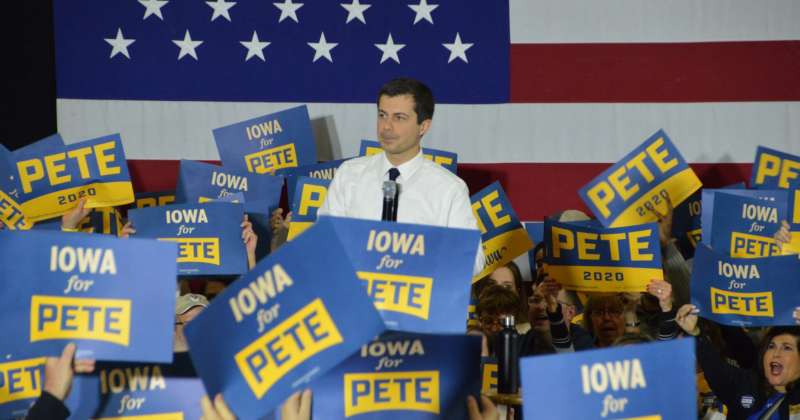
Pete Buttigieg is barreling toward an Iowa Caucus victory, and there’s not a damn thing anyone’s tweets can do about it.
The month of December has given the South Bend Mayor his biggest challenges yet, including intense media questions over his work at McKinsey, attacks on his fundraising from all sides on the debate stage, skepticism over his appeal to black voters, and the whole wine cave controversy. All the while, the online left’s loathing of Buttigieg fully boiled over.
But you wouldn’t really know it on the ground in Iowa.
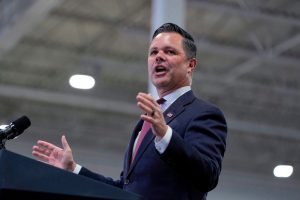
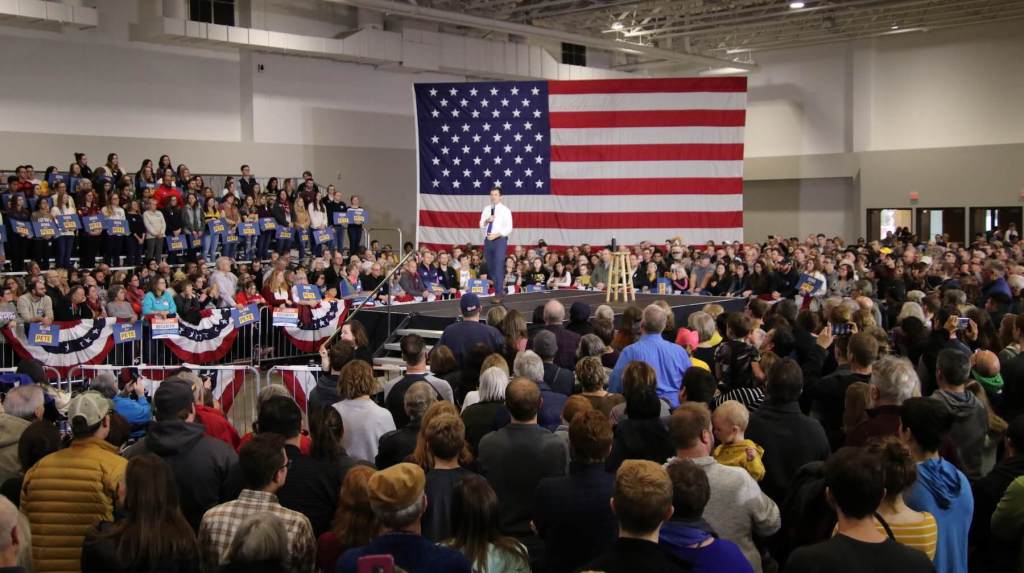
Despite the new scrutiny, Buttigieg has seen his crowd sizes in Iowa swell this month, including five separate events with over 1,000 people each. Among those were a statement-making 2,000-person rally in Coralville, right in Iowa’s most liberal county, and a West Des Moines event this weekend that brought out 1,200.
Between those, he took a tour of rural counties and mid-size towns, often producing turnouts that local Democratic leaders say are the largest they’ve seen since Barack Obama’s 2008 caucus campaign. Around 500 showed up in Ottumwa and Fort Madison each for Buttigieg yesterday, and over 240 packed a theater in Centerville, a town of 5,500 near the Missouri border.
What’s driving the groundswell of interest?
“I just need some hope,” said Julie Gentz, 69, a retired educator from Washington, Iowa at Buttigieg’s town hall event there in early December. “I feel like this is a Kennedy moment … It’s a Kennedy moment in one respect, and it’s an Obama moment in the fact that he’s not just your run-of-the-mill politician.”
[inline-ad id=”0″]
Ever since late October, Buttigieg has keyed in on a hopeful, future-looking message in Iowa, running a steady rotation of TV ads that often feature Iowans touting his policy stances. He’s also leaned into the party’s ideological divide on Medicare for All and tuition-free college, running ads where he directly advocates for the more moderate position on those topics.
But while he’s staked out his policy grounds somewhere in the mainstream progressive/center-left sphere at a time when Democratic voters began to question Medicare for All, most Iowans who show up to his events are more interested in his persona and overarching themes of unity.
“He has his way of uniting all of us from different backgrounds and cultures, and just reminding us that we’re all human,” said Laura Miller, 30, of Waukee at the West Des Moines event, who plans on caucusing for the first time in February, for Buttigieg.
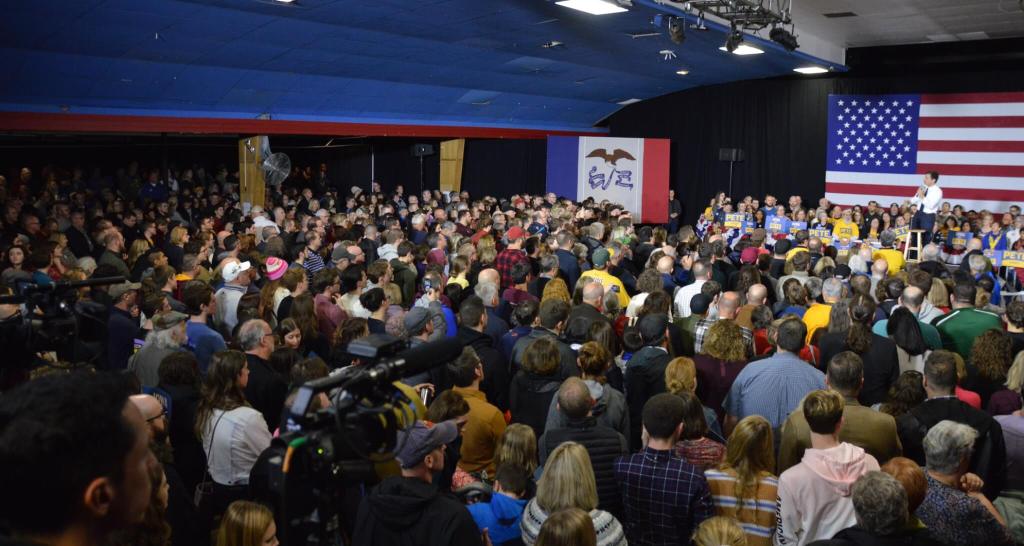
At the Coralville rally, where Buttigieg turned out almost as many people in Johnson County as Bernie Sanders did the previous month with Alexandria Ocasio-Cortez, there were similar feelings.
“One of the big messages he has is how polarized our county is, and he wants to unite all Americans,” commented Maryan Thompson, a photographer from Coralville. “It’s not about the party, it’s about people. It doesn’t matter that you’re Democrat or Republican. I like that core of his message … After I heard him in person, I definitely will vote for him.”
[inline-ad id=”1″]
Roger Mills, a North Liberty retiree and orchestra member, took note of Buttigieg’s mentions of faith.
“I think he’s a person who has a great deal of spirituality in him, and I think he’s a person who can lead us into a different form of consciousness of peace and love,” Mills said. “He quotes passages from the Bible. That intrigues me. It gives me hope.”
The time between those campaign events can be tougher.
Buttigieg’s month in Iowa began with a very contentious press gaggle after a mayors’ conference in Waterloo, where he somewhat abruptly left the podium after getting peppered with questions over his fundraising and McKinsey work. He would decide a few days later to open his fundraisers to the press, which only led to more problems when photos of a fancy setup for one of them went viral online. His list of McKinsey clients drove a few other news cycles.
Most of those controversies, however, have either largely gone unnoticed by Iowans or simply aren’t resonating.
“I haven’t heard any of that,” Thompson said the day after Buttigieg’s press conference.
“That doesn’t stack up with anything compared to what we’re living with now,” Gentz said of the McKinsey concerns.
“Honestly, I can’t say I’ve heard much about it,” commented Miller.
“I heard about it, but it doesn’t concern me,” said Karen Milan, 66, a retired accountant in Des Moines, about the fundraising issue. “I think he’s getting popular enough, they’re starting to pick on him.”
[inline-ad id=”2″]
It’s a contrast to what happened to Elizabeth Warren’s polling numbers after she started to get pushback on Medicare for All following her rise around Labor Day. That, however, was about her position on health care, the top issue for most voters.
For Buttigieg, questions over what he did in his first job while in his mid-20s or process concerns around his fundraisers may be able to drive a news cycle, but they’re not ranking high on real voters’ reasons to choose a candidate. The overall money-in-politics critique that Warren is pushing against Buttigieg seems to be the more dangerous line for him, because it’s something voters better understand.
Some have thought the McKinsey attack also highlights his comparative lack of life experience, but his youth is often mentioned as a positive by older Iowans, even if he still has issues with voters closer to his age.
[inline-ad id=”3″]
As discussed on Starting Line’s recent podcast episode, many older Iowans, especially those in rural areas, like to see younger people in their community step up, and they may be looking at the presidential race through that lens.
“I have two kids about his age, and I think it’s time we start letting them take over,” Milan, at the West Des Moines event, said.
The most pressing problem for Buttigieg, however, is starting to bubble up in Iowa conversations: his poor polling numbers among black voters.
[signup_form]
When it comes to actual voting, that’s less of a problem now for Iowa and New Hampshire, and only becomes a major one if any media bump Buttigieg gets out of doing well in those states doesn’t quickly improve his standing among the party’s most loyal voting bloc. It can, though, factor into voters’ thoughts on the all-important “electability.”
Some undecided caucus-goers, like Tina Wilkins, 49, a Medicare analyst at the West Des Moines gathering, acknowledged the issue, but felt it could be corrected.
“I’m a little disappointed he doesn’t have more minority support, I think his campaign needs to address that,” Wilkins said. “But I don’t think it’s anything he’s done, he just needs more outreach.”
[inline-ad id=”6″]
And there were others who felt Buttigieg wasn’t getting his due for the historic meaning of his candidacy and the potential to elect America’s first openly gay president.
“Even though the pundits say there’s going to be no diversity on the debate stage, I beg to differ,” said Gentz. “There really is. I have a lot of friends who are gay and friends’ children who have come out as gay … Okay, he is a white guy, but he comes from a segment of the population that gets marginalized.”
In the month ahead, the biggest threat facing Buttigieg may be the unknown factor of Sanders’ Iowa organization. There’s a growing sense in Iowa that Sanders and Buttigieg are the two currently fighting for a first-place finish on caucus night (due to the complete lack of Iowa polling lately, it’s just a sense).
The Sanders team has taken a pass this year on trying to win over most long-time caucus-goers or party regulars, instead focusing on generating massive turnout from young Iowans, people of color, independents and unlikely voters. That may work or it may not, and Buttigieg meanwhile seems to be winning the persuasion battle with Warren among the mainstream progressive crowd of caucus-goers.
[inline-ad id=”4″]
Buttigieg’s own Iowa field operation, which may now number the largest of the field (many are coy on sharing specific numbers, so it’s hard to tell), is also clearly having their own impact.
At Buttigieg’s event in Washington, Iowa, he was introduced by veterans who had signed on after outreach from the campaign’s veterans team. The White House hopeful’s service in Afghanistan is also often mentioned by Iowans considering their choices.
“He speaks from the heart because he is a veteran,” said Tom Lucas, a fellow veteran, at that event. “It’s not a canned speech from some speechwriter. He’s worn the boots, he’s part of the brotherhood.”
The Buttigieg campaign had sent out some of their veterans policy advisers and a state senator from Illinois to hold a small roundtable discussion in the rural, conservative county a few weeks prior. That gathering also landed Buttigieg the endorsement of Sandra Johnson, the former mayor of Washington and the type of caucus leader who can swing a precinct for their candidate.
“We actually had some Republicans sign on for Pete that night because of the military emphasis,” Johnson said. “He’s wicked smart. He’s inspiring.”
There should hopefully be a round of Iowa polls that come out after the holidays are fully finished, at which point we’ll see just where exactly Buttigieg stands as caucus-goers like Johnson increasingly make up their minds. But from everything we’re seeing on the ground, the hits and criticisms Buttigieg took in December hasn’t slowed him down one bit here.
by Pat Rynard
Posted 12/30/19