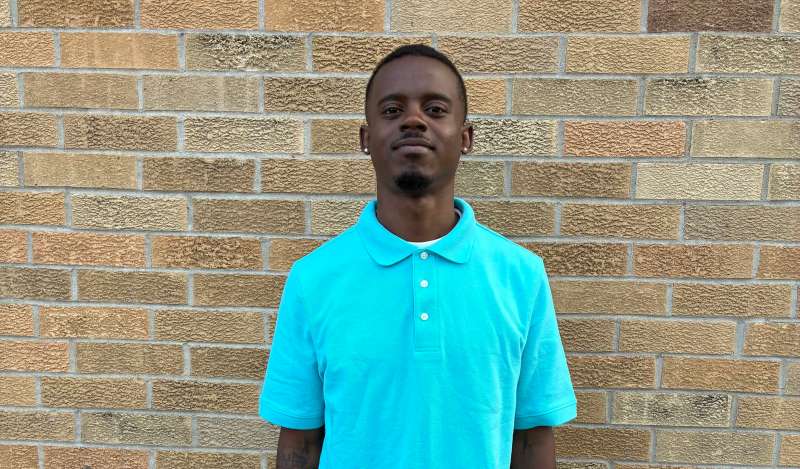
I never imagined that owning a barber shop would lead me into a public conversation about politics, voting rights, and civic engagement. I certainly never expected that opportunities connected to my profession would place me in the middle of a political controversy that would challenge how people viewed me, test my relationships with my community, and ultimately help shape a new direction for my work.
Looking back, my journey did not begin with a political agenda. It began with being a barber, running a business, and trying to take advantage of opportunities that aligned with my profession. What followed taught me important lessons about due diligence, public perception, accountability, and the power of turning a difficult experience into something constructive.
How it started: A barber, a business owner, and a campaign advertisement
As a barber and small-business owner, I have always understood that a barber shop is more than a place to get a haircut. It is a gathering place where people talk about their families, livelihoods, aspirations, and the decisions being made by those who represent them. Conversations about taxes, business regulations, economic opportunity, and public policy are not abstract to people working to support themselves and their families. These issues can have a direct impact on our everyday lives.
That was the perspective I brought with me when I was approached about participating in a campaign advertisement for Congressman Zach Nunn.
At the time, discussions surrounding the federal proposal commonly known as “no tax on tips,” along with Iowa legislation affecting the barbering and cosmetology industries, intersected with my own experience. As a barber, I saw an opportunity to speak about issues relevant to my profession and my livelihood.
I participated because I saw a connection between those issues and the work I do. I did not anticipate the level of attention the advertisement would receive or the controversy that would follow.
The advertisement aired on television and gained significant attention across Des Moines and Iowa. Before long, I was dealing with public scrutiny and online criticism that extended beyond the policy issues in the advertisement to my personal decisions and political associations.
I was learning firsthand how quickly an opportunity can become a public controversy, especially when politics is involved.
The post that changed the direction of my journey
While I was still dealing with the reaction to the Zach Nunn advertisement, I had a personal realization that prompted me to make another public post.
I said, “I can’t even vote.”
I knew that Governor Kim Reynolds had taken action to restore voting rights to many Iowans with felony convictions. However, I misunderstood what that meant for my own circumstances. I believed I still needed to apply or complete additional steps before I could regain my voting rights.
I had not fully understood the process.
Under Iowa’s Executive Order 7, voting rights have been restored to many people with felony convictions who have completed their sentences, subject to certain exceptions. Eligible individuals must still register to vote. My experience brought an important distinction into focus: restoring someone’s rights does not automatically mean that person understands those rights, knows how to exercise them, or feels confident navigating the process.
My post gained attention of its own. People began responding, sharing their opinions, and discussing my circumstances. The conversation expanded beyond my individual experience into broader questions about voting rights, civic awareness, and what people in our communities understand about the political process.
That post also became the reason Iowa Creator Corps discovered me.
At the time, I was not looking for a political partnership or trying to build a voter outreach initiative. I was sharing a personal realization that had become part of a much larger public conversation. I could not have predicted that the post would help set the stage for the work I am doing today.
Two videos, growing scrutiny, and an important lesson
As the scrutiny surrounding the Zach Nunn advertisement continued, Iowa Creator Corps reached out to me. I participated in a video for the organization, viewing the opportunity primarily as another creative or professional engagement.
The timing made an already difficult situation more complicated.
People were still reacting to the Zach Nunn advertisement when the Iowa Creator Corps video became another point of public discussion. Because the two opportunities were associated with different political interests, some people interpreted my participation as an attempt to play both sides of the aisle. Others viewed it as backtracking or trying to distance myself from the criticism I had received over the original advertisement.
I understand why the sequence raised questions. From the outside, the two videos could appear contradictory, especially to people who were already following the controversy.
But what people perceived and what I intended were not the same thing.
I was not deliberately trying to play both sides of the political aisle. I was not making a calculated decision to switch allegiances because the reaction to the first advertisement had become uncomfortable. I had accepted opportunities without fully understanding the political relationships surrounding them, and I had not adequately considered how those decisions might be interpreted together.
I take responsibility for that.
I could have asked more questions, researched both organizations more thoroughly, and taken more time to understand the affiliations and broader context before agreeing to participate. That is an important lesson I have taken from this experience: when your name, image, and public reputation are involved, it is not enough to understand the immediate opportunity. You also need to understand the environment in which that opportunity exists.
I am not sharing this to dismiss people’s concerns or suggest that I should never be questioned. People have a right to ask questions, disagree with my decisions, and expect transparency from those who engage publicly in political matters.
I am sharing it because I believe there is a difference between acknowledging that I should have done more research and accepting an assumption that I deliberately set out to mislead people.
My involvement was not driven by malice. I was navigating opportunities I did not fully understand, learning about the political landscape as I went, and experiencing the consequences of decisions made without sufficient context.
That experience forced me to reflect on the responsibility that comes with having a public platform.
How Iowa Creator Corps became an important part of my story
I want to be clear about the role Iowa Creator Corps played in this journey.
I did not initially approach the organization with a full understanding of its political orientation or connections. My first interaction came after the post in which I shared that I thought I could not vote. The organization saw that post, reached out, and created an opportunity for us to work together.
As I learned more about the organization’s political connections, I also began developing a relationship with the people behind it. That relationship grew during a period when I was experiencing considerable scrutiny and trying to make sense of what was happening.
The support I received from Iowa Creator Corps made a genuine difference.
They provided opportunities, guidance, encouragement, and assistance as I navigated a difficult period. At a time when I felt isolated by the public reaction and questioned whether people in my own community still trusted me, I felt that the organization was willing to work with me, invest in me, and help me move forward.
I felt seen as a person with something to contribute, rather than being defined entirely by a controversy.
I am grateful for that support, and I want to acknowledge it honestly. Their willingness to provide opportunities and guidance helped build my trust in the organization and influenced my decision to continue working with them.
Over time, what began as an unexpected connection developed into a working relationship and eventually a partnership focused on voter registration outreach, community engagement, and events intended to help residents participate in the civic process.
That progression was not something I planned from the beginning. It developed through real interactions, shared work, and a growing understanding of what we could accomplish together.
My appreciation for Iowa Creator Corps is not a claim that every person must agree with its political connections or viewpoints. It is a recognition of the support I received and the meaningful opportunities that emerged from a relationship I never anticipated.
I believe it is possible to acknowledge an organization’s political connections, be transparent about your own learning process, and still appreciate the people who helped you turn a difficult chapter into something productive.
For me, that is part of the story worth telling.
Turning a difficult experience into a community mission
My experience also forced me to think more deeply about what I wanted to do with the attention I had received.
I could spend my time arguing with people online, responding to every accusation, or trying to convince everyone that their interpretation of my intentions was wrong. But I began asking myself a different question: What if I used this experience to create something that could benefit the same community that was debating my decisions?
That question helped clarify my purpose.
I want to help educate people in our community about voting, civic participation, and the decisions being made by elected officials. I want people to understand that government is not distant from their daily lives. Decisions made in legislative chambers, government offices, and public institutions can affect our schools, businesses, neighborhoods, economic opportunities, public safety, healthcare, and families.
Whether we pay attention or not, those decisions continue to be made.
Voting is one way people can influence the direction of their communities, but meaningful civic participation requires more than a reminder to show up on Election Day. People need access to accurate information. They need opportunities to ask questions, understand their rights, learn about the registration process, and make informed decisions for themselves.
My own experience demonstrated how easily someone can misunderstand an important part of the voting process. If I could have that misunderstanding, I know there may be other people who have questions of their own but do not know where to find reliable answers.
I want to help close that gap.
Through our partnership with Iowa Creator Corps, we are working to turn that goal into action through voter registration outreach, events, and direct engagement with residents. I want us to reach people where they are, whether that is in their neighborhoods, at community events, in local businesses, or through digital platforms and the voices they already follow.
I also want this work to create pathways to additional resources and opportunities. Civic engagement should not be limited to political conversations. It can be a starting point for helping residents become more informed about public resources, community initiatives, and ways to contribute to the places where they live.
Ultimately, I want to help people move from feeling disconnected to recognizing that they have a role to play.
A challenge to our community, not a response rooted in revenge
There is another part of my motivation I want to acknowledge honestly.
The scrutiny I experienced was difficult, particularly when some of the strongest criticism came from people within my own racial community. As a Black man, I felt the weight of being judged by people I hoped would understand that I was navigating unfamiliar territory and learning along the way.
Some of the people criticizing me presented themselves as deeply informed about politics, economics, social justice, and the issues affecting Black communities. That experience made me reflect on the distance that can exist between talking about the importance of civic engagement and actually creating opportunities for people to participate.
I could respond to criticism with more criticism. Instead, I want to offer a challenge that is constructive, professional, and focused on results.
If we believe voting matters, how can we make it easier for eligible people to register? If we believe our community deserves access to reliable information, how can we help provide it? If we believe our neighborhoods need stronger representation and greater opportunities, what are we willing to do to contribute to that progress?
I want to create an opportunity for people to put their values into practice.
This is not about revenge, humiliating critics, or forcing anyone to agree with my decisions. It is about demonstrating that disagreement does not have to end in division and that criticism can become a catalyst for something useful.
I want the work to speak for itself.
If someone questioned my intentions, I cannot demand that they immediately change their opinion. Trust is built over time through consistency, transparency, and meaningful action. What I can do is continue working to create opportunities for people to participate, make information more accessible, and contribute to the well-being of my community.
I also recognize that no community is politically uniform. Black communities, like all communities, include people with different beliefs, priorities, and political affiliations. We will not always agree on candidates, parties, or policies. But we should be able to work toward a shared commitment to informed participation, access to opportunity, and the well-being of our neighborhoods.
The invitation is open to anyone who wants to contribute constructively, regardless of political affiliation.
The work ahead
My journey began behind a barber chair. It continued through a campaign advertisement, a personal realization about my voting rights, two videos that attracted public scrutiny, and a relationship with Iowa Creator Corps that developed into a community outreach partnership.
Along the way, I learned that opportunities come with responsibilities, public perception can differ from personal intention, and doing your due diligence matters. I also learned that a difficult experience can introduce you to people, ideas, and opportunities that help you find a constructive path forward.
I do not claim to have known everything from the beginning. I am still learning. I believe that being honest about that process is more valuable than pretending I have never made a mistake or misunderstood a situation.
I cannot control how everyone interprets my past decisions. I can, however, take responsibility for what I have learned and be intentional about the work I do from this point forward.
I want young people to see that one difficult chapter does not have to define the rest of your story. I want community members to see that disagreement does not have to become disengagement. And I want people who believe in civic participation to have a practical opportunity to turn that belief into action.
The objective is not to win an argument on the internet. It is to do meaningful work beyond it.
Our communities deserve more than viral moments, online disputes, and promises made during election season. We deserve sustained engagement, access to information, opportunities to participate, and people willing to turn their experiences into service.
I entered this chapter of my life unexpectedly. I made decisions without fully understanding the political context around me. I experienced the consequences, learned from them, and received support that helped me move forward. Now I am choosing to use those experiences to contribute to the community I call home.
My goal is to turn attention into action, disagreement into an opportunity for engagement, and a personal experience into a lasting contribution to our community.
The next chapter of my story will not be defined solely by the advertisements I appeared in or the scrutiny that followed. I want it to be defined by the people we reach, the opportunities we help create, the information we share, and the work we do together.
That is how I intend to move forward: not by asking everyone to agree with me, but by giving people an opportunity to join me in doing something meaningful.