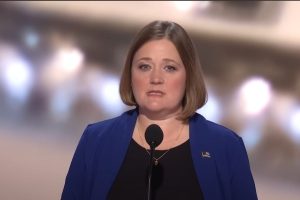
Tamara Krug stood in a field west of Cedar Rapids on a brisk Iowa evening and looked toward the city she calls home.
“I said, my god, that’s ugly,” Krug recalled. “We used to look to the east and see darkness. And now all we see is bright lights, like a damn prison has been built there or something.”
Krug, 60, is talking about the glow coming from power plant and data center construction across her community. She’s spent nearly 30 years farming corn and soybeans with her husband. They work about 800 acres across Linn and Benton counties. All the land they farm is rented.
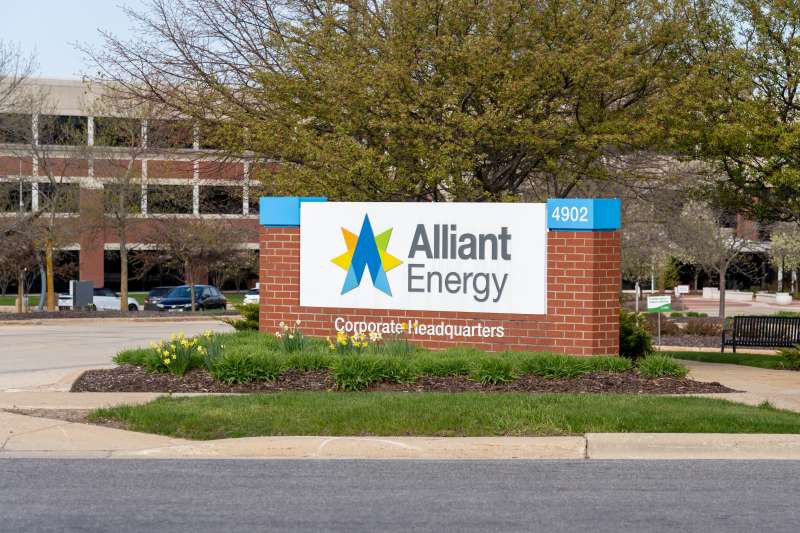
Finding more ground to plant, grow, and harvest isn’t easy in Iowa. So when Krug learned that Alliant Energy wanted to build a natural gas power plant near their fields, she started paying attention. Then she started showing up at county meetings. And for the first time in her life, Krug began signing up to speak.
Alliant’s proposed Morgan Valley Energy Center would be a 720-megawatt natural gas plant near Highway 30 and Linn-Benton Road, northwest of Fairfax. Krug estimates the site is within a mile of 41% of the land she farms.
Alliant said the plant is necessary to meet growing electricity demand and keep the power grid reliable. Opponents believe the project is being driven largely by the region’s expanding data center industry.
After a public meeting that stretched past midnight on Wednesday, Linn County supervisors voted unanimously to deny Alliant’s request to rezone nearly 150 acres for the project. For Krug and her neighbors, it was a victory. But it wasn’t the end.
The Iowa Utilities Commission could still approve the plant over the county’s objections. Hearings are scheduled to begin Dec. 7.
‘You don’t farm right up to the creek’
Krug knows what it takes to keep a farm going when you don’t own the ground beneath your feet.
“There’s a pool of us out here looking for farm ground to rent,” she said. “When something comes up for rent, 25 people are putting their bid in.”
About eight years ago, the Krugs managed to pick up another 300 acres. They’ve been trying to expand ever since, but nothing has worked out. And 800 acres isn’t enough to pay all the bills.
Her husband drives a grain truck in the mornings before heading out to the combine. Krug receives a pension from her years working for the state of Illinois. They can’t simply move their operation somewhere else, either.
“We can’t travel four counties over with all this equipment,” she said.
That’s part of what frustrates her about the development creeping into the countryside. When farmland is sold for industrial use, it isn’t just the owner making a decision. Tenant farmers like the Krugs can lose opportunities to make a living.
Krug doesn’t have much patience for landowners who cash out.
“There’s the farmer that wants to get rich, and he saw his opportunity, took it,” she said. “And then there’s the farmer like my husband and his father, which wouldn’t sell it to a gas company to save their damn soul.”
For her, the land is worth more than a check.
Until this year, Krug had never stood up to speak at a public meeting. Now she’s done it five or six times.
“I get so anxious,” she said. “The bingo card for me has filled up with stuff I never thought would happen.”
She didn’t grow up in Iowa. Her husband did, and they moved back from Illinois to farm.
Maybe that’s why she still notices things people who’ve lived here their whole lives might take for granted. The rolling hills. The fields. The small farms scattered across the countryside.
At one county meeting, she tried to explain what she sees.
“If you were born here, you may not realize it, but your countryside is gorgeous,” she said.
Then she told officials what she thought they were doing to it.
“You are ruining rural Iowa.”
Krug isn’t against every kind of development. Her own son works in the nuclear power industry on projects that serve technology companies.
“My son’s business needs data centers,” she said. “I just don’t want them underneath my armpit everywhere.”
What bothers her is the pace of the changes and what she fears will be left behind.
When she and her husband took over a 300-acre farm years ago, the previous tenant had plowed through the grass waterways meant to carry runoff safely across the fields.
After a heavy rain, Krug found a gully so deep it reached her armpit. They put the waterways back.
She remembers what her German grandfather taught her about taking care of the ground: You don’t farm right up to the creek.
It’s advice she still follows.
Data center debate enters US Senate race
Krug isn’t the only one worried about what the proposed plant would mean for the area.
Neighbors organized under the name Save Morgan Valley have spent months questioning the project and pressing local and state officials for answers.
At a county work session, organizer Abe Kellison of Fairfax told supervisors that “economic benefit cannot be the only measure of what’s good for a community.”
Alliant has made the case that the plant would help meet increasing energy needs. The company says the facility would occupy roughly 55 acres of the proposed site, with some of the remaining land expected to return to agricultural use.
But the debate has grown beyond one power plant.
The Cedar Rapids area has attracted major data center investments, bringing promises of jobs and economic growth along with questions about electricity demand, land use, and who should pay for the infrastructure needed to support them.
It’s also become an issue in Iowa’s US Senate race.
Republican nominee Ashley Hinson previously celebrated the QTS data center project in Cedar Rapids as a major economic development win and spoke about Iowa’s work with Alliant to support AI data centers.
More recently, Hinson has argued that Iowans should have the final say over data centers in their communities. She has also pointed to her vote for legislation intended to protect electricity customers from costs associated with large data centers.
But her record has drawn criticism from the left. The Center for American Progress Action Fund has pointed to Hinson’s support for a 2025 House version of the One Big Beautiful Bill Act that included a proposed 10-year moratorium on certain state and local AI regulations. The provision was later removed.
Krug doesn’t claim to know what role Hinson has played in the local project. She’s more concerned about what happens to the land and whether the people living and farming near the proposed plant will have a say.
The fight has even drawn her into electoral politics. She says she recently appeared in a campaign ad for Democratic US Senate nominee Josh Turek, something she’d never fathomed doing before.
“I don’t want any more puppets in Washington, DC,” she said.
For now, the county has said no to the plant. But state regulators could still say yes.
Krug plans to keep paying attention.
Her grandfather taught her to check things for herself rather than take someone’s word for it.
He had another piece of advice, too.
“Follow the money,” she said. “That’s what Grandpa used to say.”