Reporter’s Notebook with political correspondent Zachary Oren Smith does a weekly Q&A. Send your questions here.
|
|
|
|
|
“Is Josh Turek a better baller than you?” — Lily, Iowa Starting Line’s state organizing coordinator and my #1 op
|
|
|
Lily, I want to say this is a trick question, but it’s not. Turek played professional wheelchair basketball and won two gold medals. He has a whole Wikipedia section just called “Athletic career.”
Now, Turek and I played a game of H-O-R-S-E five months ago. He wanted to play I-O-W-A, but I thought that was corny. While the game didn’t go well for me, it was a good interview. And if you do the math, Turek beat me. Turek beat former President Barack Obama, too. I’m as good as, maybe better than, Obama. That’s just math.
|
|
|
“Can we go to the debate, or will we stream the debate?” — Jen of Maquoketa
|
|
|
|
To my knowledge, none of them are open to a live in-person audience the way a town hall is—these are studio debates. But they are scheduled. I will be watching all of the debates listed at the bottom of the email.
If folks are planning a watch party, drop me a line. I might come through.
|
|
|
|
|
A reader flagged KWQC’s fact-check on Republican state Senate candidate Joe Stutting’s ad, which makes false claims about Clinton and Maquoketa hospital closures. Stutting is running against Democrat Mike Zimmer, hoping to retake Senate District 35.
|
|
|
Saw this one too, and it’s ugly for a specific reason: this isn’t a spin dispute; it’s a false claim about where you can get emergency care. The ad is a mock 911 call in which an operator says the hospitals in Clinton and Maquoketa have closed.
They haven’t. Both towns still have emergency rooms open 24 hours a day.
What’s true is that Clinton lost its birthing center. A real cut that Stutting’s campaign turned into misinformation. That ran on TV. And depending on the viewer, it might inform how a person chooses to get care. Sure, it’s one local ad, but facts matter, and this one stunk to high heaven.
Stutting told a reporter that he knew the hospitals mentioned weren’t closed and said his campaign is seeking to clarify the ad. He said he intended the commercial to be hypothetical. Which, as a bit of spin, is heroically stupid.
|
|
|
|
|
“Could you please do a story on Iowa Amendment 1, which is on the ballot this November?” — Stacy
|
|
|
Before early voting kicks off, I plan to do a full story on this. But here’s the rough of it:
Buried down your ballot this November, after the governor’s race and the US Senate race and all the candidates whose yard signs you’ve driven past since June, is a single paragraph most Iowans haven’t read: Amendment 1.
It would rewrite one sentence of the Iowa Constitution: any bill raising the individual income tax rate, the corporate income tax rate, or “any other type of tax based upon income” would need a two-thirds vote in both the Iowa House and Senate to pass. A supermajority. Sixty-seven of 100 House members. Thirty-four of 50 senators. It would make it easier to change your healthcare and your school’s access to funding than the state’s income tax.
Supporters call it taxpayer protection. Rep. Dan Gehlbach, R-Urbandale, put it plainly at a news conference in Grimes this month: “It strikes me as just common sense that if politicians want to raise our taxes, there should be wide consensus, not narrow support.”
Iowans for Tax Relief, the advocacy group pushing the “yes” side, has been running an awareness campaign since July under the banner, “make tax hikes harder.”
Here’s what doesn’t fit on a bumper sticker: Iowa’s spent more than it’s taken in for two years running now—over a billion dollars, according to Joshua Brown, president of the Iowa State Education Association, who’s been out front against the amendment.
“That gap only gets closed one of two ways: you raise revenue or you cut something,” Brown told Radio Iowa. “Amendment 1 takes one of those options and makes it nearly impossible.”
Iowa’s income tax is already flat, a single 3.8% rate for everyone since 2025. This amendment doesn’t touch that rate today. What it does is make it structurally harder for any future Legislature to move it again without a supermajority.
That’s the actual question on your ballot. Not “do you want your taxes raised right now.” It’s “do you want to make it constitutionally harder, for every Legislature that comes after this one, to use income tax as a budget tool at all.”
Iowans for Tax Relief president Chris Hagenow says sixteen other states already require some form of supermajority for tax increases, so this isn’t unprecedented. It’s also not neutral. A rule that only makes one direction of a decision harder isn’t really a procedural safeguard — it’s a policy outcome wearing a procedural costume.
The polling on this is genuinely murky. A Suffolk University poll in late August had it close and mostly undecided—33% yes, 36% no, 30% still making up their minds. Iowans for Tax Relief cites a poll putting support north of 68%.
I don’t think I’m breaking ground here when I say most people don’t like paying more in taxes. But they also probably like functioning schools and roads and garbage pickup. They probably like efforts to clean up our water. But depending on how this election goes, Iowa voters may just tie a revenue hand behind the state’s proverbial back.
Amendment 1 could shape Iowa budgets for a decade after everyone currently running for office has moved on.
|
|
|
Trump’s Iowa steel mill, Reynolds’ swan song
|
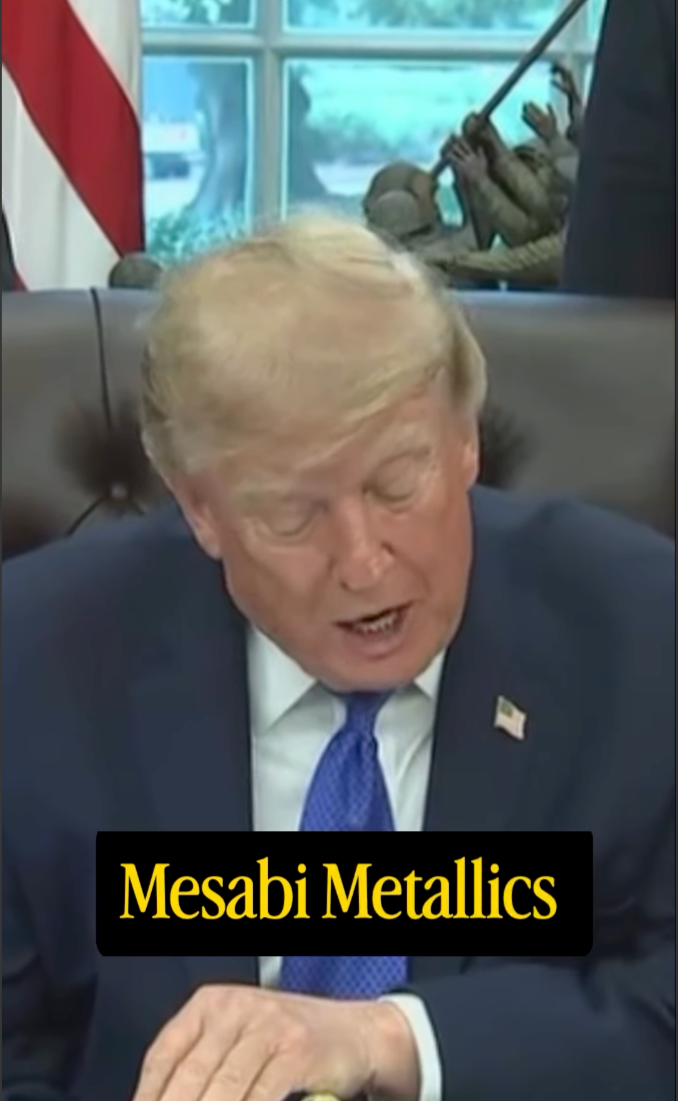
Friday, I’m headed back to the Capitol. The governor called a special session that state leaders say is key to securing a tremendous $15 billion steel mill in Lee County.
|
|
|
|
|
|
We learned the state has entered into a deal with the company, but as of writing, no one outside the negotiating room has seen the numbers.
Nonetheless, US Secretary of Commerce—and Epstein contact—Howard Lutnick claimed the “deal is done,” and it’s not contingent on tax breaks. Yet, one month from the midterms, the Iowa Legislature is preparing a tax incentive package for the company Mesabi Metallics. It is expected to receive the largest subsidy in Iowa history.
Why? It could be a BFD for Lee County and for Iowa more broadly.
|
|
|
According to the White House, the “largest plant in American history” would create 1,750 permanent jobs paying about $49 an hour on average, 5,000 to 6,000 construction jobs, and—by the White House’s own estimate, not an independent one—$95 billion in economic activity over the first decade. That would mean something real in Lee County, which has one of Iowa’s highest unemployment rates at 4.6%.
It’s also Gov. Kim Reynolds big swing. She isn’t running for reelection, and she’s called it “the most consequential economic development opportunity ever for our state.”
Whatever passes Friday will likely be one of the defining deals of her tenure, and the next governor will be the one holding it.
I want to point out here that when the war in Iran drove gas prices through the roof, a special session was never called to, say, drop the gas tax. Insurers selling ACA plans in Iowa have proposed 2027 increases averaging anywhere from about 5% to nearly 17%, depending on the company. About 119,000 Iowans are seeing their out-of-pocket healthcare premium costs double or triple because of lost expanded ACA subsidies and rising costs. About 21,000 Iowans dropped ACA coverage between 2025 and 2026. That’s roughly 12 times the number of jobs the project promises.
|
|
|
Now I think you are smart enough to hold two things in your head at once. A $15 billion project of this size would be a boon for the state if it comes as sold. But we’ve seen this movie before—including, it turns out, a scene that’s still playing right now.
The plant’s iron ore is supposed to come from Mesabi’s mine in Nashwauk, Minnesota. That mine took 20 years to build and just opened this month. Mesabi told Minnesota it would bring 350 permanent jobs. So far, it employs 200.
|
|
|
|
A source tells me that the project is slated to go in near the Iowa Fertilizer Co. plant, the site of the previous largest subsidy in Iowa history. Fourteen years ago, an Egyptian company took $240 million in Iowa incentives to build a fertilizer plant in Lee County that was supposed to bring down prices by adding competition to a consolidated market. Or, as Legislators argued at the time: to help break up the fertilizer cartel. Iowa taxpayers helped build the plant. In 2024, I wrote about how it was sold to one of the alleged cartel leaders, Koch Industries, for $3.6 billion, further consolidating the market.
What Reynolds is asking lawmakers to change is the state’s MEGA program, built for projects over $1 billion. $15 billion is a different order of magnitude than what that program was designed to handle. The terms of the memorandum of understanding Iowa already signed with Mesabi haven’t been made public. We don’t know what package Mesabi will ask for.
Both parties are treating this as something worth doing right, not something to kill. House Speaker Pat Grassley called it bringing real jobs home to the state. Senate Democratic Leader Janice Weiner said Democrats are “ready to go to work” but that “we still have a number of outstanding questions,” and their goal Friday is to make sure “any final deal is in taxpayers’ best interests.” House Democratic Leader Brian Meyer pointed out that almost 10,000 Iowans have been laid off since the start of 2025, before calling the session “a welcomed step.”
Louisiana just did something similar with Hyundai’s $5.8 billion steel mill—a gas supplier alone put in $350 million, and 70% of the project’s contracts have gone to Louisiana companies. Big projects can and do deliver. It just means the terms matter more than the headline, and right now, most of the terms are still unwritten.
What I’m watching for Friday: whether the incentive package comes with real guarantees—job numbers Mesabi has to hit, money back if they don’t—or whether Iowa hands this company the benefit of the doubt its Minnesota mine hasn’t earned.
Under the right terms, this is something Iowans should want to work. Under the wrong ones, it’s Lee County’s fertilizer plant with more zeroes.
|
It feels a little hack to make everything about the midterms, but Trump clearly doesn’t mind. He announced the proposed Iowa steel mill with Gov. Kim Reynolds, US Sen. Joni Ernst, US Reps. Mariannette Miller-Meeks and Ashley Hinson in the room, along with Iowa Attorney General Brenna Bird. Sure, MMM makes sense. Her district. But why was the AG there? Occam’s razor: All three have Democrats in spitting distance of overtaking them.
On Monday, one Republican I spoke to was saying the mill could be huge for the party as it braces for the midterms. He asked me, “You think this will move the needle?” And the answer is obviously yes, but to what extent? Polarization has most of us locked up. Will a proposed $15 billion project be enough bait to mobilize Republican voters who are unenthusiastic about gas and healthcare costs?
This is happening in the Midwest where we’ve got a long memory. A memory that includes Foxconn.
In 2017, right before Trump’s last midterm headache, the president shared the stage with Wisconsin’s Republican governor and promised a state-of-the-art facility that would generate 13,000 jobs. He later called it the “eighth wonder of the world.” Foxconn became one reason Gov. Scott Walker lost reelection in 2018 because voters soured on a roughly $3 billion price tag for a plant that was still mostly a promise. The gap between the announcement and the delivery became the story.
Will voters run with the announcement or grade based on the follow-through? Will it move the needle when only one is visible Nov. 3?
|
Trump-Epstein Reading Room comes to Iowa
|
Last week, I found myself at a crime scene. Thousands of bound volumes, floor to a little above eye level, each one a slice of the roughly 3.5 million pages of the Epstein Files the DOJ has released. Evidence of Jeffrey Epstein’s relationships with the well-to-do.
It’s called the Donald J. Trump and Jeffrey Epstein Reading Room, and it’s been touring battleground states both as a full exhibit and as a “bookmobile” — Omaha, Des Moines, Iowa City, Cedar Rapids.
In Des Moines this week, I followed Sarah Trone Garriott, the Democrat running against US Rep. Zach Nunn in Iowa’s 3rd District, as she toured it. She was joined by an Epstein survivor and the brother and sister-in-law of Virginia Giuffre, one of Epstein’s most prominent accusers, who died by suicide last year.
|
|
|
|
|
“You can just see the tragedy that took place over decades,” Trone Garriott said, pointing to redacted pages along the edges of the volumes. “Entire pages are just black because what’s in them is so awful.”
Trone Garriott was an interesting one on this since, as an AmeriCorps VISTA volunteer, she worked with survivors of domestic violence and so has been involved in some really hard stories. Seeing the full exhibit, she said she was struck by the magnitude of violence towards Epstein’s victims.
“It is overwhelming to see all this evidence of a massive criminal operation that was abusing children,” Trone Garriott told reporters after the tour.
|
|
|
“To see what is still an active crime being committed against survivors who need to have accountability for those who abuse them. And it’s not happening.”
The exhibit is set up for you to walk through casually. A timeline of Epstein and Trump’s documented relationship. The shelves and shelves of bound documents. Towards the end, there’s a little desk space. A phone is set up for you to call your congressperson. But it’s a little unnerving how commonplace it all feels. And yet, you know that there’s something dark, something sinister undergirding the surface.
I probably wouldn’t have toured it if I hadn’t decided to cover it. Don’t make that mistake. The Reading Room was a haunting experience and ingrained in me a deeper sense of how history will demand answers and accountability. It will take note of those who got in the way.
|
That’s it for me. As always, there are more questions than I can get to this week—I’ll keep working through the mailbag next week. Send yours here. And follow me for more: @zacharyorensmith on Instagram, YouTube, and TikTok.
See you on the trail.
Yours,
|
|
|
|
|
|
Zachary Oren Smith
Political Correspondent, Iowa Starting Line
|
|
|
|
📺 TV debates I’m watching
|
Here’s the deal: not much happens in a TV debate. But that doesn’t mean they aren’t important. We almost never get a chance to compare candidates side by side, so that alone can make them invaluable.
As I plan how to track all these upcoming elections, I want to help you look around the corner with me. Here is a list of TV debates that I’m aware of, plus a few dates you need to act on. Take a look and pick a few to watch in full. At Starting Line, we’ll have clips from the important moments, but do yourself a favor and tune in:
|
🗓 Oct. 6
Sand/Lahn Debate #1, Iowa Governor, KWQC
🗓 Oct. 7
Turek/Hinson Debate, US Senate, Iowa PBS
🗓 Oct. 8
James/Mitchell Debate, IA-02, Iowa PBS
🗓 Oct. 13
Hinson/Turek Debate, US Senate, Nexstar Media
🗓 Oct. 14
First Day for Early In-Person & Mail Voting
Sand/Lahn Debate #2, Iowa Governor, KTIV
🗓 Oct. 19
Voter Pre-Registration Deadline
🗓 Oct. 20
Bohannan/Miller-Meeks Debate, IA-01, KWQC/KCRG
🗓 Oct. 21
Sand/Lahn Debate #3, Iowa Governor, Iowa PBS
🗓 Nov. 3
🗳 Election Day 🗳
|
Do you enjoy reading this newsletter?
|
|
|
Thanks for reading.
Iowa Starting Line is free for everyone. Your support makes our work possible.
|
|
|
You are receiving this email because you opted in via our website.
Our mailing address is:
Iowa Starting Line / COURIER Newsroom
3229 Greenpoint Ave., PMB 532
Long Island City, New York 11101
Want to change how you receive these emails?
You can update your preferences or from this list.
|
|
|
|