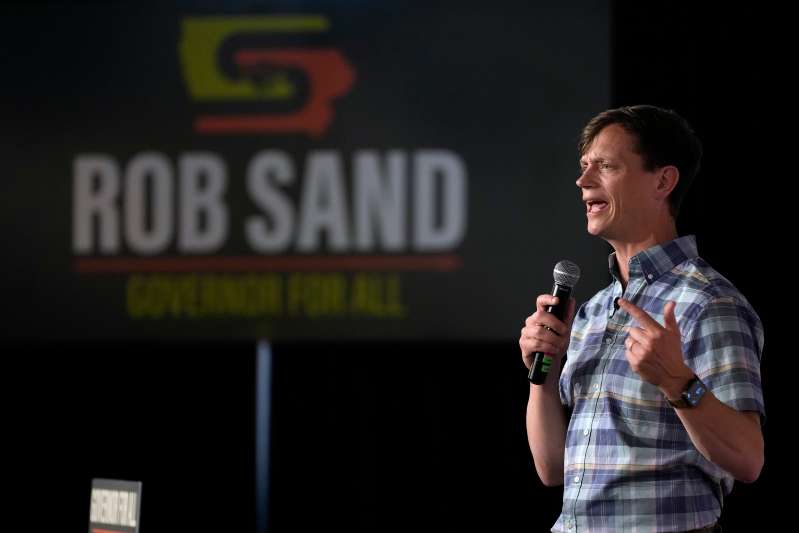
Democratic governor nominee Rob Sand released a plan Monday to ban social media for Iowans under age 16, require age verification at the app-store level, and force companies to stop hooking children on “infinite scroll” feeds. It’s the most detailed kids’ tech safety proposal any Iowa candidate has put to paper this cycle, landing just three days after Republican US Senate candidate Ashley Hinson held her own event on protecting kids online, Iowa Capital Dispatch first reported.
“A lot of this, to me, is just pointing us towards things that can be good for us, when social media, at the end of the day, is conclusively—even from the social media company’s own studies—bad for children,” Sand told Iowa Capital Dispatch in an interview unveiling the plan.
Sand’s plan, modeled on a 2025 Utah law, would require app stores to verify a user’s age and get parental consent before anyone under age 18 downloads certain apps. It would ban infinite scroll for under-16 accounts, ban targeted advertising and the sale of kids’ data, force independent audits of the algorithms companies use to keep kids scrolling, and make minors’ accounts private by default. It would ban location sharing and DMs from strangers.
The ground has shifted under this issue. According to Pew Research Center, nearly six in 10 American adults now support banning social media outright for anyone under 16—including 65% of parents with kids at home. That’s up across the board since 2023.
Nationally, PBS News reported that two juries this year found Meta’s platforms liable for harming children, and a third found Google liable, too, cracking open a legal strategy that sidesteps the tech industry’s usual shield. Section 230 is a provision in the 1996 Communications Decency Act that shields online platforms from legal liability for content posted by their users. As this logic goes, platforms like Facebook or Instagram aren’t the “publishers” of what a user posts, so they can’t be held liable the way a newspaper might be for something it printed. Tech companies have long leaned on that shield to get lawsuits over harmful content—bullying, self-harm material, predatory contact—thrown out before they even reach trial, arguing any harm traces back to third-party content, not the platform itself.
Recently, lawsuits against these companies have transitioned from being about what is posted to how the platform was designed: addictive algorithms, infinite scroll, engagement-maximizing features that the company itself built. That’s a product-design claim, not a content claim, so Section 230 wouldn’t automatically apply. That distinction is what let this year’s Meta and Google verdicts move forward and stick.
Iowa Starting Line reached out to Republican gubernatorial candidate Zach Lahn to ask where he stands on regulating Big Tech’s treatment of kids. He did not respond by press time.
The Utah law Sand is modeling this on is already tied up in federal court after the tech industry’s trade association sued on First Amendment grounds. Free speech advocates argue outright bans go further than the Constitution allows, that minors have real First Amendment rights, and that a blanket ban isn’t the “least restrictive” way to protect them. Some researchers add that banning access doesn’t necessarily get kids off screens; it may just push them toward YouTube, gaming platforms, or corners of the internet with even less oversight. Iowa’s own Legislature ran into a version of this fight this year, with lawmakers raising concerns about handing tech companies more of kids’ personal data just to verify their age.
Sand’s answer to that, in his interview with the Capital Dispatch, was blunt: waiting for a perfect law isn’t an option:
“The answer is to do something,” he said. “And if it doesn’t work perfectly, then adjust, and keep trying, keep doing it.”