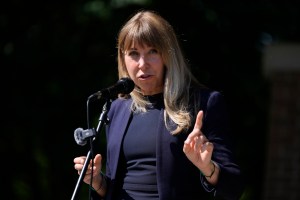
As the race for Iowa governor heats up, Kathy Butler is paying attention to what each candidate says about the voucher program and agrees with Rob Sand, the state’s current auditor, who is running for the top seat.
About 14 years ago, Kathy Butler’s daughter was having trouble in kindergarten. The 5-year-old had been sent home for “bad behavior” and, while driving past, called the school “scary.” Shelby Butler has Down syndrome, and on top of her mother’s complaints about the school, Butler said her daughter’s Individualized Education Plan (IEP)—a legally binding outline of academic goals and services for public school students with disabilities—wasn’t being followed.
So Butler contacted the local Catholic school, planning to pay to send her daughter to a private school with smaller class sizes and the added benefit of the religious upbringing Butler had.
“The Catholic school ended up ghosting me,” Butler said. The day of the meeting to discuss Shelby’s plan came, and they simply did not show up. Later, Butler got an explanation: “They didn’t have the resources to put toward her at Catholic school.”
So Shelby remained in the public school system. Today, Butler believes that was for the best. Her daughter has graduated and works a job. Years ago, even if the Catholic school had accepted Shelby, she would still have received the majority of her services at the public school through an agreement between the two districts in Cedar Falls.
But Butler says the idea of school choice is a fallacy, and as a paraeducator in the public school system, she’s seen firsthand how it’s harmed families seeking a better education for their kids while redirecting funding away from public schools.
“My daughter had to go to the public school because the public school has to service everyone,” Butler said. “Everyone wants to have a choice, and Gov. Reynolds says they’re giving the power back to the parent—no, you’re not, not for us.”
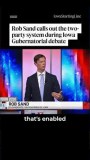
Now, as a federal voucher program rolls out nationwide next year, states like Iowa have opted in, which will offer parents even more money to send their students to private schools. As the race for Iowa governor heats up, Butler is paying attention to what each candidate says about the voucher program and agrees with Rob Sand, the state’s current auditor, who is running for the top seat.
“He isn’t totally 100% against vouchers; his thing is we need oversight,” Butler said after attending one of Sand’s September town halls in her home of Cedar Falls. “He feels some changes need to be made in terms of accountability, and I agree.”
Iowa’s voucher program
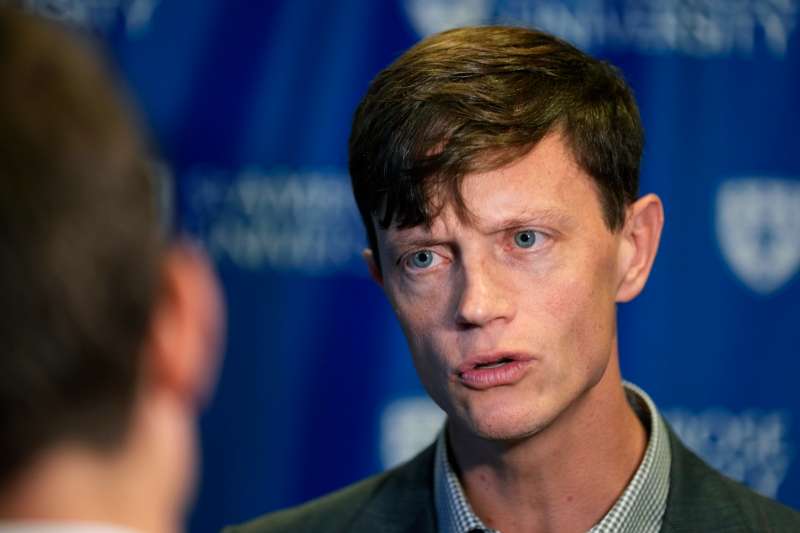
Patrick Cremin, a staff attorney with the Education Law Center, believes parents should have a choice about where they send their kids to school.
“The problem is when states use taxpayer money to funnel to private education expenses at the expense of public schools that serve the vast majority of students,” he added.
In Iowa, Sand has made the case that the money parents receive to send their students to private schools acts more like a discount than an opportunity.
“The Iowa State Auditor put it at $330 million, and basically said that because about 80% of the voucher recipients were already in private school, you’re essentially subsidizing those folks who were already paying to go to private school with public tax dollars,” Cremin said.
Couple that with the fact that parents like Butler can be turned away by ill-equipped private institutions, and you have a solution for choice that benefits the few.
“The beneficiaries of voucher programs are often those with access, with resources, wealthier families who can take advantage of these types of programs,” Cremin said, adding that the same schools “are permitted to discriminate against students on the basis of LGBTQ status, disability status.”
The fallout packs a double whammy. When money leaves public school districts for private schools, services at public schools suffer. Public schools face budget shortfalls, and students receive fewer services.
“The diversion of public dollars to private schools is one factor of many that are risking public education as an institution or eroding it,” Cremin adds.
What the candidates say about voucher programs
Republican Governor Kim Reynolds enrolled Iowa in the federal voucher program in January. States have until 2027 to change their minds.
Come November, Sand and his opponent, Republican Zach Lahn, will battle for the governor’s mansion, and each has a different stance on the voucher issue. Lahn is a proponent of the voucher program and agrees with Sand that it should be audited, but says he doesn’t believe the state’s auditor should do it. Instead, he suggests a third-party audit. As the current auditor, Sand says that approach has prevented his office from reviewing the state’s voucher program for the past two years.
Lahn himself founded an unaccredited school in Kansas where coaches and guides offer instruction in place of traditional teachers. The school is $4.5 million in debt.
As an educator, Butler said she has seen the damage voucher programs do to public schools by diverting funds and forcing districts to dip into their rainy-day funds. She also believes that her daughter would have received insufficient services at a private school, given that private schools aren’t held to the same standards as public schools. It’s with that in mind that she sides with Sand on the need for better oversight in these programs.
“I’m wanting what’s best for the education of all children, and with these vouchers, my daughter, she didn’t have a choice,” Butler said.