As everyone digests the first round of Democratic debates and discusses the bold policy agendas of the candidates, it can be easy to over-nationalize politics. But winning the presidency is just a step, and certainly doesn’t guarantee that any of those policies will successfully be implemented.
Legislation runs through the Senate, where if Mitch McConnell remains the majority leader, Democratic proposals will go to die. And connecting with rural voters to regain control of the U.S. Senate is getting overlooked by many Democrats, says Jeff Link of Link Strategies.
“Until we figure this out, we will never have a majority in the United States Senate. And the microcosm of that is that we’ll never win the Iowa Senate seats until we figure out how to break the Republican grip on rural Iowa right now,” Link said. “It starts in places like Iowa, it’s also the Dakotas. We used to have Democrats representing Nebraska, Missouri, and Indiana.”
Despite growing sentiment that Democrats should focus more on mobilizing urban voters and spend less time appealing to rural voters, Link says this is dangerous for the national party. Citing Hillary Clinton’s approach in 2016, Link offered her ads and “deplorable” comments as a historic what-not-to-do.
“The last thing we should be doing is to be condescending about a rural lifestyle or about choices people make to live in small towns,” Link explained. “And that’s the message many rural voters have been hearing from Democrats.”
Lacking Parity in the U.S. Senate
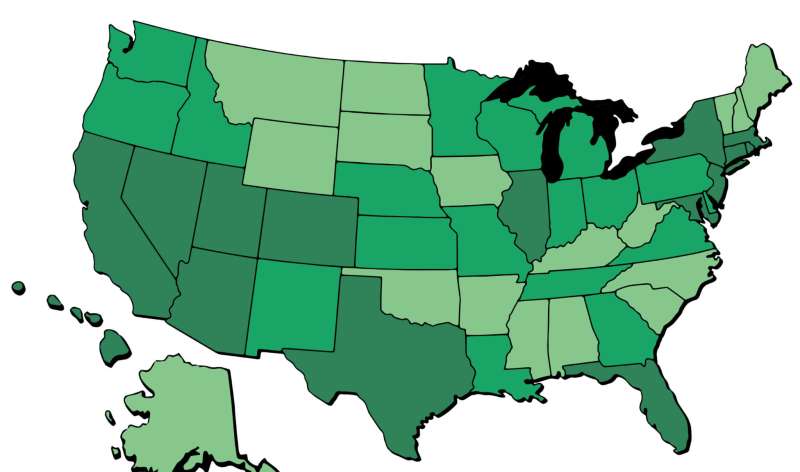
Link often referenced “thirds” of the country, a division that has been used for analysis which very simply divides states in the most rural third, the least rural third, and the middle third. Whether it’s due to poor messaging, a lack of effort, or just a failure to connect, these thirds show heavy favors to one party.
The most rural third, in Link’s breakdown, is represented in the U.S. Senate by 26 Republicans and 8 Democrats. The middle third is split more evenly, with 16 Democratic Senators and 20 Republican Senators. The least rural third has 21 Democrats and 7 Republicans.
There’s just over a handful of states that are split, notably Montana, Wisconsin, Alabama, Arizona, and Colorado. Link admitted this is an imperfect measurement, but that it shows the general trend that the parties are reaching different parts of the country.
There are some states that don’t line up with this split, like Texas, which is in the least rural third, but has two Republican Senators. And Vermont, which is tied for the most rural state in the country with Maine in the calculation, but has a Democratic Senator and Bernie Sanders, who is listed as an independent.
Overstating the Presidency
Trump’s victory in Iowa in 2016 seemed to signal a massive shift in voting preference in everywhere except urban centers. Many areas where Obama won in 2008 and 2012 saw Trump win in 2016. However, Link made the case that Democrats shouldn’t accept this as the new norm, especially if they want to regain any legislative authority.
“For 2020, the Presidential race is hugely important, obviously,” Link said. “But the Iowa Senate race is really important because – what is stunning when you look at the data – Democrats, nationally, will never, never, win a majority in the United States Senate until we figure out how to win back rural voters.”
The presidential election is just one race, and swing voters do just that, swing between parties. While Trump was able to capture those votes in 2016, historically, they often vote for change – which is what Trump championed himself as above all else; something different.
But the view that the Democratic Party should now disregard all those voters who recently helped elect and re-elect Barrack Obama because they voted Republican in one cycle, is perilous. Additionally, it’s something Link says rural voters won’t take kindly to.
“This whole debate about whether the Democratic Party should double down on cities and ignore rural America is just a condescending question,” Link argued. “We don’t even think enough of rural voters to pay any attention to them? I mean, that’s crazy.”
Clinton 2016 Ads
Link’s argument is not an empty one. Hillary Clinton was viewed as a surefire winner once Trump won the Republican nomination. Yet as the general election campaigns got underway, and voters started to seriously consider supporting Trump, he gained in support.
“Think back to the Clinton ads in 2016; voters told us they decided very late between Clinton and Trump. Their first decision was that they couldn’t vote for Secretary Clinton,” Link explained. “And then they were still troubled because they didn’t really like Trump; they didn’t like the way he talked, and they didn’t like the way he treated people.”
While Trump continued gaining popularity, the Clinton campaign became frustrated – understandably. As more damning reports came out about Trump – things which had all but ended previous candidate’s campaigns – he seemed to only gain notoriety, media attention and support. Link explains that instead of speaking directly to those voters, and making the case why she was the better candidate, Clinton effectively shamed these voters with her ads and public comments.
“And then they watched the Clinton ads and the talking heads on the news,” Link remembers. “And basically, national Democrats and the Clinton advertising itself said that if you voted for Trump, you were either a racist, a misogynist, or you were stupid.”
“The tagline of all those ads was basically, ‘how can you vote for this guy?’ For a lot of rural voters, they said, ‘well, I didn’t want to vote for him, but I could not vote for her. And why are you judging me because I’m considering voting for this guy,’” Link explained. “It’s not that they were in love with him; they felt like they had no choice.”
No Third is Deplorable
Now we’re in 2019. Donald Trump is the Republican incumbent and there’s enough Democratic candidates to field a full football game with subs. It’s more than most care to keep track of, and it’s easy to over-emphasize who wins the nomination and the presidential election, while forgetting how important Senate representation is.
But Link warns that Democrats, both as individual candidates and a party, must not forget that rural areas control a bunch of those Senate seats. While it may be easier to craft a message that uniformly connects with urban voters, and much quicker to show up in urban centers to efficiently speak to thousands of voters at a time, rural communities deserve that attention too.
“If you have the view that we should ignore a third of the nation: that’s not helpful,” Link argued. “That’s not how you grow a national party, that’s not how you win a presidential election, that’s not how you win back the United States Senate. So, I don’t believe that’s helpful.”
Link made a special point to bring attention to the fact that not everyone in the country is a dedicated partisan, and that a majority of the country doesn’t vote down party lines. We saw this in Iowa in 2018, where Democrats won back seats at the state and federal level, and some were able to come closer to unseating Republican incumbents, like Steve King, than anyone thought they would.
“For so many people out there, the party labels mean very little to them,” Link said. “We [partisans] get so teed up on whether you’re a Democrat or a Republican, but for them it’s just a proxy for politician.”
By Josh Cook
Graphic by Rob Bingham
Posted 7/2/19