One of my co-workers at the Des Moines Register was Gene Raffensperger, an excellent reporter with a delicious sense of humor.
When Raff was working on a dull story, he often would announce to colleagues, “We’re going to need another tanker of Murine. I’ve got an eye-burner here.”
Raff is no longer with us. But if he were, he would be telling us we need another tanker right now, this one filled with Maalox — because there will be lots of upset stomachs in the coming weeks.
Americans already are dealing with tremendous amounts of stress, thanks to the worst epidemic in a century, the worst economic collapse since the Great Depression, and the most contentious presidential election in our lifetimes.
This mega-level stress has increased since Friday night, when U.S. Supreme Court Justice Ruth Bader Ginsburg, a trailblazer for women’s equality, died at age 87.
[inline-ad id=”2″]
Replacing a Supreme Court justice never is a picnic. But it’s obvious filling Ginsburg’s seat will be an epic knock-down, drag-out battle.
Two names guarantee that: Mitch McConnell and Merrick Garland.
When Justice Antonin Scalia died in February 2016, nine months before the presidential election, President Barack Obama nominated Garland, a centrist judge on the U.S. Court of Appeals and a respected Justice Department attorney before that.
But McConnell, the Senate majority leader, made it clear there would be no confirmation vote on Garland’s nomination because the vacancy occurred so close to the election. “The American people will choose the next president, who, in turn, will nominate the next Supreme Court justice,” McConnell said.
And that’s the way it was — in 2016.
[inline-ad id=”3″]
But last week, following word of Ginsburg’s death, McConnell’s concern for the voice of the American people evaporated. He said the Senate will carry out its constitutional duty and vote soon on President Donald Trump’s nominee.
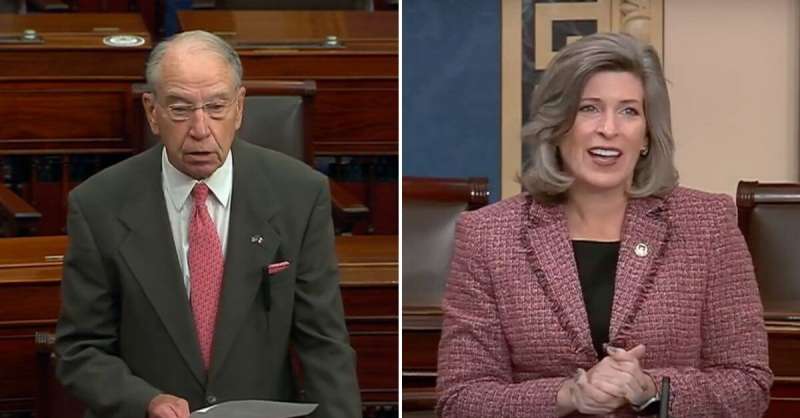
This change has put a spotlight on Iowa’s two U.S. senators, Chuck Grassley and Joni Ernst.
The two agreed in 2016 — that the president elected in 2016, not Obama, should be the one to choose the replacement for Justice Scalia.
Grassley articulated that view: “A lifetime appointment that could dramatically impact individual freedoms and change the direction of the court for at least a generation is too important to get bogged down in politics. The American people shouldn’t be denied a voice.”
And that’s the way it was — in 2016.
[inline-ad id=”1″]
But Ernst and Grassley now say they will support Trump’s nominee, whoever it is.
This flip-flop by McConnell and others has given rise to descriptions of shameless hypocrisy, partisanship chicanery and an unwillingness to play by the same rules they imposed four years ago.
One Republican who has stuck to her principles is Sen. Lisa Murkowski of Alaska.
“I did not support taking up a nomination eight months before the 2016 election to fill the vacancy created by the passing of Justice Scalia,” she said over the weekend. “We are now even closer to the 2020 election, and I believe the same standard must apply.”
There is much at stake in this Supreme Court fight because the court will address a raft of issues sooner or later: the Affordable Care Act, abortion rights, legal protections for “Dreamers,” voting rights and legal protections for LGBTQ people.
[signup_form]
Democrats see McConnell’s about-face as the ultimate disregard for fairness — especially with control of the White House, and the Senate itself, up for grabs on Election Day.
If the Senate goes ahead and confirms Trump’s nominee before the election, or if the Senate votes on the nomination after the election but before newly elected senators are seated on Jan. 3, get that bottle of Maalox and pour yourself a big glassful.
If Democrats take the White House and win a majority in the Senate and keep their advantage in the House, don’t be surprised if they enact sweeping payback legislation they would not consider otherwise.
[inline-ad id=”6″]
Court size: The number of seats on the Supreme Court is not stated in the Constitution. The number is set by law and has fluctuated through the years. Democrats could vote to add seats to the court to cut into the conservatives’ majority there.
New states: Another possible response involves granting statehood for Washington, D.C., and Puerto Rico. That would increase the number of senators from 100 to 104, with most of the new members being Democrats. D.C. and Puerto Rico statehood also would likely dilute the number of Republican seats in the House.
Filibuster: Getting rid of the filibuster, which now requires 60 votes before most Senate action can proceed, would reduce the ability of the minority party to bottle up votes and make it easier for the majority party to proceed when it wishes.
My friend Raff probably would be wise enough to see that one tanker of Maalox will not be enough to take care of us between now and springtime. Act accordingly.
By Randy Evans
Posted 9/23/20
Iowa Starting Line is an independently-owned progressive news outlet devoted to providing unique, insightful coverage on Iowa news and politics. We need reader support to continue operating — please donate here. Follow us on Twitter and Facebook for more coverage.