Can the Iowa Democratic family avoid a repeat of the 2016 family feud that seriously fractured party unity?Because the Sanders-Clinton race was so close that year, there was a plethora of hard feelings and theories about unfair or a rigged result in the 2016 caucuses. Some argue that the deep division dampened support for Hillary Clinton and resulted in Trump’s election.
The “ugly ghosts of division” of 2016 lasted longer in Iowa than nearly any other state. It took more than two years to mend the bitter divide created by the 2016 fight. The 2018 midterm successes did wonders to reunite the party with the election of Cindy Axne, Abby Finkenauer, and wins in the Iowa House. But the potential for contentious issues to open old wounds between progressives and moderates is real.
There are signs that the bitter idealogical divide of the 2016 Sanders-Clinton split may be remerging as the presidential campaigns search for a breakout issue. The current split isn’t over personalities but rather over issues like Medicare For All, socialism, and the New Green Deal.
Just as Democrats are divided in Washington between moderate and more progressive factions, the presidential campaigns and/or their supporters are starting to become more critical of one another. It’s natural that there is division and competition and it certainly is healthy and welcomed. The concern comes when debate over issues escalates to the point of creating long-lasting damages, making the eventual nominee unacceptable to some Democratic voters.
We are already seeing evidence of attacks that could permanently handicap candidates. The front runners are expected to get criticism. As expected, Joe Biden and the other polling leaders are getting criticized for past positions and votes. The danger arises when voters become so entrenched in their opposition to a candidate that they refuse to support them if they are the ultimate nominee. These opinions are already showing up in some social media circles as some voters are identifying candidates they couldn’t support under any condition.
So far, there is push-back on this idealogical blacklisting of candidates. Politico ran an article in early May that quoted several Iowa Democratic leaders about their efforts to nip this toxic candidate bashing early.
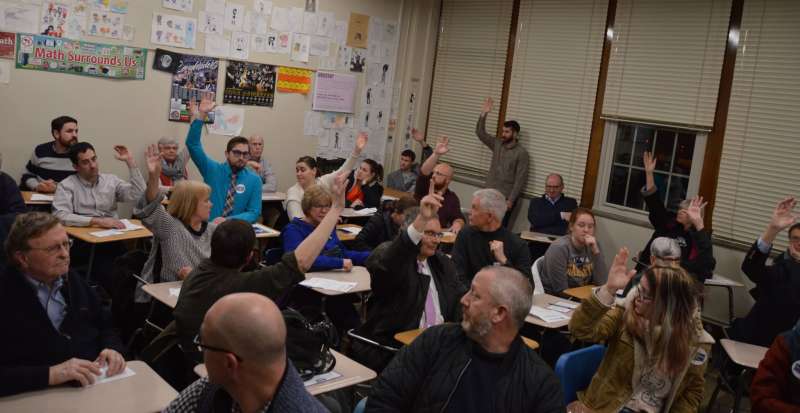
“There is no tolerance whatsoever for the bullshit this time,” Polk County Chair Sean Bagniewski told Politico. “When I see people standing up spouting conspiracy theories in meetings, people start reacting. When it’s on social media, there’s an avalanche of people saying, ‘not this year, we’re not doing this again. There’s almost an overreaction.”
Bernie Sanders’ senior adviser in Iowa, Pete D’Alessandro, echoed a similar intolerance for the 2016 infighting in the Politico piece.
“We can’t keep rehashing 2016 because every time we’re doing it, even at a meeting, we’re not organizing. We’re not knocking on doors,” he said. “2016 is over. It doesn’t do us any good to have blood in the eyes. It’s gone. This is 2020, it’s a different race, it’s a different dynamic. We have to win this time.”
Indivisible, one of the largest progressive groups, is so concerned with this phenomenon that they are asking voters to take a pledge to support the eventual Democratic nominee. They are calling for a spirited primary debate but one that is constructive, respectful and inspiring.
The Indivisible pledge reads, “We’re launching a massive grassroots campaign to get you, every Democratic presidential hopeful, and every activist to sign onto a simple promise: that no matter our differences in the primary, once Democrats have a nominee, we’ll do everything in our power to get the nominee elected.”
Party leaders believe that Democrats can conduct a competitive caucus season and avoid the bitter ideological devisions. They think Democrats are so motivated to beat Trump they will unite once a single Democratic nominee is agreed upon.
Others warn that the same ideological struggles that ignited the Sanders-Clinton split still exist. They warn that it will play out again if activists insist on ideological purity tests for the eventual nominee. The answer will come down to how badly activists want to defeat Trump. Will they be able to accept a nominee that doesn’t perfectly fit their ideological requirements?
If Democrats aren’t able to accept a less-than-perfect nominee, they may guarantee Trump’s reelection.
by Rick Smith
Posted 6/4/19