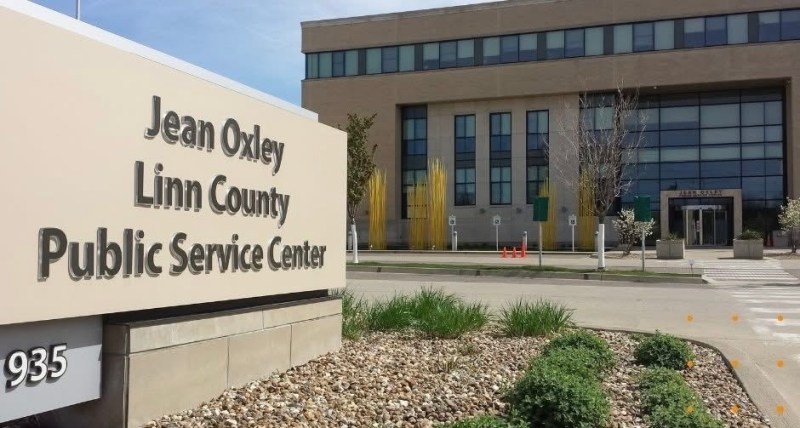
The Linn County Board of Supervisors voted in favor of an 18-month moratorium on the acceptance of new applications to rezone property for large-scale data centers on Wednesday. Supervisors Kirsten Running-Marquardt and Brandy Meisheid voted yes, whereas Sami Scheetz voted no.
Following the meeting, Scheetz took to Facebook to state his reasoning behind opposing the measure.
“When one of the largest companies in the world looked at our rules, they tried to bypass them. I’m proud that we set the bar that high,” Scheetz wrote. “We’ve never even had the chance to use our ordinance. No application has come forward. We are suspending our own rules before we ever tested them. Every other lowa county that paused did it because they had no rules yet. We already did that work. Let’s trust the ordinance we built.”
According to Running-Marquardt, who backed the moratorium, the boardroom and two overflow rooms were filled with constituents wanting to hear the outcome of the resolution. She said roughly 35 attendees spoke during the public comment section, most—though not all—of them voicing their concerns about electrical usage, water consumption, and long-term potential impacts if the resolution did not pass.
“There were a couple people who were against us having a moratorium. Some of them had valid concerns about jobs and economic development,” Running-Marquardt told Iowa Starting Line. “But I really believe that we can have smart economic development and have a good positive long-term impact for jobs in the area and still do what’s right for our people.”
The resolution will put a pause on any new data center applications in unincorporated Linn County until January 1, 2028.
This does not impact the current construction of the 13 data centers in Cedar Rapids because the Board of Supervisors do not have jurisdiction within city limits.
The resolution does, however, allow exceptions for data centers powered strictly by nuclear or solar energy. This specific carveout protects the potential restart and expansion of the Duane Arnold Nuclear Power Plant in Palo, an effort Running-Marquart supports alongside its projected 400 permanent union jobs.
Even with the moratorium in place, tech giants continue to pursue alternative avenues. Google has sought annexation into Palo for a proposed data center near the Duane Arnold plant to bypass county oversight—an effort Running-Marquardt expects the tech giant will continue. By directly pursuing annexation in Palo, Google circumvents set regulations for unincorporated areas of the county.
While the county also passed a comprehensive data center ordinance in February, Running-Marquardt noted that recent national data revealed risks of data centers shifting infrastructure and power costs onto residents. Locally, environmental and utility alignment concerns have also mounted.
“There were a lot of concerns that I had from some of the consequences from the current data hunters that are moving forward, such as the Alliant gas plant, the over 100 tons of pollution being put in the air,” Running-Marquardt said.
Addressing labor unions worried that the 18-month pause delays local jobs, Running-Marquardt highlighted a severe regional worker shortage. Linn County recently delayed its own secondary road shop projects three times due to the lack of labor. Meanwhile, an estimated 6,000 workers are currently building the Cedar Rapids data centers, with 12,000 more expected. She stated the pause will help the county space out the labor demand and promised to review the timeline early if a market downturn occurs.
While Running-Marquardt acknowledges the economic concerns of the county’s data center proponents, she remains firm in how she sees these facilities fitting into the bigger picture for the community’s residents.
“We’ve been approached by billionaire prospectors who don’t seem to care about our community. For me, we need to have our comprehensive plan updated,” she added. “We can be pro-growth, but we can do it in a smart way where we say where they should go and where they shouldn’t.”