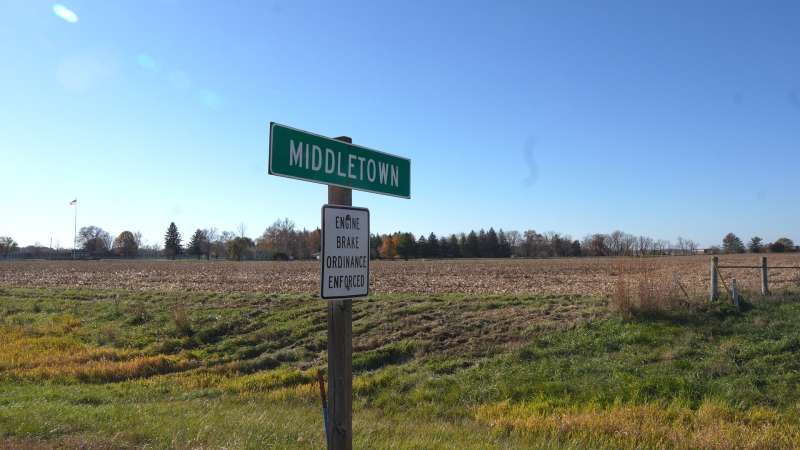
The Army will detonate roughly 10,000 pounds of degraded lead azide at 9 a.m. Wednesday, Nov. 25 in Middletown, Iowa. Just one day before the detonation, federal officials held their first press conference about the plan and how it was rolled out to the public.
In addition to taking questions, leaders from the Army, ATF, FEMA, EPA, HHS, and USDA laid out why they think detonation is the best option, what they’re doing to limit lead fallout, and what residents should do.
Here are the five key takeaways:
1. Officials say the material can’t be safely moved or neutralized
ATF Director Rob Cekada said inspectors found crystallization on the outside of the barrels in March, which kept crews from topping off the ethanol-water mixture that stabilizes the lead azide. They determined that opening a lid could set off a barrel and every barrel in that magazine, he said.
“It’s not a matter of if, it’s a matter of when,” Cekada said.
Col. Aaron Teller, who commands the 71st Ordnance Group which specializes in the disposal of explosives, said a chemical neutralization approach “proved to be an unsafe method.”
Officials said every agency involved agrees a controlled detonation is the best option. As temperature decrease, experts are concerned that the lead azide could become more unstable and dangerous.
2. Evacuation advice is narrow and depends on a forecast that will keep changing
Sean Kaufman, an deputy assistant secretary at HHS, said pregnant women, children and people with chronic disease inside the modeled plume area should evacuate. Others nearby should use their own judgment and stay inside, he said.
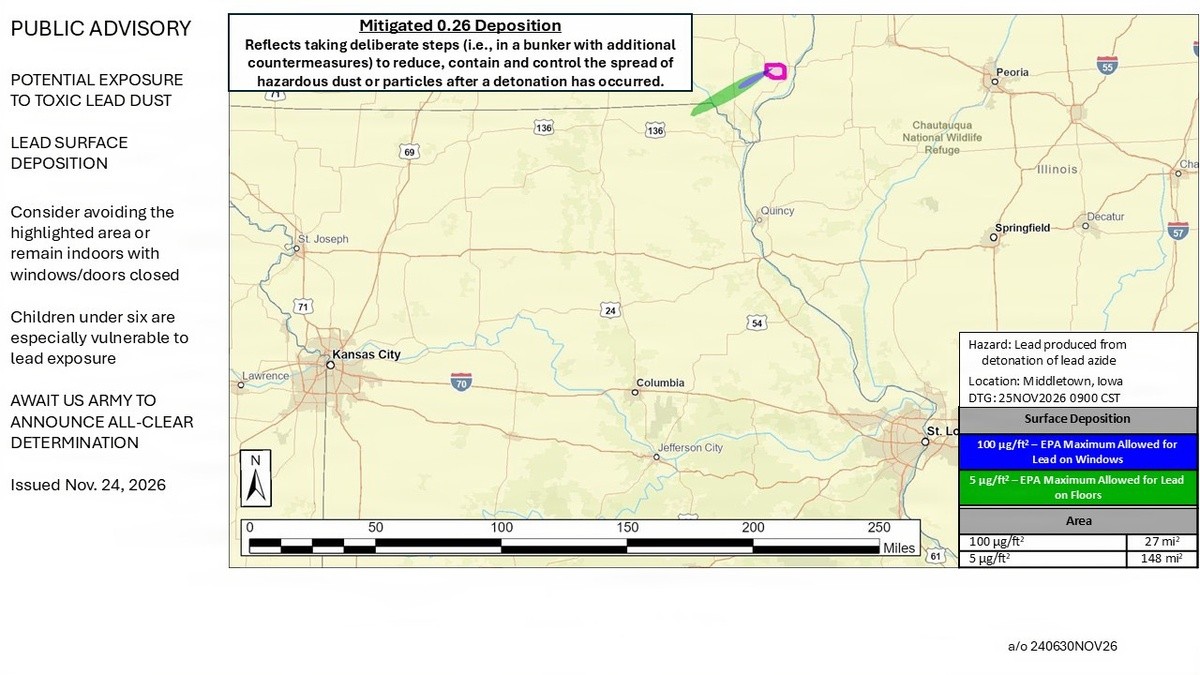
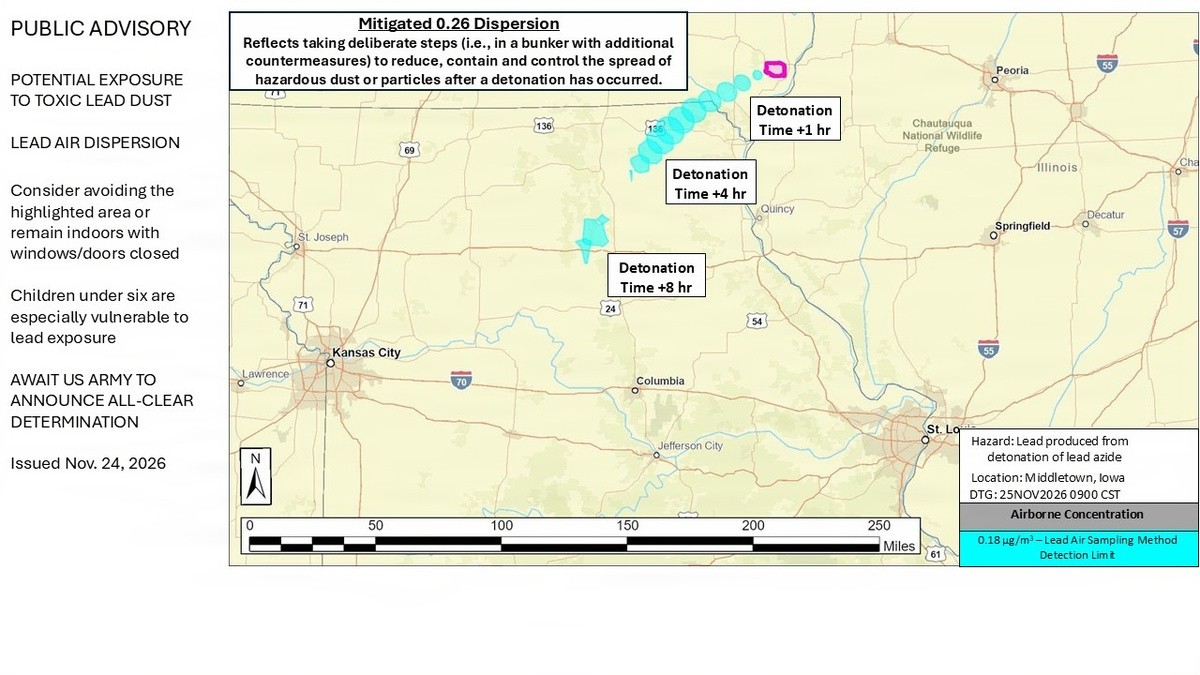
Army modelers showed maps of where lead dust and airborne lead could exceed EPA levels, and USDA estimated about 350 farms could be affected. The Army says its mitigation, including water sprayers, wetted ground, foam and containment screens, should cut the release well below earlier worst-case models.
EPA says it will sample soil from homes, properties and schools on request, and FEMA is offering relocation help.
FEMA is assisting with the recommended temporary relocation of residents of Middletown and designated surrounding areas. That assistance includes transportation, temporary hotel accommodations, meals, water, and other supplies. If you are unsure if you live in an impacted area, call FEMA at 1-800-621-3362.
The Army’s latest information can be found at its notification website.
3. Questions about the rollout went largely unanswered
Asked whether he had regrets about the shifting detonation dates, which moved from Friday to Monday and then again to Wednesday, including a brief halt by President Donald Trump, Acting Army Secretary Adam Telle said he understands Iowans’ frustration.
Asked whether the mitigation measures described were in place for the original Friday date, he said they have been “continuously added.” But he did not clarify when and what kind of new mitigation efforts had specifically been added.
Officials said the Army began public outreach after the problem was found in March, including an October open house. Iowa officials in eastern Iowa have said the Sunday, Nov. 15 plume maps were the first notification some had of the potential regional impact.
4. How much lead escapes is still a forecast
Maj. Gen. Eric Shirley, commander of the US Army Sustainment Command, said the first public models assumed no mitigation at all (as if detonated in an open field). The newer maps reflect the added water tanks, foam, and screens, he said. But the maps shown Tuesday still forecast areas where lead dust could exceed EPA clearance levels for a window or floor, and where airborne lead could exceed detection limits.
FEMA’s Cam Hamilton called the older maps closer to the worst case. Dr. Andy Nelson, director of the Army’s Construction Engineering Research Laboratory, stressed they’re forecasts that will be re-run with new weather data and replaced by a post-event model calibrated to ground samples.
5. The work continues after the blast
EPA said it will keep monitoring “for as long as it takes” for levels to return to safe, and will publish results. HHS said cleanup will happen if needed and that “the work doesn’t end after the detonation.”
Telle said the Army is also reviewing every weapons storage facility to prevent a repeat. Cekada explained that the lead azide was consolidated in Middletown in 2009 and that the barrels were checked monthly and topped off each September.