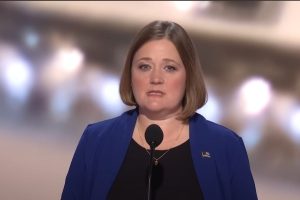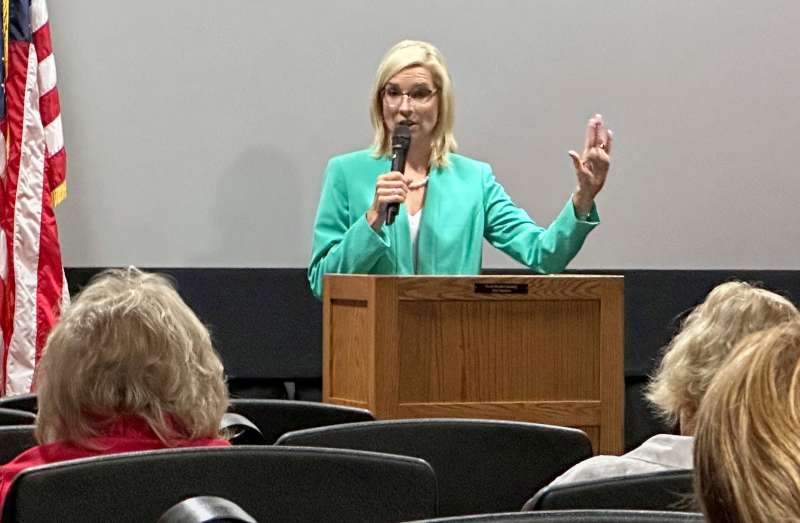
While telling Iowans she didn’t go to Congress to get wealthy, Ashley Hinson spent years championing a tax provision that directly benefits her family’s multimillion-dollar private business holdings.
Hinson, now the Republican nominee for U.S. Senate, has repeatedly claimed that she “proactively” sold her individual stocks to show Iowans that serving in office wasn’t an “investment opportunity.” But federal financial disclosures first reported by Heartland Signal show her family’s net worth climbed from a maximum of $1.6 million before she took office to as much as $8 million by 2024.
The growth was fueled in part by a private insurance portfolio she never divested from. She disclosed up to $5 million in privately held stock in High Street Insurance Partners. Because Hinson only divested from publicly traded stocks, she can accurately say that she does not trade public stocks while leaving the portfolio untouched.
LLCs are what’s known as pass-through entities — businesses where profits flow directly to the owners and are taxed at the individual rate. And there is a provision in the federal tax code, Section 199A, that lets pass-through business owners shield 20 percent of their business income from federal taxes.
Hinson has fought to make that provision permanent since before she was even sworn in. In 2020, she told the Dubuque Telegraph Herald she wanted to see the pass-through deduction extended, saying it “needs to be made indefinite.” Once in Congress, she co-sponsored bills to extend it in every single Congress she served in. In January 2025, she testified before the House Ways and Means Committee — a panel she doesn’t even sit on — specifically to advocate for making the provision permanent. When Trump’s One Big Beautiful Bill came to the House floor, Hinson voted yes — twice. The bill made Section 199A permanent.
The nonpartisan Tax Law Center found that the vast majority of the provision’s benefits flow to the top one percent of income earners, saying it creates opportunities for tax gaming. Extending it will cost the federal government roughly $730 billion between 2025 and 2034, according to its analysis.
Hinson’s tax returns are not publicly available so it’s unclear how much the 199A deduction has contributed to her tax savings. Hinson’s campaign did not respond to a request for comment.
Last December, Hinson refused to sign a discharge petition that would have forced a House floor vote on the End Congressional Stock Trading Act—legislation that would have required members of Congress, their spouses, and their dependent children to divest from private holdings like hers. Instead, she co-sponsored a weaker bill that government watchdog groups said would do nothing to address the core conflict of interest. The portfolio remains intact.