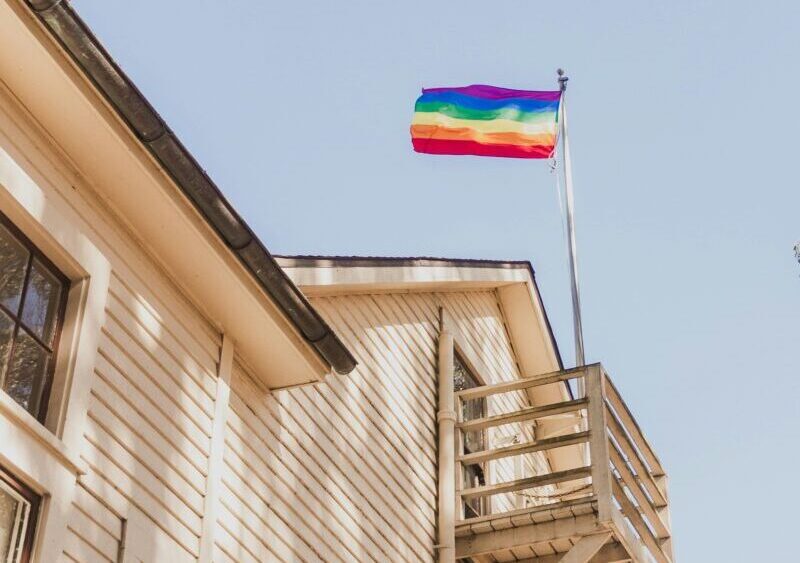
As lawmakers restrict the rights of LGBTQ Iowans, more and more are leaving in favor of states with friendlier laws, with over half saying they’ve at least considered it.
Since President Donald Trump’s re-election in 2024, and Iowa Republican legislators’ swift cutting back on DEI and restricting rights for queer and trans Iowans, many LGBTQ Iowans are facing the decision to flee the state in order to seek out a better life elsewhere.
When asked about what Iowa must do to resolve its dwindling LGBTQ population, their answers were unanimous: Iowa needs political change.
“Make Iowa a good place for everyone to live,” Bobbi Saldaña, an Iowa native now living in Seattle, said. “All of my young adult life, I’ve just seen legislation making Iowa a worse place to live for the majority of people. If Iowa wants to stop hemorrhaging young, talented people, the state legislature needs to focus less on culture wars and more on making Iowa a safe place for everyone.”
Though current laws drive away many LGBTQ citizens, many former Iowans still have hope for Iowa’s future. But they know action must be taken.
“It’s going to take work to build a better world, and part of that is Iowa actually establishing a relationship with the queer people who live in it,” said Nate Petrik, who moved from Sioux City to Minneapolis.
Former LGBTQ+ Iowans reached out to Iowa Starting Line to tell their stories.
Cas Berta

Cas Berta was born in Davenport. Part of a military family, Berta was no stranger to moving across the country, first to New Jersey, then to Arizona, and finally back to Davenport when they reached middle school.
“It was interesting,” they said. “People in Iowa stay in Iowa, and don’t necessarily leave, especially when they’re young. It’s kind of a place where people stick and stay.”
Iowa’s culture was entirely different from what they had been used to in other states.
“Culturally, Iowa was the nicest and most milquetoast,” Berta said, “Not diverse in the way Arizona or New Jersey was… Even being a young, white Jewish person, I was very much othered. People were just very ignorant about parts of my identity.”
It ultimately took stepping away from Iowa—when they moved to Boston in 2018 for college—for Berta to be confident enough in their identities as both a Jewish and transmasculine person.
“It took me going to college and coming back to visit to realize I was queer and trans,” Berta said. “In Iowa, there was such little language and such little exposure to differences. I came into myself, especially, when I wasn’t in Iowa.”
Once COVID-19 struck, Berta was forced to return to Iowa for a while, distraught at having to leave behind the freedom that Massachusetts afforded them.
“I had to choose if I wanted to closet myself, or if I was going to be the first trans person my friends and family had met, where before I was living so authentically,” they said.
“I went back to being the first,” Berta added. “I was the first Jewish person people had met, sometimes I was the first outwardly queer person people had met, and then the first trans and nonbinary person people had met. I went back knowing I was taking all these steps back and having to educate people.”
After being refused gender-affirming healthcare by a doctor in Iowa, Berta ultimately made the decision to settle back in Boston, where they were able to thrive.
“With the many configurations of who I am—being an actor, being a person who talks about politics and advocates for social justice in a way that people find annoying, and someone who valued diversity—Iowa was never going to be the place that I stayed,” Berta said.
Stories like Berta’s are becoming more and more a reality for vulnerable populations within Iowa.
LGBTQ+ Iowans make up 3.6% of the population. Out of this percentage, 27% are raising children, and 22% face food insecurity. Earlier this year, the Iowa Civil Rights Removal Act was passed by Iowa Republican legislators, stripping transgender individuals of protections regarding healthcare, housing, job accessibility, and more.
Among LGBTQ+ young people in Iowa, 51% said they or their family have considered leaving the state, including 69% of transgender and nonbinary people, according to a survey done in 2024.
Caroline Adams
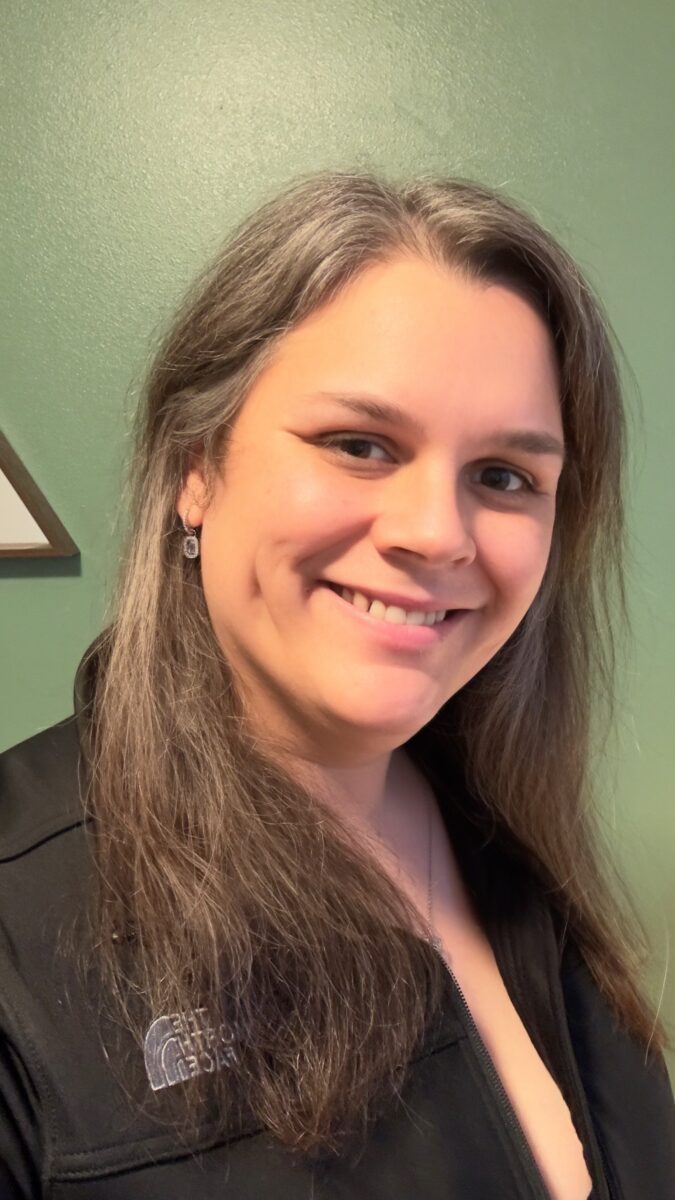
Caroline Adams moved to Oregon with her wife and mother-in-law in February of 2025 because of the presidential election results. She says she used to feel safe, or at least not targeted, for being queer and transgender.
“When I first moved to Iowa six years ago in 2019, just before the pandemic, (the attitude toward LGBTQ+ individuals) was one no one seemed to care about, or that it was no big deal,” Adams said. “But it progressively got worse.
“I remember one particular instance (where) my wife and I were walking into (a store) holding hands,” she added. “We got dirty looks from people who were walking out. And I thought, ‘OK, something’s wrong. Something has changed, and the mood here is not conducive to us living here anymore.’ So we left.”
When asked about what Iowa needs to do to make itself a safe enough place for LGBTQ+ citizens to want to stay, Adams pointed to the regressive political environment.
“Iowa was seen as rather progressive for the longest time,” Adams said, “People moved there. I moved there. I moved there even in 2019, when Kim Reynolds was already governor, because I had this perception of Iowa that—no matter what—their politics were at least on the edge of what was progressive at the time. And now, I see Iowa politics as regressive.”
Joe Mirabella

Joe Mirabella, who was raised in Cedar Rapids, moved to Seattle in 2007 after graduating from the University of Iowa.
He said he moved because he struggled finding a job, as well as with bigotry and violence that accompanied him here in Iowa.
In one instance, he fell victim to a violent hate crime at night outside of a gay bar in Iowa City. The experience caused him to ultimately leave Iowa, and he doesn’t plan to return.
“I felt isolated,” Mirabella said, “And I knew that more was available to me elsewhere.”
Currently, Iowan outbound moving trends show 38% of movers leave due to seeking job opportunities elsewhere, while 30% leave due to family and lifestyle reasons.
“Iowa needs a government that is willing to listen,” Joe states, “The current legislation is repelling people, and the public officials who have cut DEI programs and who are advocating for the demonization of LGBTQ individuals are partly responsible for driving away economic development.”
Bobbi Saldaña
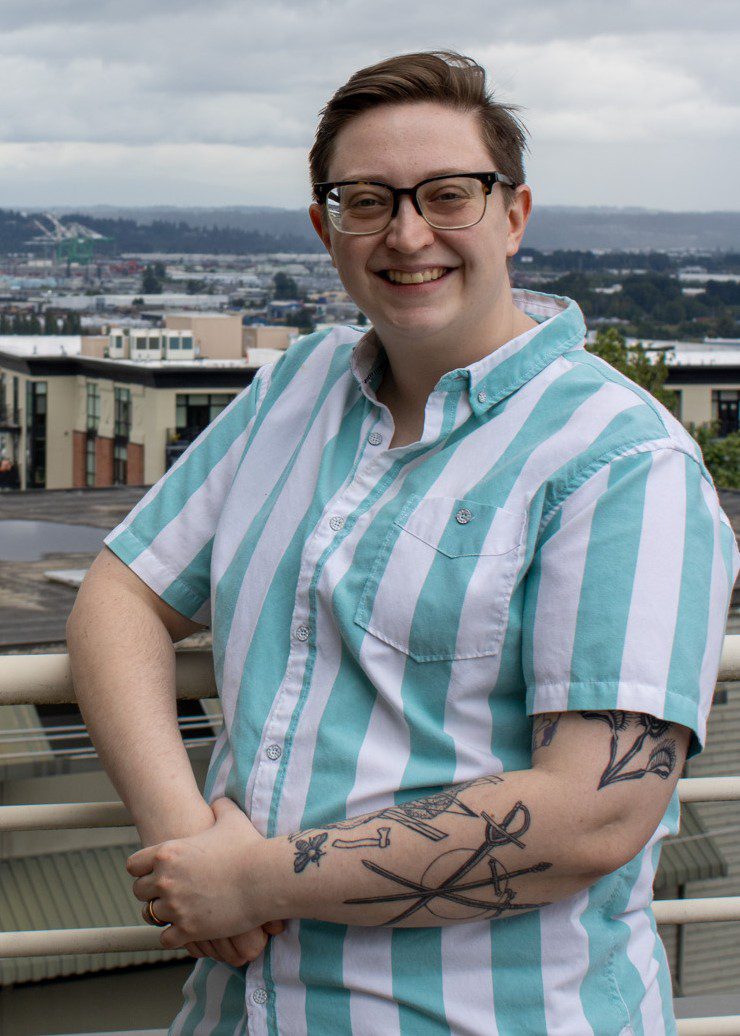
Bobbi Saldaña was born in Ottumwa and lived in Oskaloosa most of her life, and struggled growing up in a homophobic school environment.
“I didn’t come out until college, but when I did, I felt like a whole person,” Saldaña said. “Prior to my coming out, I was shy and scared, but after I was able to be more confident in myself and am now often described as ‘the life of the party.’
“I really didn’t think about leaving Iowa more permanently until I was working with the state legislature,” she said. “I was a political science major and did two sessions as a clerk in the legislature. I don’t remember exactly what bill it was, but there was one specific debate that I remember essentially boiled down to, ‘Are queer people deserving of human dignity?’
“At first, I tried to laugh it off the same way I did with hate I got on the street,” Saldaña added. “But as the debate dragged on, the darker reality set in—these people who make our laws do not think I am fully human, nor that I am worthy of respect.”
Saldaña left for law school in Seattle in 2019, and laments that Iowa’s legislature has become further hostile toward LGBTQ+ individuals in the years since.
“Now, as I talk with my wife about having kids, I know that coming back to Iowa is not an option,” she said. “I would not be able to protect my family from hate in Iowa, and I do not want my children to grow up in an environment where they might be at risk because of who they are and who their parents are.”
Ty and Frank Barnes
Ty and Frank Barnes moved from Iowa to Denver, Colorado, at the beginning of June this year. Ty was born and raised in a small town near Fort Dodge, and left to find work elsewhere. Frank was raised in California’s Bay Area. The two met in Denver before moving to Webster City—a stark contrast to Frank’s upbringing.
“We never really saw the outward support of the LGBTQ+ community unless we went down to the East Village (in Des Moines),” Ty said. “And to have to make that trek all the time just to have a sense of validation or even to feel safe is what neither of us wanted for ourselves.”
The couple wanted to live in a larger city, but the lack of visibility for LGBTQ+ individuals within Iowa was the final nail in the coffin in their decision to leave.
Now, they feel incredibly comfortable living authentically in a place they both can call home.
“We’ve done so much searching and so much understanding about who we are. We’ve done it individually, and now we are in the chapter of finding it as a married couple,” Ty added. “So being able to walk out and see businesses down here in Denver with pride flags galore, it’s like culture shock.”