Black history is important for everyone to learn about. Check out these eight places in Iowa where you can learn something new, from monuments to museums.
Like most other states, Iowa has a long and complicated history with its treatment of Black Americans, but in many ways, the Hawkeye State has been ahead of the curve when it comes to human rights. For example, the landmark Supreme Court case that integrated schools nationwide in 1954, Brown v. Board of Education, was actually very late compared to Iowa’s standards. Iowa had integrated schools more than 80 years earlier in 1868 due to the case Clark v. The Board of Directors, according to the Des Moines Register.
This is just one of the many important and interesting tidbits about Black history in Iowa that many folks don’t know. There’s also local history that goes forgotten, such as the state’s southernmost city, Keokuk, being home to The (Keokuk) Western Baptist Herald newspaper, the first newspaper in Iowa to be run and owned by a Black woman, Amos Johnson.
With so much local and national history rooted in Iowa, it’s only natural to want to learn more, especially during Black History Month. Here are eight places you can elevate your knowledge in Iowa, both during Black History Month and throughout the rest of the year.
1. African American Museum of Iowa
Address: 55 12th Ave SE, Cedar Rapids
One of the biggest places to learn about Black history in Iowa is undoubtedly the African American Museum of Iowa. The museum has been around since 1993, though only in its current building since 2003. According to its website, the museum’s mission is “[t]o preserve, exhibit, and teach the African American heritage of Iowa,” and it does so through myriad exhibits that cover everything from Black communities in Iowa to ships that brought enslaved individuals to North America.
Many visitors to this museum experience the same revelation: It’s small but mighty. The museum has permanent installations but also rotates in new exhibits as they’re curated. Folks report loving that they can learn not only about Iowa but also about Western Africa. “The museum covers black Iowans that contributed to education, science, the civil rights movement and other fields. This place is a hidden gem that is worth visiting,” one reviewer wrote on Google, where the museum has 4.7 stars.
2. The “A Monumental Journey” art installation
Address: Grand Ave & 2nd Ave, Des Moines (Hansen Triangle Park)
Iowa has changed history for the entire country on several occasions, and one of those times came in 1925. You see, the American Bar Association didn’t treat Black legal professionals the same way as it did their white counterparts, so 12 Black lawyers banded together to officially form the National Bar Association, according to the Greater Des Moines Public Art Foundation.
In honor of them, an art installation titled “A Monumental Journey” from artist Kerry James Marshall was erected at Hansen Triangle Park in Des Moines, where the National Bar Association was founded. Local and national history collide along the park’s Principal Riverwalk, and you can witness the monument, which was completed in 2018, for free.
3. Fort Des Moines Museum & Education Center
Address: 75 E Army Post Rd, Des Moines
If you live in or around Des Moines, you can make a full day of learning by visiting the Fort Des Moines Museum & Education Center after you see A Monumental Journey at Hansen Triangle Park. Just make sure that day is Saturday, because this facility is open one day a week from 10 am to 4 pm.
The Fort Des Moines Museum & Education Center is unique because it honors Black military members, who often go forgotten in the conversation surrounding veterans at large. In May 2025, the museum revealed a special marker in honor of Black military members, and it’s at this facility for a reason. According to Black Iowa News, the only training facility for Black military members was Fort Des Moines.
More than 1,200 Black military members, who also held college degrees, began training there in 1917 alone, making this an important place in Black history. “At that time in 1917, the U.S. Army’s racial views were that Black men were not intelligent [enough] to lead and command soldiers during war. Their inherent racial views were debunked when these Black men successfully showed valor and leadership during battles in France and Germany,” retired Army major Don North explained at the time. He’s also the president of Grid North Historical Productions, which aims to “research the rarest African American history that made major changes in American life,” according to North (via Black Iowa News).
4. Drake University self-guided walking tour
Address: 2507 University Ave, Des Moines
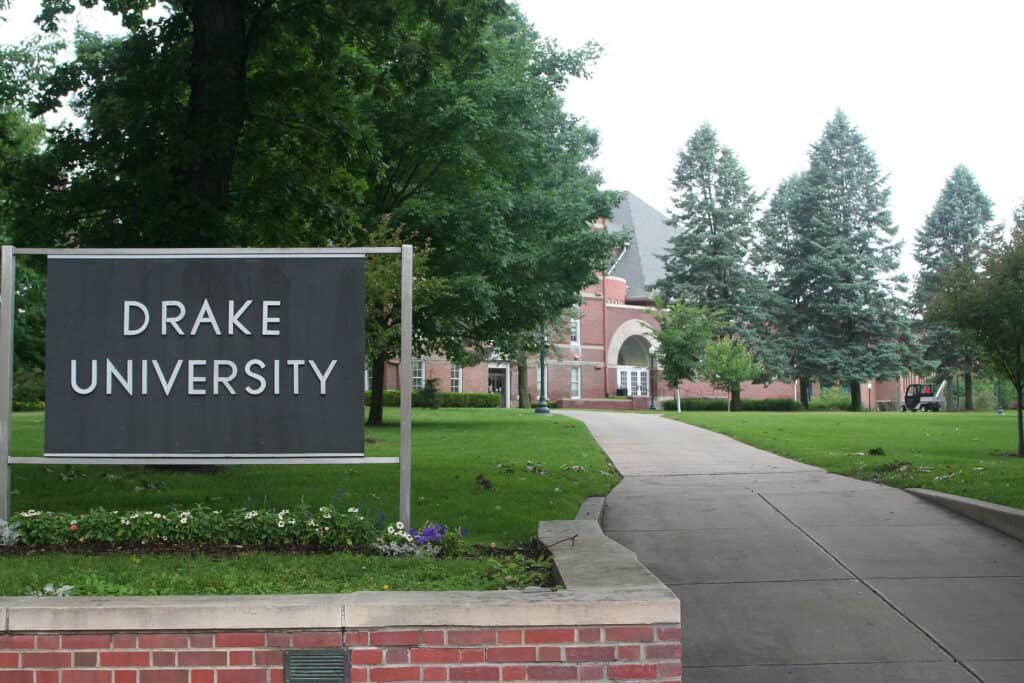
Des Moines’ very own Drake University has its own self-guided walking tour that features six stops along the way, each commemorating a Black student or lecturer who made history at the school. This tour is obviously great for anyone who’s attended Drake University—or is a prospective student—but it could be an excellent educational experience even if you haven’t studied in its hallowed halls.
The stops on this self-guided tour include various buildings across the campus, from a dorm building to the stadium, and the self-guided information online fills you in on why you’re making each stop. For instance, you’ll learn about the first Black professor to achieve tenure, and you’ll be introduced to the city’s first Black library director. As the latter shows, this history goes beyond the university’s perimeter; some of the school’s history is also Des Moines’ and Iowa’s history.
5. The “Shattering Silence” art installation
Address: 1111 E Court Ave, Des Moines
Another Greater Des Moines Public Art Foundation commission, the “Shattering Silence” art installation is a stunning work that was designed to memorialize a groundbreaking Iowa Supreme Court ruling from 1839. As such, the piece is situated near the Supreme Court’s building.
“Shattering Silence” resembles broken glass just like its name suggests, with shards jutting outward in varying lengths. It memorializes the Supreme Court case that prevented an enslaved man named Ralph Montgomery from being forced to return to Missouri, the state from which he’d escaped. This is just another example of Iowa being ahead of the curve and breaking historic barriers.
6. Buxton
Address: N/A
You won’t find a specific address for Buxton, and that’s because it’s an entire community that’s been lost to time. You can, of course, still visit the ground where Buxton stood, where the foundations of buildings and other remnants of the unincorporated town remain.
What makes Buxton so special, you ask? It was “Iowa’s Black utopia,” according to the West Des Moines Historical Society—a place where Black Americans were treated as equal to their white peers, which was uncommon in the nineteenth century. In the mines, they earned the same pay rate as white miners, and some Black residents of Buxton went on to become legal and educational professionals. The town had grown so popular because of this that, per PBS Iowa, Buxton was the “largest unincorporated city in the nation,” as well as the “largest coal mining town west of the Mississippi River.”
Sadly, not all good things last, and Buxton didn’t last long-term. But in its heyday, it was a thriving community built on equality, and you can still learn about it today. You can even go see the remnants of the community, located near Lovilia, for yourself.
7. The “Breaking Barriers” sculpture
Address: 1732 Jack Trice Wy, Ames
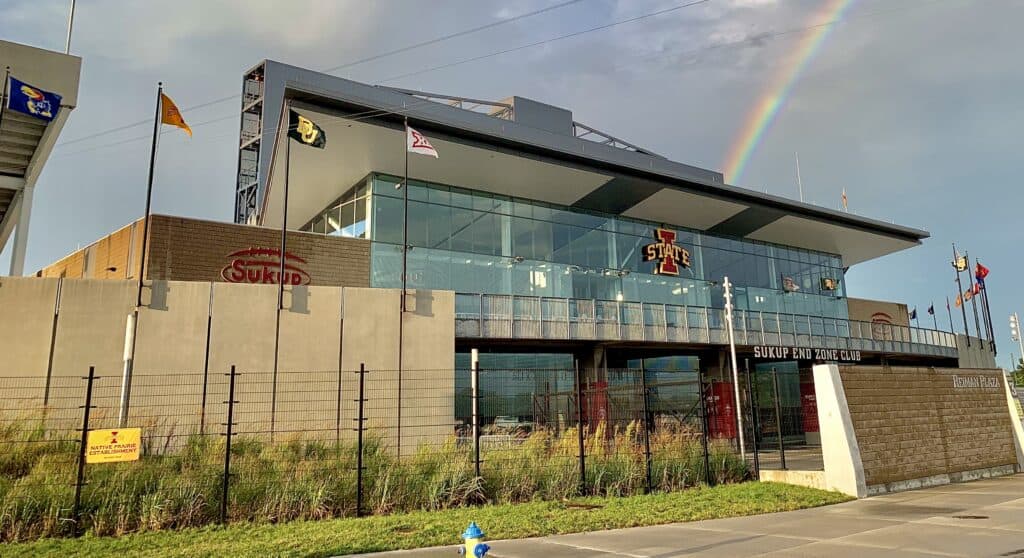
Another brilliant art installation that honors Black history and Black excellence is the “Breaking Barriers” sculpture at Iowa State University. Just like the university’s stadium is named after college football player Jack Trice, the sculpture, which sees Trice’s silhouette mapped out in negative space, is positioned outside the stadium and welcomes visitors.
Trice was the first Black student to play football—or any other sport—at Iowa State University, and he was an exceptional player. Tragically, he died in October 1923 after sustaining injuries during one of his first professional games as a member of the Cyclones, according to the university’s website. The statue has been watching over the grounds outside the stadium since 2023, and it’s a perennial reminder of a trailblazer whose life was lost far too soon.
8. Pop-in Museum Tour – Barbers, Buxton, and Beyond: Black Iowans and the Formation of Iowa
Address: 600 E Locust St, Des Moines
Many of the places on this list can be visited anytime, but if you’re seeing this before Feb. 20, 2026, you need to register to attend the Pop-in Museum Tour – Barbers, Buxton, and Beyond: Black Iowans and the Formation of Iowa event being held by the State Historical Society of Iowa. This event is slated to be a 45-minute tour that teaches guests about Black Iowans who shaped the state’s history. Pre-registration is mandatory, so make sure you fill out the form on the society’s website if you’re interested.
This article first appeared on Good Info News Wire and is republished here under a Creative Commons license.
Related: At Majority-White UNI, Highlighting Black History ‘Extremely Important’