Iowa has built a reputation as an agricultural powerhouse—there’s a reason some people only know us for pigs and corn—but farming is only part of the state’s economic story.
Over the years, Iowans have mined coal, manufactured millions of buttons, built household appliances, and processed meat for customers across the country.
Some of these industries helped entire communities flourish, while others put Iowa products in homes around the world. As technology changed, resources ran out, or businesses moved on, the state’s economic landscape shifted with them.
Here’s a look at several Iowa industries that once played a major role in the state’s economy.
Coal mining
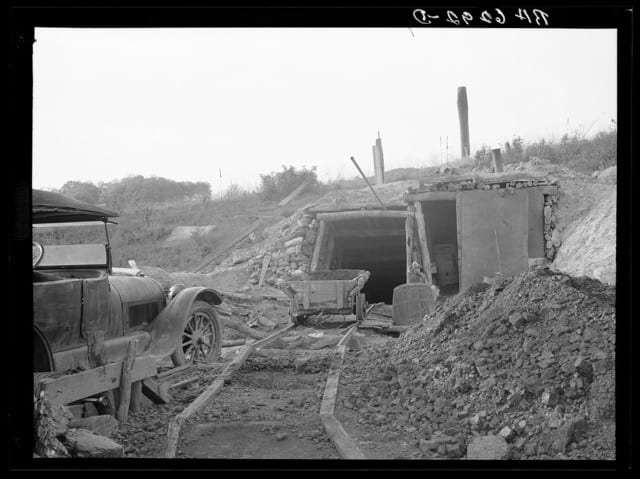
Once upon a time, it was coal that helped power Iowa’s growing economy. Iowans knew of the mineral long before the Civil War, but railroads arriving in the mid-1800s turned coal mining into a major industry, per the State Historical Society of Iowa.
Railroads needed enormous amounts of coal to keep their engines moving, and some operated their own mines to maintain a steady supply. Coal also heated homes and powered factories across the state.
Mining created jobs and brought new residents to communities throughout southern and central Iowa. Oskaloosa, Albia, What Cheer, Madrid, and Perry all had ties to the industry. But some of the most interesting stories come from the towns that grew up around the mines and eventually disappeared when the coal ran out. For instance, Buxton.
Located in Monroe County, the town was one of Iowa’s most remarkable mining communities. Established by the Consolidation Coal Company in the 1890s, it attracted workers from across the country, including Black families recruited from the South.
In 1900, Buxton had a population of nearly 4,000 and supported a thriving collection of businesses, schools, churches, and other community institutions. It had Black doctors, lawyers, teachers, ministers, pharmacists, and undertakers, making it an especially significant place in Iowa’s African American history. Buxton also had an unusually robust social infrastructure for a mining town, including a YMCA that served the industrial workforce.
But the town’s fortunes were tied to the mines, so when coal production declined, jobs disappeared, and residents moved elsewhere. By the late 1920s, the last mine had closed, and Buxton faded away.
Even though coal mining isn’t a part of Iowa’s current identity, remnants remain. Old underground mines remain beneath parts of Iowa, including populated areas like Polk County. In some places, deteriorating mine shafts and underground workings can cause ground collapses or sinkholes—an interesting way to remind Iowans of their roots.
Pearl button manufacturing
Here’s one you might not expect: Iowa was once a global leader in button production. Say what?!
In the late 1800s, German immigrant John F. Boepple came to Muscatine looking for material to make buttons. He discovered that freshwater mussel shells from the Mississippi River were ideal for producing attractive, durable buttons with a pearly sheen.
Workers harvested mussels, cut button blanks from their shells, polished and drilled the pieces, and prepared the finished buttons for sale. The work supported factories and related jobs throughout Muscatine, with women and children also earning money by helping prepare buttons for distribution.
By 1905, Muscatine was producing approximately 1.5 billion buttons annually, accounting for a substantial share of the world’s supply. The city became known as the Pearl Button Capital of the World.
The industry eventually ran into trouble. Heavy harvesting depleted mussel populations, while changes in the river environment added pressure. Then came a formidable competitor: inexpensive buttons made from newer materials, particularly plastic. As demand for natural pearl buttons declined, the industry faded.
Muscatine hasn’t forgotten its unusual claim to fame, though. The National Pearl Button Museum preserves the story of the entrepreneurs, workers, and river mussels behind the boom.
Home appliance manufacturing
If you’ve ever found yourself saying, “Thank goodness for my washing machine,” (*raises hand*) you have Iowa’s industrial history to thank.
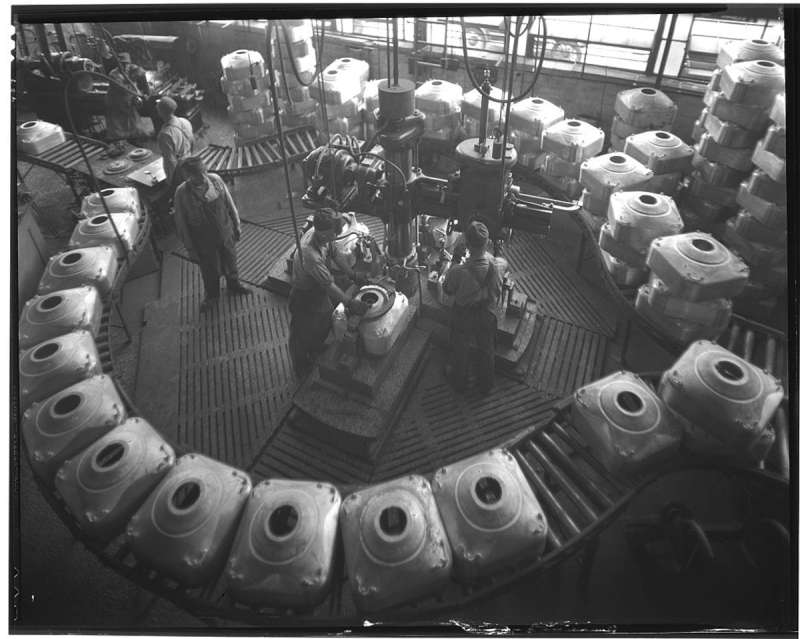
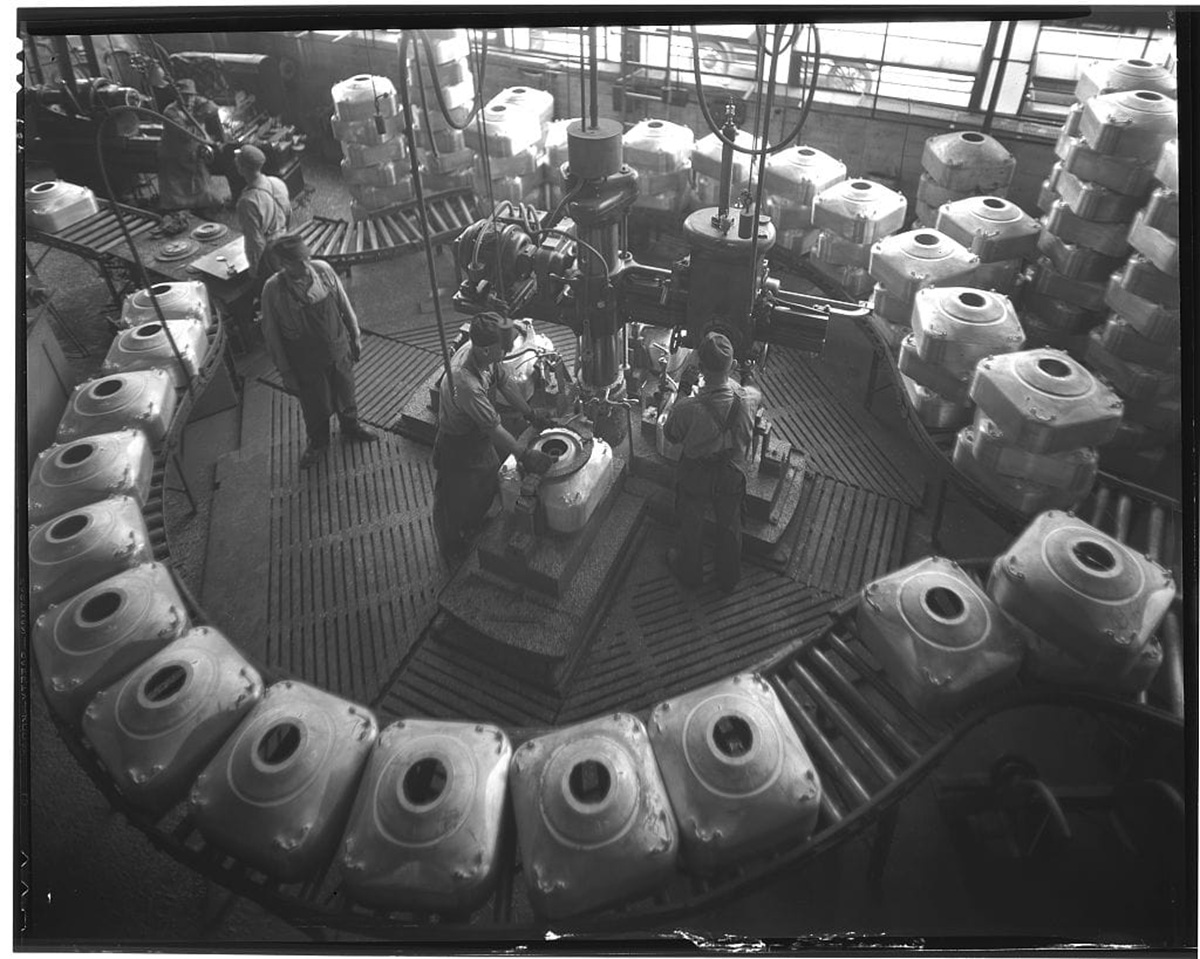
During the early 20th century, as electricity became more common in American homes, manufacturers began producing appliances for a growing market. Two Iowa companies became especially well known: Maytag in Newton and Amana Refrigeration in the Amana Colonies.
The Maytag Company began making washing machines in Newton in 1907. Over the decades, the company became a household name, producing washers and dryers for customers throughout the country.
After Whirlpool acquired Maytag in 2006, the company announced plans to consolidate operations. Maytag’s historic Newton headquarters and manufacturing facilities closed in 2007.
The closure marked the end of an important chapter in the city’s industrial history, and Newton has since worked to develop new economic opportunities and move beyond its longtime dependence on the appliance maker.
Meanwhile, in eastern Iowa, Amana Refrigeration was making its own mark on household technology. Founded in 1934, the company initially manufactured walk-in coolers. In the 1960s, it introduced the Radarange microwave oven to the consumer market, helping bring a technology once associated with commercial and industrial applications into everyday kitchens.
Although the appliance industry has changed substantially since its Iowa heyday, the influence of these manufacturers is easy to recognize.
Radio and aviation technology
Right here in the heartland, Iowa also became an important center for communications technology.
In Cedar Rapids, Arthur Collins began experimenting with radio equipment as a teenager. He later founded Collins Radio Company, building a business that developed communications systems for military and commercial applications.
During World War II, the company produced radio equipment for military aircraft. Its work continued into the space age, when Collins equipment was used in communications systems supporting early American space missions.
The business eventually became part of Rockwell Collins, which developed communications, aviation, and information technology for government and commercial customers. In 2018, Rockwell Collins was acquired by United Technologies, later part of RTX.
Lead mining
Before coal mining became a major force in Iowa, lead was already drawing people to the region.
In the late 1700s and early 1800s, lead deposits near the Mississippi River attracted miners and traders. French Canadian Julien Dubuque established mining operations in the area that would later bear his name, working with the Meskwaki people.
Lead was valuable for a range of uses, including ammunition, and mining helped bring commercial activity to the region before Iowa became a state in 1846.
But easily accessible deposits eventually became harder to find and extract. As the early lead-mining boom faded, river communities developed other economic activities, including lumber, trade, and manufacturing.
Meatpacking
If there’s one industry that has long made Iowa’s agricultural identity tangible, it’s meatpacking. The state raises livestock, but for generations, it also processed animals into products shipped to markets across the country.
During the late 1800s and early 1900s, meatpacking plants helped transform cities such as Ottumwa, Cedar Rapids, Mason City, Sioux City, and Waterloo into industrial centers.
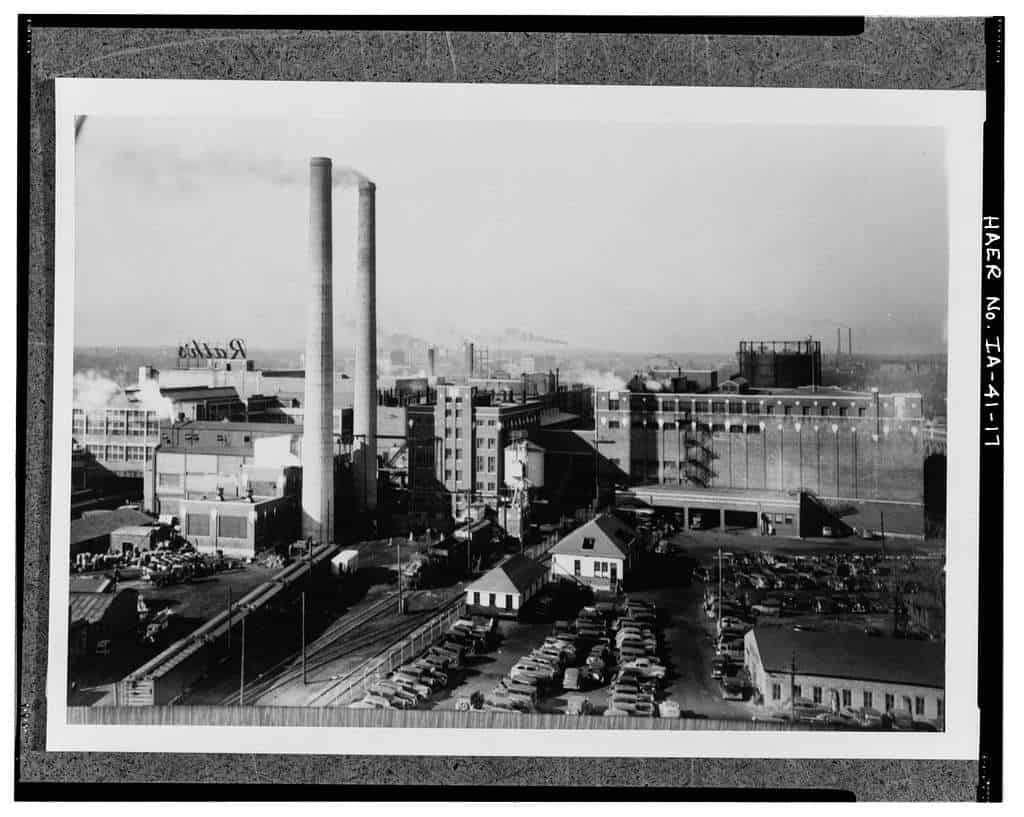
Particularly notable was Rath Packing Company, which opened in Waterloo in 1891, initially processing hogs. Over time, it expanded into beef and lamb, becoming one of the nation’s major meatpacking businesses. Rath was especially successful during the World Wars, when military contracts boosted production. Its products included Black Hawk Bacon and Tend’r Ham, recognizable brands that reached consumers far beyond Iowa.
By 1941, Rath operated the largest single-unit meatpacking facility in the United States. At its peak in the 1950s, the company employed nearly 9,000 people, making it one of Waterloo’s biggest employers. Its workforce also included Black workers who came to Waterloo seeking industrial employment, helping shape the city’s social and economic history.
But the industry was changing. Newer plants were designed around more efficient, single-level production lines, while competition and labor-management disputes put pressure on older operations. Rath struggled to adapt and ceased operations in 1985.
But Iowa Beef Packers, founded in Denison in 1960, showed how the industry evolved in the state, as it helped popularize a new approach to processing and shipping beef. Its boxed-beef system packaged cuts of meat for shipment rather than transporting whole carcasses to butchers and retailers. The shift changed how meat was processed and distributed, and it contributed to a broader transformation in the industry. Production increasingly moved away from older city plants toward facilities in smaller communities.
In other words, meatpacking didn’t leave Iowa behind entirely. It just changed.
This article first appeared on Good Info News Wire and is republished here under a Creative Commons license.
Related: Palace Site: The Des Moines spot where humans have lived for 7,000+ years