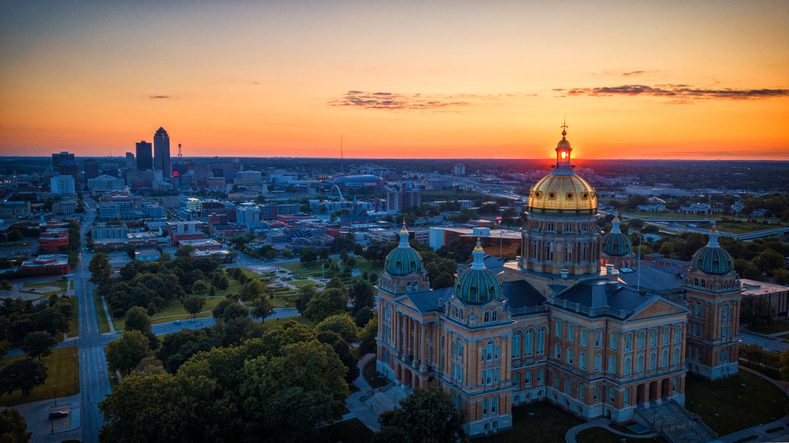
View the sun setting through the windows of the capitol dome.
In a world that demands more of our time and attention be spent online, it can be easy to forget how much we need in-person community and connection too. The Des Moines Pride Center exists because LGBTQ+ people have always needed places to gather, learn, and simply be ourselves together.
The Des Moines Pride Center is home to the largest LGBTQ+ library and archive in Iowa, but it is not just a collection of books on shelves. It is a living space shaped by queer stories, queer history, and queer people. It is a place where someone can stumble across a book that finally puts words to their experiences, where elders can see their lives reflected and honored, and where younger generations can learn that they are part of a long, resilient lineage.
Des Moines can be a bright, beautiful, and deeply connected community. And yet, over the past nine months, it hasn’t always felt that way for LGBTQ+ people. Working for the Des Moines Pride Center board in May of 2025, I found myself asking a simple but urgent question: how can we reimagine this space to better serve our community in this critical time?
While the Des Moines area boasts no shortage of gathering places such as coffee shops, restaurants, bars, and bookstores, the reality is that these spaces are often not designed with LGBTQ+ people in mind. They may welcome us, but they don’t belong to us. Our center can be a place created by LGBTQ+ people, for LGBTQ+ people, grounded in our stories and our history.
In a time when Iowa has become one of the first states to roll back civil rights protections for our transgender siblings, the need for spaces like DSMPC has never been more urgent. These policy decisions are not abstract. They have real consequences for where LGBTQ+ people feel safe, welcome, and seen. For many, especially transgender individuals and youth, public spaces that affirm our existence are becoming increasingly rare. The Pride Center stands as a crucial lifeline, not just cultural resources, but a lifesaving one. As a licensed social worker I see everyday how necessary community and connection are, especially in times of increased hostility and fear.
Though digital platforms have allowed us to connect across vast distances, they can never replace the power of physical community spaces. These spaces allow for shared learning, quiet reflection, spontaneous conversation, and intergenerational connection. They offer a sense of belonging that cannot be replicated through a screen. For many LGBTQ+ people, especially those in rural or isolating environments, these spaces can be rare and deeply meaningful.
Access to queer history is also more important now than ever. Across the country, LGBTQ+ stories are under attack, being challenged, erased, or removed from public spaces. Archives and libraries like ours serve as a form of resistance, preserving the truth of who we are and where we come from. That our history, our stories, are not optional; they are essential. And that seeing ourselves reflected in history reduces isolation, combats shame, and affirms that LGBTQ+ people have always existed.
To be sure, no single organization can meet every need of an entire community. DSMPC is not a replacement for policy change, healthcare access, or systemic reform. However, spaces like ours play a crucial role in sustaining people while these larger battles unfold. We offer a sanctuary, connection, and hope at a time when those things feel increasingly fragile.
Reimagining the Pride Center is not just about modernization for its own sake. It is about showing up for our community as it is right now. It is about protecting what makes us resilient, and creating space for one another when it matters most. We deserve places that reflect who we are, honor where we have been, and make room for where we are going. The Pride Center can, and must, be one of those places.
I invite you to join us for our library relaunch. Come celebrate queer joy, explore the richness of our shared history, and be part of a community that values presence, care, and connection. By showing up, you help affirm that our stories matter and that the future of this community is something we build together.
We’ll gather at 1620 Pleasant Street on February 1, 2026, at 2:00 p.m.—and we hope you’ll be there to help turn the page with us.

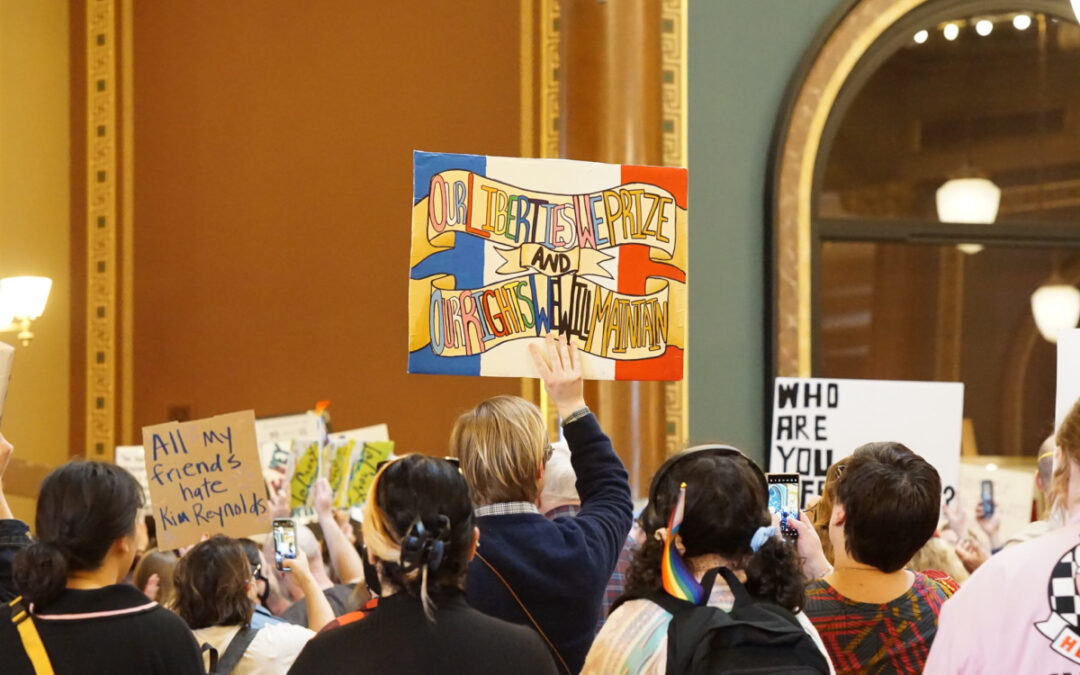
Iowa Republicans advance bill to strip trans civil rights
Iowa House Republicans advanced a bill to remove gender identity from the list of protected classes under the Iowa Civil Rights Act. This has...
Iowa House Republicans renew effort to strip transgender protections from Iowa civil rights law
House Republicans want to remove Iowa’s discrimination protections for transgender Iowans. The bill is a long list touching on bathrooms, birth...
Iowa Republicans advance law that could expose drag performances to obscenity lawsuits
Republicans are pushing to open obscenity laws in hopes of making it easier to sue drag performers. Senate File 116, a bill that follows long-time...
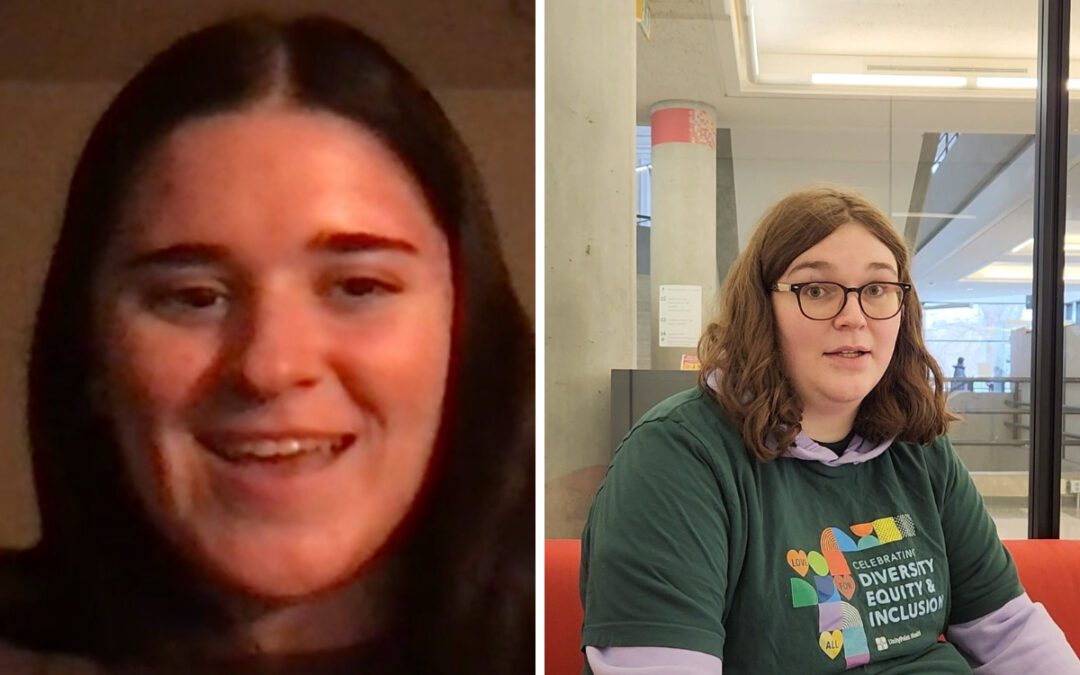
Students: ISU LGBTQ Center turned into ‘generic study lab’ by IA Republicans’ DEI law
Iowa Republicans' decision to restrict DEI programs means the loss of one university's LGBTQ+ center, where students have found friendship and...
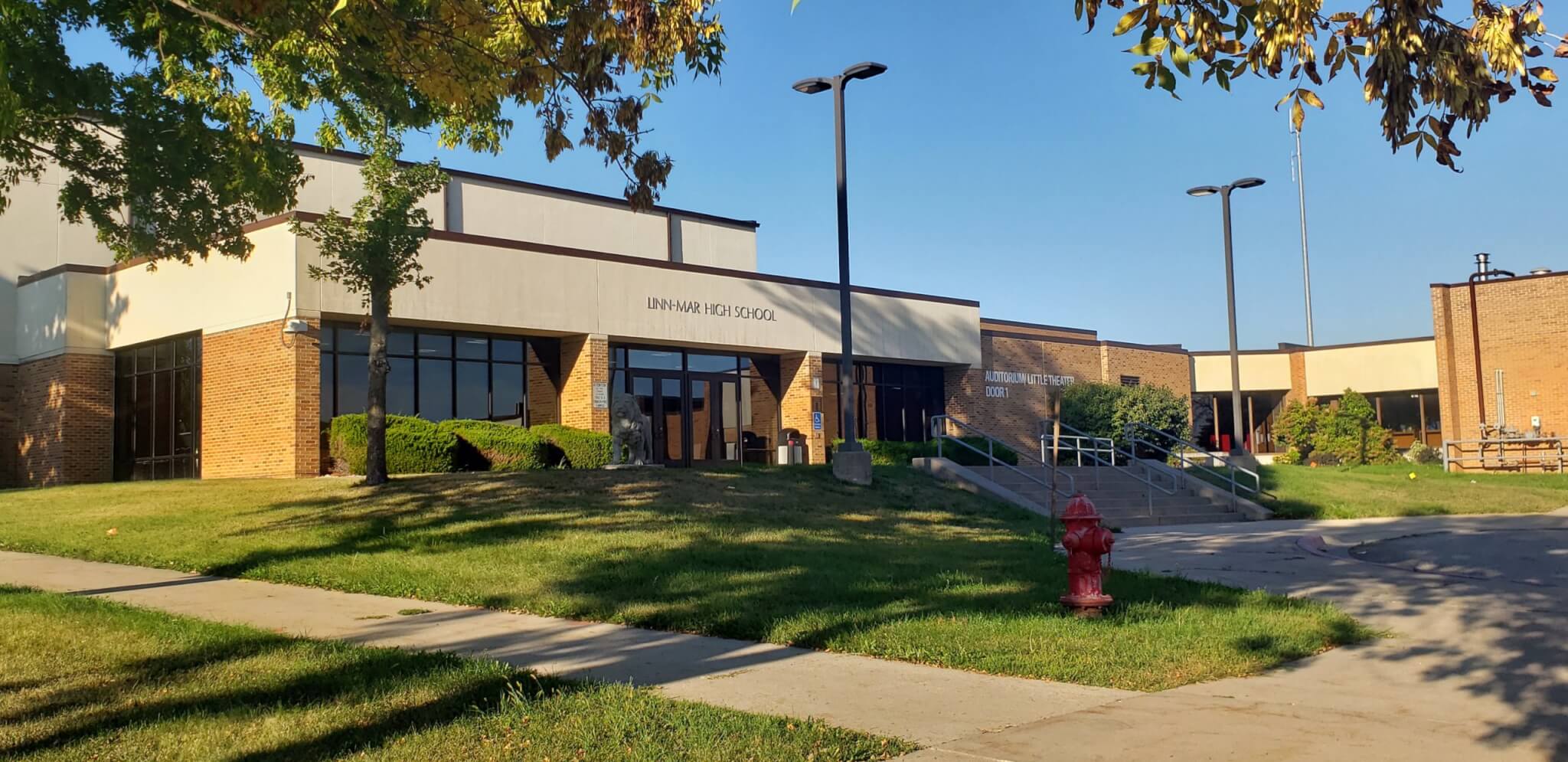
Attack on LGBTQ+ student group enabled by Iowa’s anti-LGBTQ+ bills
Linn-Mar's LGBTQ+ student group was attacked at the school's homecoming parade. Here's why the Iowa Legislature is on the hook. What do you remember...

Iowa AG defends other states discriminating against trans athletes
Iowa Attorney General Brenna Bird has now joined a group of states to defend laws discriminating against transgender athletes in Idaho and West...