It’s Worker Wednesday, Aug. 7, 2024.
|
Yesterday, Vice President Kamala Harris picked Minnesota Gov. Tim Walz as her running mate—arguably a progressive pick, given the laws Walz has signed as governor that have propelled Minnesota into an escape state for many of Iowa’s more liberal-minded folks.
But picking Walz also signals something else: Workers, and pro-worker policies, are back at the forefront of Democratic politics.
Walz, a former teacher and union member, said it himself in a speech to building trades unions:
“In my first campaign for Congress, in a debate, my opponent came at me and said, ‘Tim is in the pocket of organized labor,’” Walz said. “And I said, ‘That is a damn lie. I *am* the pocket.’”
|
How pro-worker is Tim Walz?
- Labor journalist Steven Greenhouse notes Walz helped enact “one of the most pro-worker packages of legislation that any US state has passed in decades.”
-
That legislation, which was signed into law last year, mandates paid sick days, bans noncompete agreements, boosts funding for workplace safety inspectors, and increases protections for workers in nursing homes, Amazon warehouses, meatpacking plants, construction sites, hospitals and public schools.
-
It has paid dividends for low-paid workers, like a $23.49/hour minimum wage by 2027 for nursing home workers.
-
It also provided for a loan forgiveness program for nurses, and put strict rules on hospital mergers.
-
Walz signed an executive order banning bachelor’s degree requirements for the majority of state jobs.
-
And he helped negotiate better pay for Uber and Lyft drivers, even despite those companies threatening to leave the state.
|
|
|
Working class news you can use:
|
-
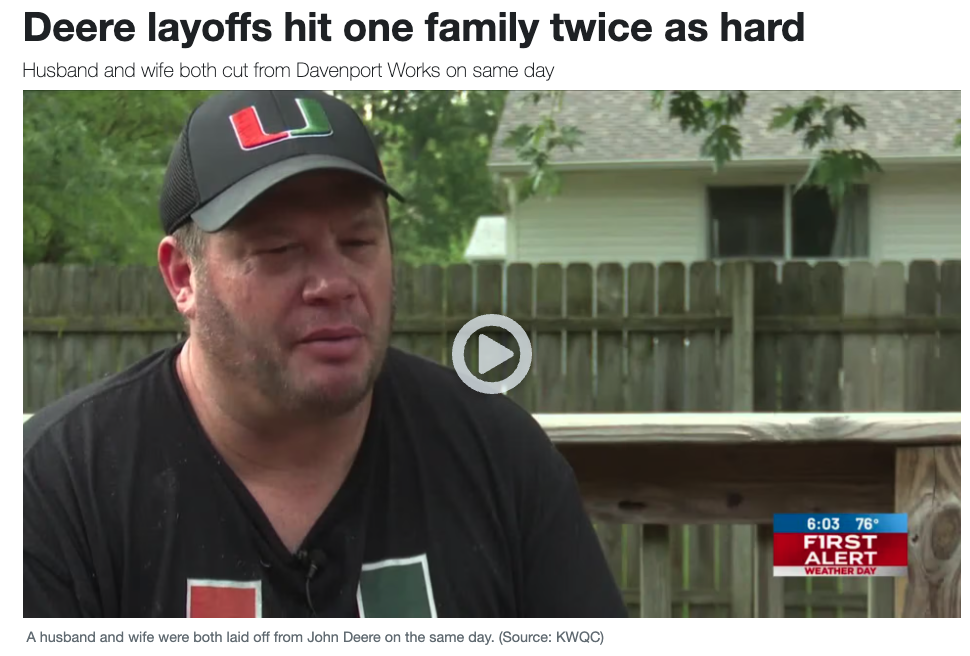
Deere layoffs hitting hard: In just the last month, in just the Quad-Cities area, John Deere has laid off 922 workers, per KWQC, which interviewed one couple who lost their entire family’s income in one day.
-
Those layoffs include salaried workers, too: Deere announced this week that 300 workers at its Moline, Illinois, headquarters will also get the axe.
-
Deere cuts affecting suppliers: As a result of Deere cuts, Gates Corporation in Newton will close, laying off its 41 workers by November.
-
Agriculture jobs are big business in Iowa, and more than 810,000 jobs in the state are potentially affected by decisions like Deere’s.
-
Why the Deere layoffs? Deere points to a global slowdown, including falling values for farmland, low crop prices, and high interest rates.
-
But Deere is still making money: Despite continuing to profit nicely to the tune of $2.4 billion this spring, capitalism’s growth-at-all-costs mantra means Deere is tightening its belt regardless.
- Voting on a union:
– 36 bricklayers and mason helpers at 5G Masonry in Boone, Dallas, Jasper, Madison, Marion, Polk, Story, and Warren counties voted not to unionize with Bricklayers and Allied Craftworkers Local 3.
– 140 electricians, welders, pipe fitters and more at Quaker Manufacturing in Cedar Rapids will vote Aug. 20-21 on whether to unionize with one of several unions or joint unions.
– 33 drivers and other workers at Iowa Beverage Systems in Des Moines will vote Aug. 22 on whether to unionize with Teamsters Local 90.
-
Iowa layoffs coming up:
– Wells Fargo in West Des Moines is laying off 26 workers by Sunday, 10 workers by Aug. 25, 24 workers by Sept. 11, and 12 workers by Sept. 23.
– West Liberty Foods is laying off one worker by Aug. 18.
– Tyson Foods in Perry is still closing, but slowly: 32 workers will be laid off by Aug. 24, and the remaining five workers by Sept. 28.
– John Deere Davenport Works is laying off 211 workers by Aug. 30.
– John Deere Dubuque Works is laying off 99 workers by Aug. 30.
– Smithfield Packaged Meats in Altoona is closing and laying off 319 workers by Aug. 30. Read more about that here.
– Amcor in Des Moines is laying off nine workers by Sept. 1.
– Winnebago Industries in Charles City is closing (the smaller of its 2 locations there) and laying off 36 workers by Sept. 1. Read more about that here.
|
|
|
In my never-ending quest to get better at my job, I’ve been reading and watching labor/working-class stuff. So I thought I’d occasionally share what I’ve learned!
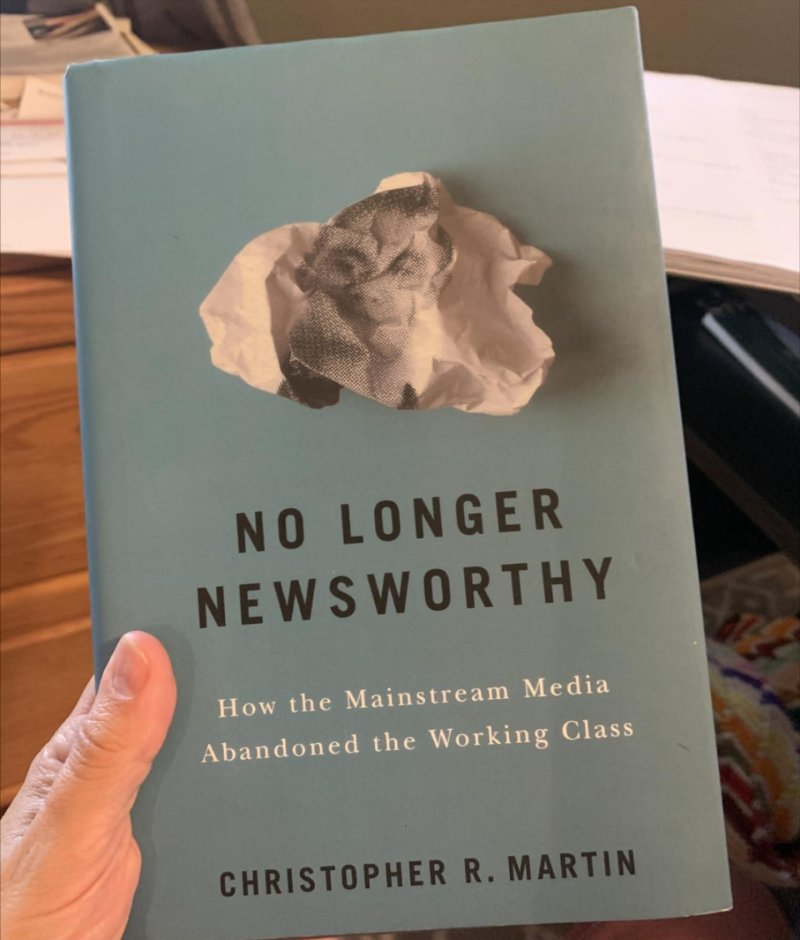
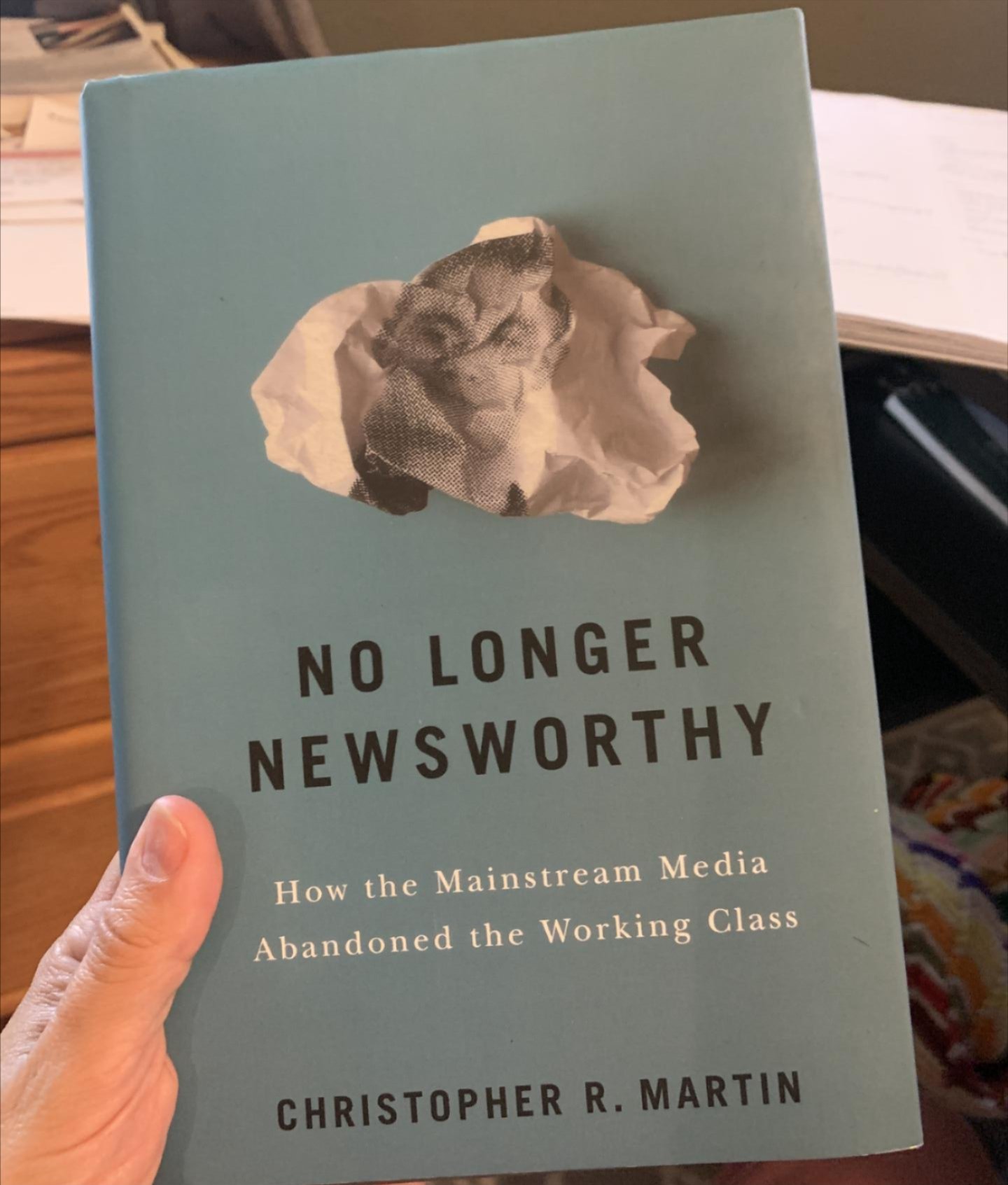
“No Longer Newsworthy” was actually written by a former professor of mine at the University of Northern Iowa, Dr. Chris Martin, who is also one of the heads of the faculty union there.
It’s about how journalists used to center the working class, and workers themselves, in their coverage. And then, around the 1960s, the news business began catering to an “upscale” audience to attract advertisers, shifted to talking about “business” and “money,” and centering things like workplace etiquette, rather than how to take power back through unions. This accelerated with the “trickle down” policies of Reagan, et al, in the 1970s and 80s (and, let’s be real, continued through the 90s).
Not only did that mean workers were not seeing themselves represented in news stories, they were taught that all their problems were individual personal failings. And Martin directly traces that to the rise of conservative news and strongman political figures like Trump.
But it doesn’t have to be this way—and it starts with us journos realizing that objectivity is a false god that both-sides its way into irrelevancy:
“Should journalism follow wherever our current politics takes us?” he asks. “Or should it set its own agenda, putting its historically democratic function—loyalty to all citizens—first?”
I know what I’m picking: Power to the people!
|
|
|
Iowa Starting Line is free to read, thanks to your support.
Send checks and other snail mail to:
Iowa Starting Line
c/o Courier Newsroom
101 Avenue of the Americas
8th and 9th Floors
New York, NY 10013
|
|
|
Would you recommend this newsletter to your friends and family?
|
|
|
You are receiving this email because you opted in via our website.
|
|
|
|