Despite sweeping public resistance, Iowa is set to move forward as one of the almost three dozen states where Republicans are pushing to restrict voting access after November’s general election.
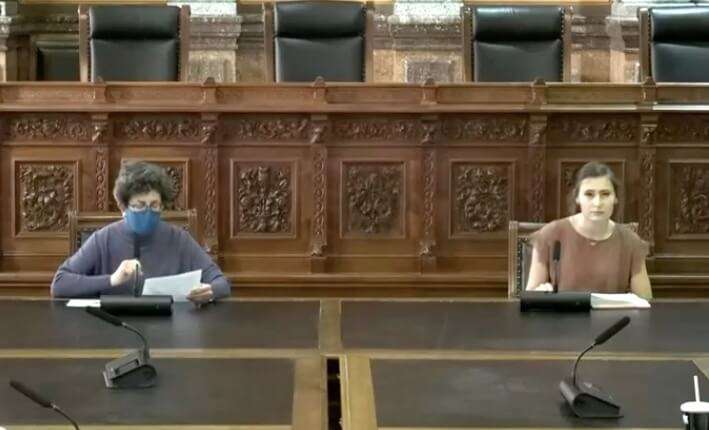
A total of 964 Iowans signed up on Monday night to speak against a GOP-introduced House bill that shortens voting periods and clears out voting rolls, among other election hurdles, in an hour-long, in-person public hearing. Only 22 were in support of the bill.
Around 165 similarly restrictive laws are being considered by Republican lawmakers in 32 other states, including those known for their battleground contests, a new report shows.
Iowa’s fast-tracked legislation has been deemed by experts as one of the country’s most restrictive and would impose criminal charges on any of the state’s 99 county auditors who don’t follow the proposed bills’ guidelines, which include shortening Iowa’s early voting window from 29 to 18 days, limiting a county’s number of ballot dropboxes and restricting absentee ballot request and return practices.
https://twitter.com/marceelias/status/1362923331347955713
In Iowa, early and absentee voting soared in the 2020 election, when a record-shattering 1.7 million Iowans, or over 75% of the state, voted amid the pandemic.
[inline-ad id=”1″]
A separate but identical Senate bill joined the House’s version in moving through subcommittees last week after being introduced on Tuesday. These bills are set to be debated in the Senate on Tuesday and in the House on Wednesday.
Republican Rep. Bobby Kaufmann said at Monday’s hearing that Iowa Republicans plan to send the bills to Gov. Kim Reynolds on Wednesday night.
“This has been fast-tracked, and usually that occurs when the majority party decides that they want to push something through quickly, without people being able to fully understand what is actually in the bill,” Democratic Rep. Mary Mascher said in her closing remarks at the end of the hearing.
The spike in restrictive voting legislation across the nation follows the 2020 election and the fallout by former President Donald Trump’s debunked claims of election fraud. Trump’s campaign and its associates lost many court cases challenging election the results.
[inline-ad id=”2″]
Iowans who testified in Monday’s hearing in support of the bill mostly echoed the former president’s claims of election security and integrity.
“Election misconduct is a very serious matter and it only makes sense that our laws should reflect that,” said testifier Drake University Law Student Emily Russell.
“We need to face the reality that after recent events, and surrounding the 2020 election, many Americans do not have faith in our elections. This should concern all of you because it affects all of us. If we don’t start taking steps to increasing public confidence in the integrity of our elections now, all of us will continue to live in a divided society.”
A number of speakers opposed to the bill refuted election integrity concerns.
“Just as Sen. Ernst won her election and each of you won yours, President Biden won freely and fairly. The remedy for the big lie of a stolen election is not to take an axe to election laws that work exceedingly well, it’s simply to tell the truth,” said one woman against the legislation.
[inline-ad id=”3″]
Among other measures, the proposed legislation also makes it illegal to drop off a ballot for a family or friend, and only allows counties to place one ballot drop box—under video surveillance—at an auditor’s office.
The bill also bans auditors from sending out absentee ballot requests until mid-October, and only if upon request—unlike the 2020 election when many auditors sent out absentee ballot request forms throughout the state.
And to ensure that all of Iowa’s auditors are law-abiding, the proposed bill states that any who violate state guidance would face penalties like felony charges of first-degree election misconduct, punishable by up to five years in prison or fines up to $10,000.
Most of the state’s county auditors oppose the bill, including several who spoke at Monday’s public hearing.
Iowa’s County Auditors Reject the “Suppress Iowa Voters Bill.”
Here’s Auditor Dokter’s testimony to the Senate subcommittee SSB 1199, the Senate effort to suppress the vote of Iowans. pic.twitter.com/EQ8TamPXAA
— Iowa Senate Democrats (@IowaSenate) February 22, 2021
Becky Bissell, the Adams County Auditor and a Republican, spoke out against the bill, asking House leadership to work with her and other auditors on making the legislation less restrictive.
“Smaller rural counties have a large elderly population who typically chose to vote absentee because of weather or health concerns. Why are we making it harder for them to vote?” she noted, among other concerns in the bill.
“Auditors are willing and eager to work with both chambers on topics in which you have concerns about since we all want the exact same thing—easy to vote, but hard to cheat.”
Rep. Kaufmann acknowledged in his closing remarks that amendments are expected to accompany the bill.
by Isabella Murray
Posted 2/22/21
Iowa Starting Line is an independently owned progressive news outlet devoted to providing unique, insightful coverage on Iowa news and politics. We need reader support to continue operating — please donate here. Follow us on Twitter and Facebook for more coverage.
[inline-ad id=”5″]