[et_pb_section admin_label=”section”]
[et_pb_row admin_label=”row”]
[et_pb_column type=”4_4″][et_pb_text admin_label=”Text”]Council Bluffs once played host to one of the most famous figures in underground crime.
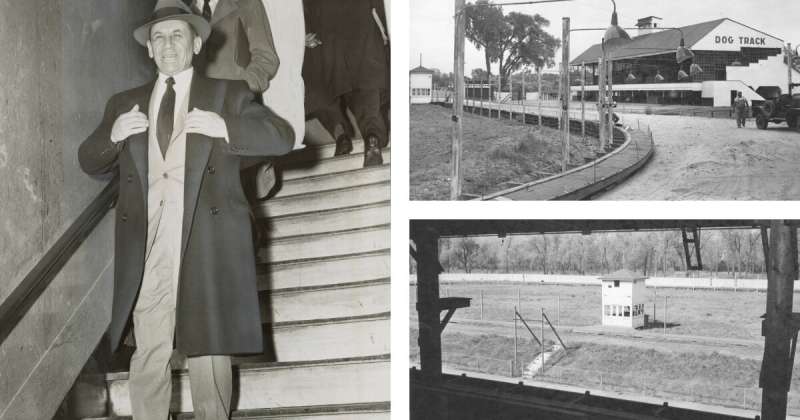
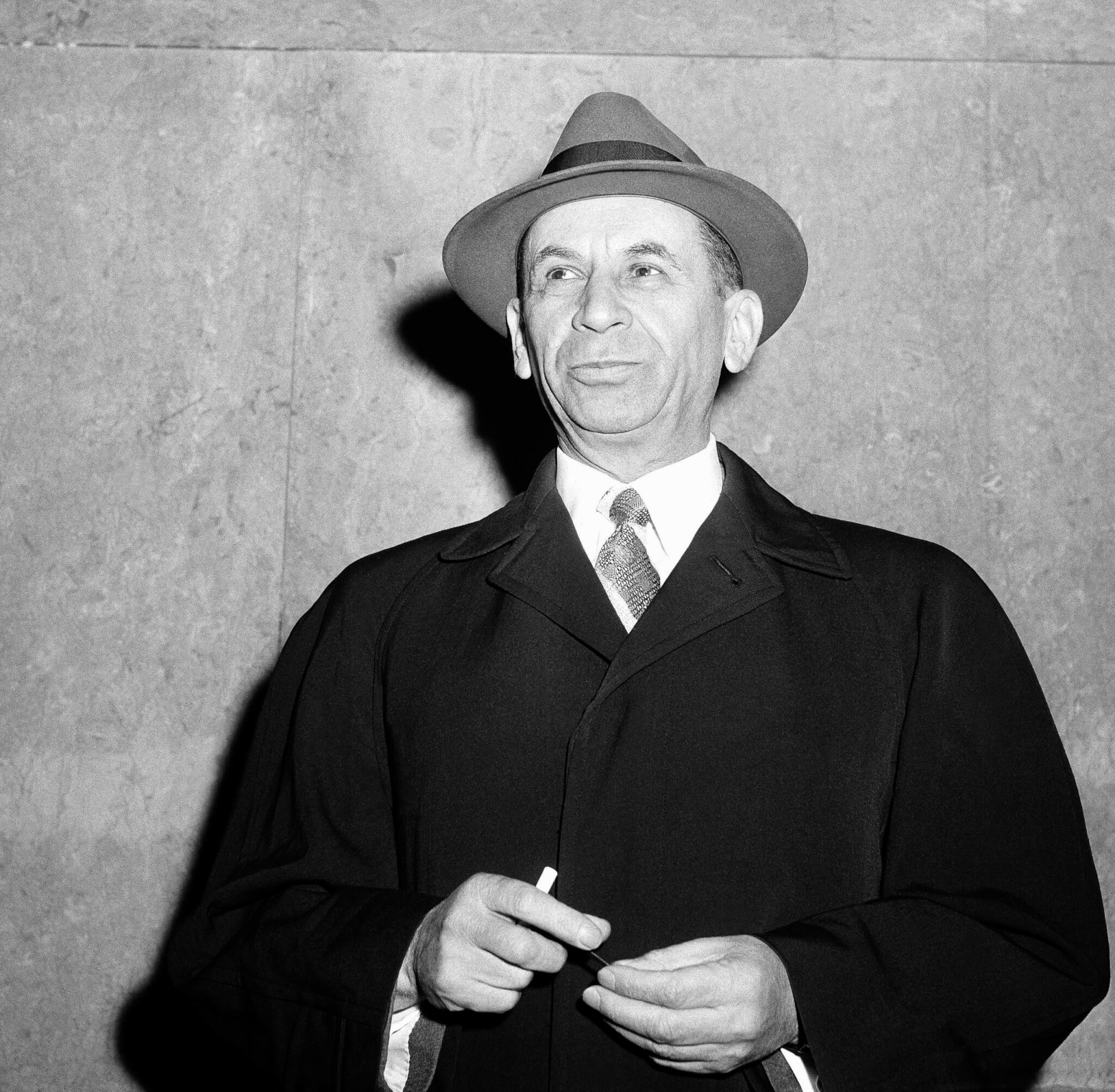
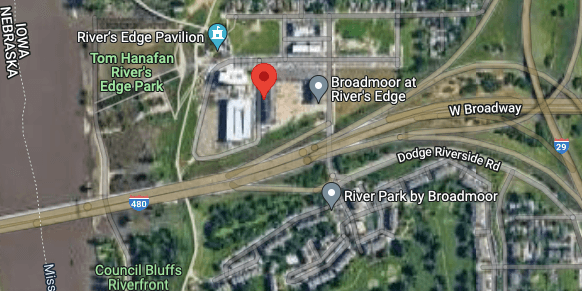
Meyer Lansky, AKA “The Mob’s Accountant,” lived seasonally in the Western Iowa city for a period in the early 1940s while he operated the Dodge Park Kennel Club. The dog-racing track was just east of the Missouri River and near the present-day location of the Interstate 480 bridge.
For those who are unfamiliar with Lansky or his notorious reputation, here is a bit of background on him before we talk about his time as a part-time Iowan.
Born Maier Suchowlansky—or Suchowljanksy, depending on the source—the Belarus native immigrated to the United States in 1911 when he was about 9 years old alongside his mother and a brother.
He grew up on the Lower East Side of Manhattan where he “had a hardscrabble life, facing horrible violence as a child, yet he was also renowned for his prodigious mathematical abilities and self-assured demeanor,” according to Biography.com.
As a teenager, Lansky led a Jewish street gang. It was during this time he met fellow Jewish gangster Benjamin “Bugsy” Siegel and future Italian mobster Charles “Lucky” Luciano, according to the Iowa History Journal.
[inline-ad id=”0″]
During Prohibition, Lansky and Seigel led the violent Bugs and Meyer Gang bootlegging operation while Luciano climbed the ranks of New York’s Italian mob. Bootlegging is how Lansky made his fortune which he later invested in gambling and real estate operations.
In 1938, Council Bluffs hosted a Centennial Exposition to celebrate 100 years since Iowa became a territory. The celebration was a bust and left the city of Council Bluffs with a debt of about $12,000—about a quarter-million dollars in 2022—according to the Meyer’s FBI file.
The land the Centennial Exposition was held on was owned by the Council Bluffs Park Board. To help clear the exposition debt, the park board leased the land to Centennial Exposition Creditors which then leased the land to Lansky and his partner, Bill Sims. The duo was allowed to lease the land for $1,000 a week for a minimum of five weeks per season.
Lansky’s FBI file explains why the East Coast mobster decided to invest in Council Bluffs, which was described as a “cow town.” According to the file, the purpose of the track wasn’t to make money but was there for his East Coast bookies to take bets. A track Lansky owned in Florida was closed in the summer, so the Council Bluffs track allowed him to run dog races year-round.
[inline-ad id=”1″]
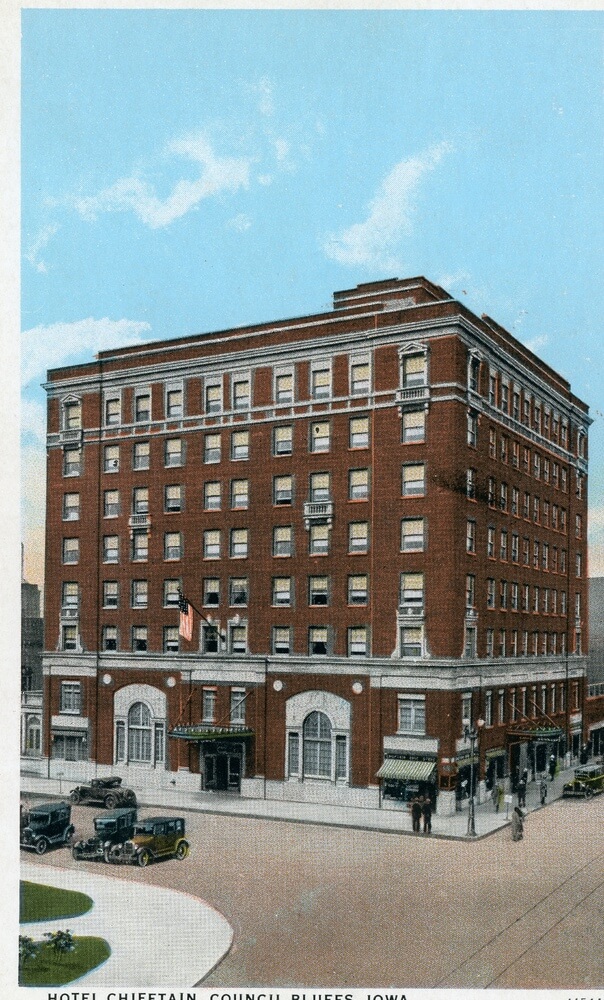
While they were in Council Bluffs, Lansky and Sims lived in the then-lavish eight-story Chieftain Hotel, a historic landmark that later found a second life by providing housing for low-income senior citizens. They also spent a summer staying in the home of Dr. Isaac Sternhill, the namesake of Sternhill Park.
The FBI estimates Lansky and Sims spent $50,000-$100,000 to build the Dodge Park Kennel Club. The track operated in the summers of 1941, 1942, and 1943. An AP article says the track’s opening attracted 4,500 people, and an Omaha World-Herald article says it drew 150,000 people that season.
Iowa had anti-gambling laws at the time and the Dodge Park Kennel Club found a way to circumvent that, according to Meyer’s FBI file. Spectators could buy “interest” in a racing dog. If the dog won, the spectator turns in their interest for payment since the dog’s value increased, whereas if the dog lost, the interest was forfeited.
The previously-referenced AP article notes that any interest collected from a winning dog was, coincidentally, equal to the payout of a pari-mutuel ticket.
[inline-ad id=”2″]
The track had supporters and detractors during its run.
One person told the FBI that “Lansky and associates maintained excellent public relations, were lavish spenders, hired all local people … and ran a ‘clean track.’”
Joe W. True of Avoca filed a suit to stop dog races at the track, which one of his attorneys called “a flagrant violation of the law,” but a grand jury failed to take action.
By April 1944, the track made enough money to pay back the Centennial Exposition Creditors but was forced to close after the 1943 season after Council Bluffs Mayor William A. Byers made the dog ownership roundabout way of gambling illegal.
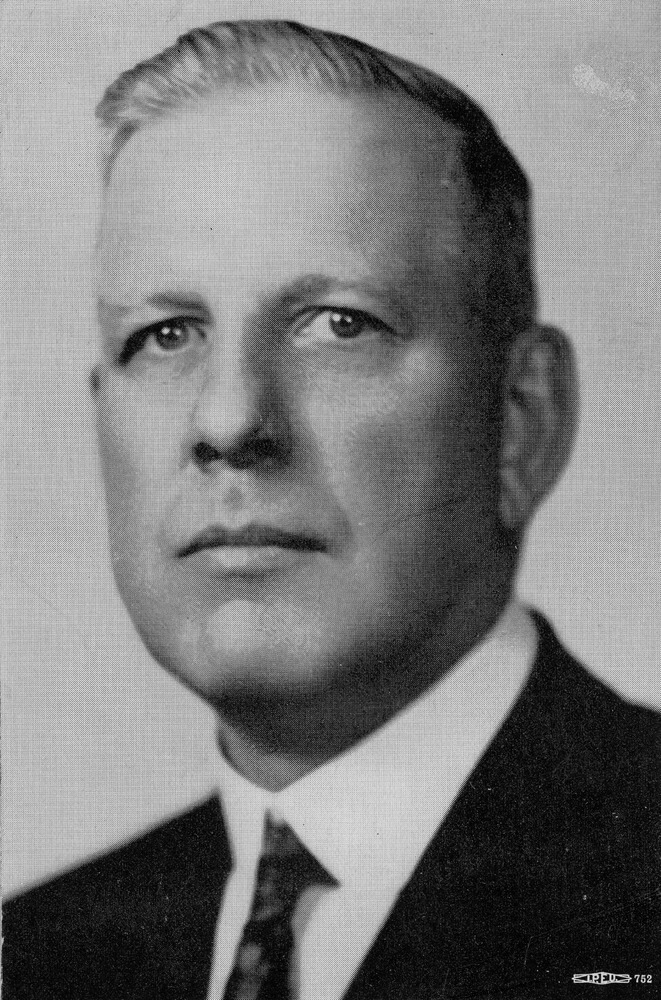
According to the Omaha World-Herald, Lanksy tried to appeal to the city by noting the races brought in $140,000 in annual economic activity to Council Bluffs, but Byers stood firm.
The state of Iowa also made dog-ownership-style gambling illegal in 1946, the same year Lansky and Smalls tried to get their old operation going again.
The two had even started making repairs and updates to the grandstands and offered to pay nearly $10,000 in back taxes, but R.W. “Doc” Nebergall, chief of the then-Iowa Bureau of Criminal Investigation, put a halt to that plan.
[inline-ad id=”3″]
The former Dog Park Kennel was converted into a dirt track in 1947 and operated under the name Frontier Park. In 1948, an amusement park and midway were added and it was eventually renamed Playland Speedway, according to a website of the same name.
The amusement park cost $250,000, according to the AP article. The site eventually became a mix of residential and commercial lots, a community park, and a portion of Interstate 480.
Lansky continued to be a prominent figure in the world of underground crime until his death at age 80 of lung cancer in 1983, according to The Mob Museum. The feds estimated that he had more than $300 million in hidden assets, but his bank account had less than $35,000 in it when he died.
by Ty Rushing
05/04/22
Iowa Starting Line is part of an independent news network and focuses on how state and national decisions impact Iowans’ daily lives. We rely on your financial support to keep our stories free for all to read. You can contribute to us here. Also follow us on Facebook and Twitter.
[inline-ad id=”4″][/et_pb_text][/et_pb_column]
[/et_pb_row]
[/et_pb_section]