When it comes to using the latest technology to make more money, small farmers know they don’t have the resources of the Big Ag players.
One Iowa college student wants to change that.
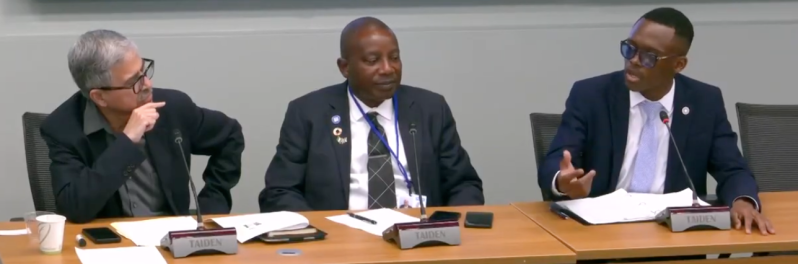
Mansur Kasali, an Iowa college student, told financial experts from around the world this month that we can use technology like artificial intelligence (AI) to help get more loans to small farmers—and, in an era of increasing food insecurity, that it’s vital we do so.
“The defining economic question of our time isn’t really whether opportunity exists,” Kasali said. “The more important question is: How do we actually translate these innovative technologies into meaningful jobs and long-term economic mobility?”
Kasali is a junior at Luther College in Decorah triple-majoring in economics, political science, and international studies. And he’s the youngest person ever to speak at the World Bank–IMF Annual Meetings this month in Washington, DC.
“Technology becomes a powerful tool because it closes the information challenge that prevents small, older farmers in rural areas from becoming visible and investible economic actors,” he told the audience.
Kasali has interned at a big investment firm, and will again this summer. But he isn’t your typical finance bro.
He’s more interested in how to get Wall Street money to small and underserved entrepreneurs—like small farmers, women, and people living in developing countries.
“There’s so much capital out there. But all of that capital basically only flows in between folks who already have access to all of this,” Kasali told Iowa Starting Line. “So I was wondering if capital could be something that’s as accessible as, let’s say, electricity.”
To that end, he’s founded two initiatives—both while still in college—that support those goals: EmpowerHer Capital, founded in 2025, which expands access to funding and mentorship for women entrepreneurs; and CyberBridge, which teaches children from underserved communities from Oakland, California, to Kenya digital skills they’ll need to enter a tech-heavy workforce.
For his World Bank speech, however, he turned his attention to another underserved population: Small farmers and agricultural entrepreneurs.
“So what that would mean in practical terms would be investing in rural infrastructure, investing in human capital, so small older farmers can participate in the future of an AI-driven agricultural economy,” he told the World Bank audience.
Translated to non-finance speak, that means:
“If you are a farmer in Iowa and you’ve got access to technology, now institutions can actually credibly assess the work you’re doing,” Kasali told Starting Line.
More importantly to farmers, those institutions will be more likely to lend you money to help you grow your farm or business.
“If all of those pieces align, I think you would have an extraordinary period of growth,” he said.
Kasali isn’t naive; he knows technological gains are usually taken advantage of by big business first. But he thinks, if government officials guide AI’s rise to specifically include small farmers and entrepreneurs that have traditionally been overlooked, inequality is not inevitable.
“It’s not just the right thing to do or, like, the moral thing to include people, but it’s also the smart thing to do,” he said, pointing to a report noting the US economy has lost out on $16 trillion in additional GDP because of the exclusion of people of color and women.
”We’re sort at this crossroads where inequality or lack of opportunity could get worse, or it could improve,” Kasali added. “I think if we take a conscientious approach to it, like a deliberate, intentional approach to actually making it level the playing field, I think you could actually have the widest uplifting of welfare across the board over the next 20 years or so.”