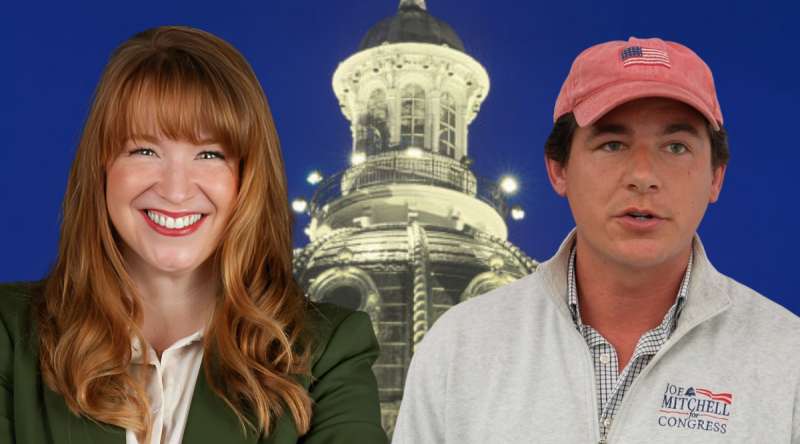
US Rep. Ashley Hinson’s decision to vacate her congressional seat to run for US Senate has transformed Iowa’s 2nd Congressional District into a national battleground. The district covers a pivotal swath of northeastern Iowa—including Cedar Rapids, Waterloo and Dubuque—the open seat is vital for both parties.
For Democrats, flipping the district represents a high-priority opportunity to help reclaim the US House majority. For Republicans, retaining the seat is essential to preserving their narrow hold on Congress. Major party and independent contenders in the race have collectively raised more than $2.5 million heading into the general election.
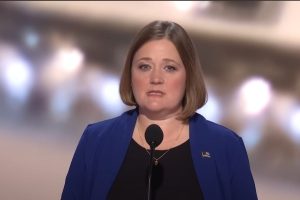
Lindsay James (D)
State Rep. Lindsay James, a Dubuque resident born in Portland, Oregon, enters the race bringing a background in ministry and higher education. James earned a bachelor’s degree in communications from Santa Clara University before obtaining a Master of Divinity from Fuller Theological Seminary. Prior to her career in state government, she worked as an ordained Presbyterian minister, college instructor, and nonprofit leader. James was elected to the Iowa House of Representatives in 2018 and rose to serve as the House Democratic Whip.
On the campaign trail, James has centered her platform on lowering everyday costs, expanding rural healthcare access, and strengthening tenant protections. During her tenure in the state legislature, she advocated for bills to cap out-of-pocket insulin prices and restrict steep rent increases by out-of-state mobile home park owners. Her federal platform includes proposals to limit prescription drug costs, bar members of Congress from trading individual stocks, and expand federal grants for rural hospitals.
James’ campaign has exceeded $1 million in contributions following a competitive three-way Democratic primary. Her donor base relies on a mix of small-dollar grassroots contributions and high-profile institutional backing. She has drawn key financial support from the Democratic Congressional Campaign Committee’s “Red to Blue” program, major labor union political action committees, like United Steelworkers. She has also received contributions from EMILY’s List and End Citizens United.
Joe Mitchell
Former state lawmaker Joe Mitchell, born in Mount Pleasant, entered public service early in life when he was elected to the Iowa House of Representatives at age 21 while completing his business degree at Drake University. After representing southeast Iowa in the legislature, Mitchell launched Run GenZ, a nonprofit dedicated to recruiting and training young conservative political candidates nationwide. Mitchell also managed real estate ventures.
Mitchell’s legislative priority focuses on fiscal conservatism, national security, and agricultural growth. In the Iowa legislature, he voted in favor of major individual state income tax reductions and regulatory rollbacks. If elected, Mitchell has pledged to extend the 2017 federal tax cuts, sponsor a Balanced Budget Amendment to curb federal inflation, secure additional funding for southern border infrastructure, and dismantle federal regulations affecting the Iowa livestock sector and row-crop farmers.
Mitchell leads the candidate field in overall fundraising, accumulating over $1.9 million in contributions. His financial total is anchored by more than $100,000 in personal campaign loans alongside contributions from national conservative networks. Endorsed by President Donald Trump, Mitchell’s campaign is primarily funded through conservative leadership PACs, business trade organizations, Turning Point Action, and funding channels tied to the National Republican Congressional Committee.
Rick Stewart (L)
Libertarian nominee Rick Stewart, a Postville native and current Cedar Rapids resident, offers a resume that spans law enforcement, entrepreneurship, and international volunteer work. After graduating high school from Phillips Academy, Stewart completed an associate degree in agricultural mechanics at Kirkwood Community College, a bachelor’s degree from Coe College, and a master’s degree from the University of Chicago. He previously served as a police officer in Maquoketa before co-founding Frontier Natural Products Co-op, leading the organic consumer goods manufacturer as CEO for over two decades.
Stewart’s platform is rooted in strict anti-statism, non-interventionism, and free-market economics. A frequent contender who previously ran for US Senate in 2020 and Iowa governor in 2022, Stewart advocates for the total repeal of the federal personal income tax, the complete abolition of regulatory agencies such as the FDA and EPA, an end to federal drug prohibitions, and immediate reduction of American military commitments abroad.
Operating a lean campaign, Stewart has raised under $100,000, relying heavily on personal funding and individual donor contributions. In line with his Libertarian philosophy, he strictly refuses corporate PAC contributions, drawing his financial backing entirely from individual grassroots donors and advocacy groups focused on civil liberties and drug policy reform.
Dave Bushaw (Independent)
Running as an independent candidate backed by the Forward Party, West Union native Dave Bushaw presents himself as a populist alternative to the two-party system. A high school graduate who earned vocational and labor organizing certifications, Bushaw is a first-generation farmland owner in Fayette County, a working folk musician, and a union organizer with 14 years of field experience negotiating contracts and training local labor activists.
Bushaw’s campaign centers on economic accountability, campaign finance reform, and rural working-class relief. Some of his legislative goals include passing federal legislation to enact ranked-choice voting for national elections and establishing anti-monopoly protections for small family farms against corporate agribusinesses.
With a little over $26,000 raised, Bushaw’s campaign relies almost entirely on volunteer mobilizations and direct voter contact rather than paid media advertising. He maintains a self-imposed pledge rejecting all corporate PAC, Super PAC, and special-interest money, financing his run exclusively through small-dollar donations from local working-class residents and endorsement support from the Forward Party.