Reporting by Nick El Hajj, Des Moines Register
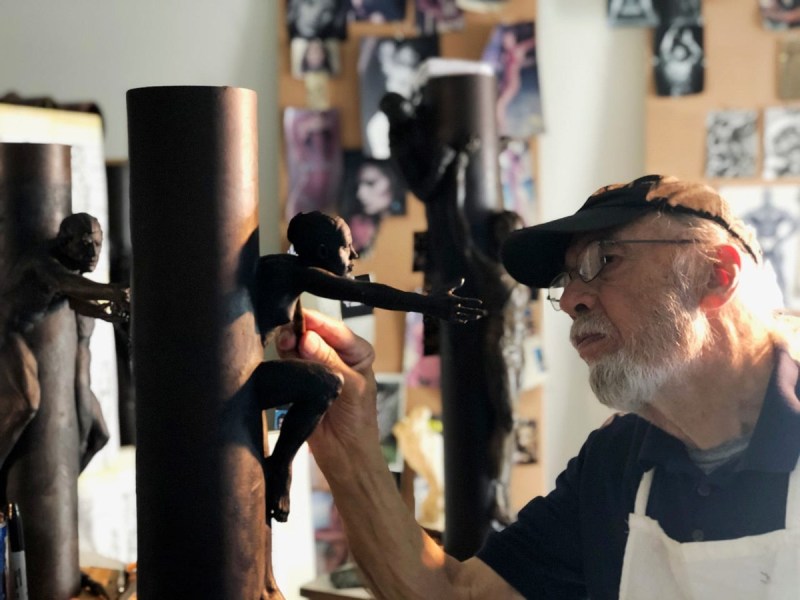
Before Tom Schomberg’s Rocky Balboa statue became a Philadelphia landmark, he was a Sioux City kid throwing crab apples in his neighbor’s yard.
He was a student in Miss Gessman’s art class at Woodrow Wilson Junior High School, watching grainy films of Jackson Pollock bent over the floor, dribbling paint with effortless freedom. Those images stayed with Schomberg, along with a small clay model he made.
“The teacher actually complimented me on that,” he said. “When you’re young, and somebody compliments you on things, it’s a big impression.”
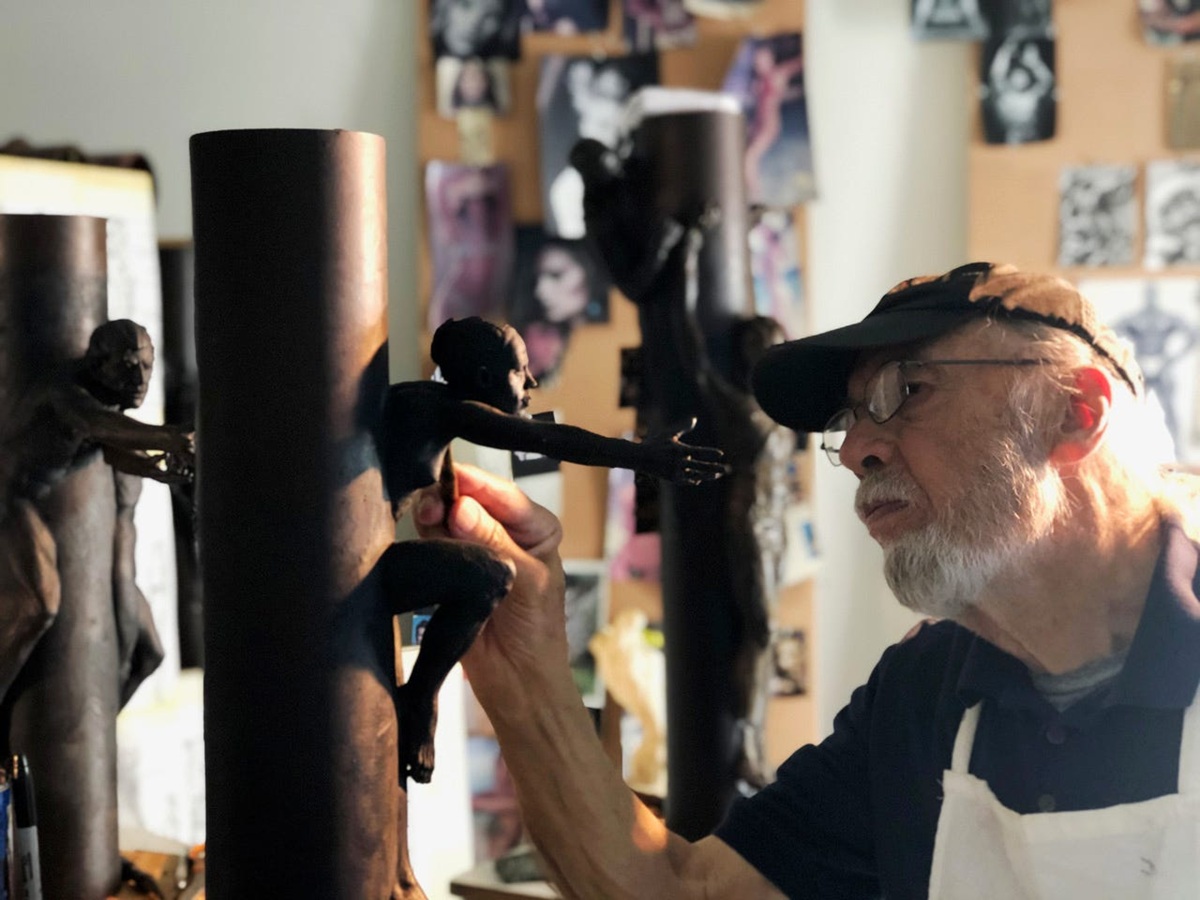
Now, after decades of debate over whether his “Rocky” statue was movie memorabilia or public art, the Philadelphia Museum of Art is finally embracing it.
In April 2026, the museum brought “Rocky” inside for an exhibition examining how the statue became a monument in its own right. The museum plans to give it a permanent spot atop the steps where it was featured in the films, after years as a pilgrimage site for millions of visitors near the base of the steps.
It ain’t about how hard you hit
At 18, Schomberg’s choices seemed limited: blue-collar work or teaching. He graduated from Wayne State College in Nebraska in 1964 and taught art in Omaha Public Schools. Then, in the late 1960s, his life took a turn.
“I had a failed lifestyle, and without going into any detail, I was lost and had hit rock bottom,” Schomberg, now 83, said.
A former teacher helped him get a graduate teaching assistantship in Greeley, Colorado. He later transferred to the University of Denver, where a card on a bulletin board offered proof of something he had never thought possible: a professional artist for hire.
Schomberg sold everything and traveled across Europe, visiting every major art museum he could. By 1975, after teaching for four years in New Jersey, he returned to Colorado with his wife, Cynthia, where they established Schomberg Studios.
By 1980, he began working on “Down But Not Out… Lost But Not Forgotten,” a memorial to 14 members of the U.S. amateur boxing team killed in a 1980 plane crash near Warsaw.
The project needed money, so Cynthia started calling people who had purchased Schomberg’s art. Among the collectors: Sylvester Stallone.
Stallone suggested another project: a statue for “Rocky III.”
The statue could have been treated as a movie prop, Schomberg said, but he approached it as something more studied. In “Rocky III,” Rocky was no longer simply the underdog fighter from the first film. He was the champion.
Looking back, Schomberg said he sees himself in that story: a young man from Sioux City who hit bottom, found a way through art and built a life around the thing he could not stop doing.
“I might be a Rocky story myself,” Schomberg said. “I love the fact that Cynthia and I decided in ’75 to take a chance and not look back.”
His work has expanded well beyond Rocky, including “The 9/11 Series,” “The Veterans Memorial,” and “The War Dog Memorial.”
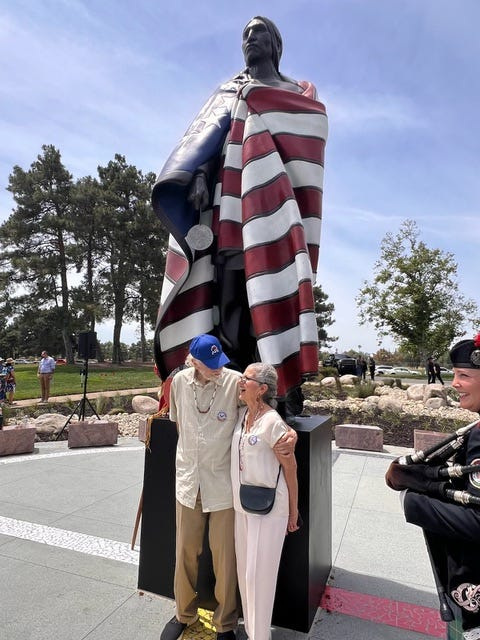
“The Gift,” which depicts a Sioux man holding a Jefferson peace medal, carries echoes of childhood bus trips to War Eagle’s Grave above the Missouri River Valley, Schomberg said.
“Somehow Sioux City still has that influence on me,” he said. “It’s taken five decades to complete this full circle.”
Schomberg’s advice is simple.
“Anybody, I don’t care what you do,” he said. “Find out what’s in your heart and do it, and enjoy it. For God’s sakes, just take a look.”
Nick El Hajj is a reporter at the Register. He can be reached at nelhajj@gannett.com. Follow him on X at @nick_el_hajj.
This article originally appeared on Des Moines Register.