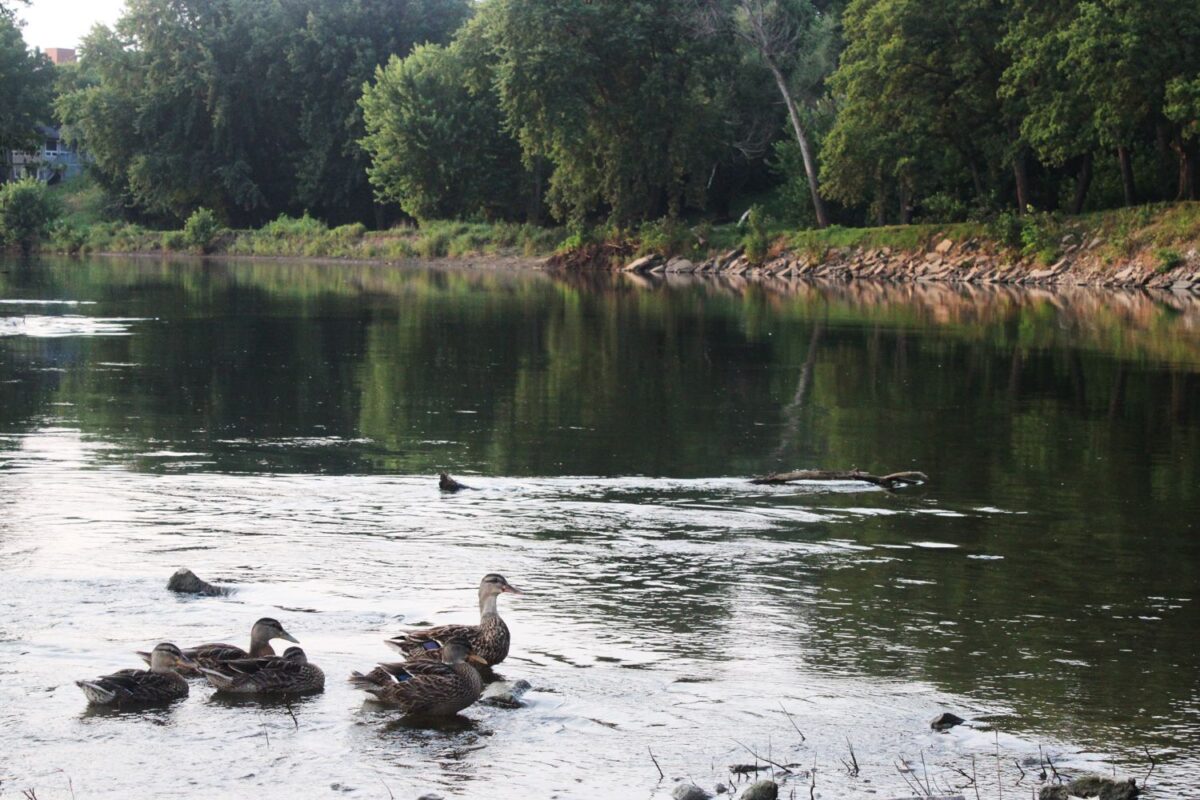
High nitrate and phosphorous levels in Iowa waterways pose health hazards for humans and wildlife. (Adobe Stock)
The Iowa Farm Bureau has released a statement claiming that the state’s waterways are becoming cleaner, despite evidence that nitrates and phosphates are higher than ever.
The chemicals are dangerous to human health.
The Iowa Farm Bureau blames seasonal waterflow fluctuations for nutrient spikes in Iowa waterways, claiming nitrate levels have not exceeded Environmental Protection Agency safety levels of 10 micrograms per milliliter of water.
But the Iowa Environmental Council’s General Council Michael Schmidt said research shows that levels are often higher than that, and adds that nitrate is dangerous at levels as low as 5 micrograms.
“The drinking water standards set by EPA many years ago, decades ago, was really set to protect against short-term acute impacts,” said Schmidt. “So, babies drinking formula made with water high in nitrates would get sick with blue baby syndrome.”
Schmidt said Iowa’s nitrate pollution is not short-term, but continuous, and has been linked to cancer in a state with the nation’s second highest number of new cases.
Environmental groups have called on the EPA to tighten nitrate level safety standards in Iowa waterways.
Schmidt says large animal confinement operations are the primary source of nitrates and phosphorous pollution in Iowa waterways, and adds that beyond cancer, the chemicals can cause birth defects.
“A study of mothers in Iowa found that increased nitrates in drinking water was associated with neural tube defects of the brain and spinal cord,” said Schmidt, “and potentially even limb deficiencies.”
Schmidt said there is also evidence that high nitrate levels in drinking water can cause thyroid disease.
The Farm Bureau says it is working with scientists at Iowa State University to more accurately track waterway nutrients levels in real time.
Related: The link between Iowa’s worsening water quality and rising cancer rate


Iowa John Deere workers recalled after layoffs
By Mark Moran John Deere has recalled 245 workers in Iowa after mass layoffs. They'll be back on the job this month and next. Prompted...

Oppose ICE? Here’s how you can take action
The moment we’re in The US Senate is currently deciding whether to approve new funding for the Department of Homeland Security (DHS), including...
Oppose ICE? Here’s how you can take action
The moment we’re in The US Senate is currently deciding whether to approve new funding for the Department of Homeland Security (DHS), including...
Clean water advocates announce demands for Iowa rivers, streams
By Mark Moran The environmental advocacy group Food & Water Watch has announced a 20-point "clean water blueprint" it says would help...

Iowa Guard soldier killed in Syria was Meskwaki police chief’s son
Meskwaki police chief says his son was one of the Iowa Guard members killed in Syria. by Robin Opsahl, Iowa Capital Dispatch December 14, 2025 The...

Collaboration and Care Guide Return of Meskwaki Artifacts From UNI to Their Tribal Home
The Meskwaki Nation worked with the University of Northern Iowa to return cultural artifacts to the tribe. The items will now be housed at The...